


CBN Advert
IMC Experts Urge Culture Of Knowledge Sharing , Inter-Generational Collaboration To Boost Productivity


Experts in the Integrated Marketing Communications sector have emphasised on the need for creation of culture of knowledge sharing and inter-generational collaboration to enhance work place productivity.

They pointed that this will build generational gap as well as creating an enabling environment especially in a work with multi generations.

The advise was made at the opening of the 5th National Advertising Conference (NAC) presently holding at the Abuja Continental hotel, Abuja.

They said this in a Fireside Chat on the theme: “A Different Generation, a Different Industry”.

The panelist were, Dr. Bolajoko Bayo-Ajayi, President, NIMN, Anthony Eigbe, Tecno West Africa, Maryam Amuda, Aster Integrated Marketing and Bello Yussuf, 3-IPOD.

According to Dr. Bolajoko Bayo-Ajayi, collaboration and knowledge sharing between the older and younger generations are vital to bridging the industry’s talent gap. To make that happen, she calls for the need for an enabling environment to allow especially the young ones to speak in a non-threatening environment, and for leaders to be accessible by the young ones.

“In a team where you have a multi-generation, if you don’t create an enabling environment- you may have a team member that may feel unappreciated which will affect workplace productivity,” she said.

“It is a responsibility for us as leaders to give access to people  and also break the barriers that hinder collaboration to aid knowledge transfer”, she affirmed.

She also advocated for knowledge documentation to help the young professionals in the work place.

“Sometimes people don’t have to go through the same experience we have gone through- but through sharing and documenting what we know will help people gain more knowledge and their learning curve can be shortened. At the end of the day people don’t have to reinvent the wheel- but can be replicated and that is one of our roles as leaders.”

She however pointed that at some point the knowledge could be obsolete but at end the knowledge will come handy.

Corroborating Dr. Banjoko’s position, Bello Yusuf noted that, irrespective of trend what should not change are the fundamentals.

“Change is constant- fundamentals too are constant- if an organisations does not have the fundamentals at some point it will show,” he said.

Speaking on what has changed in the industry today, Maryam Amuda said is the audience, who are now dynamic, ever changing and intentional in how they relate to brands.

In his goodwill message, Lanre Adisa, HASG and AAAN President said NAC 2025 was not just talk for the sake of talk, but about sharing thoughts and sharing ideas and this conference has proven to be one of those very useful platforms to do that.

MAN Calls Govt’s Intervention On NAFDAC Ban Of Sale Of Alcoholic Beverages In Sachets, Small PET Bottles  

By Fidelia Okafor

The Manufacturers Association of Nigeria (MAN) has expressed concerns over the recent directive issued by the National Agency for Food and Drug Administration and Control (NAFDAC) to outrightly ban the production and sale of alcoholic beverages packaged in sachets and small PET bottles as it is a setback to prior stakeholder agreement and a threat to local industry.

In a statement issued by Director-General, Segun Ajayi-Kadir, MAN criticised the ban scheduled to take effect on December 31, 2025, saying it contradicts a jointly validated National Alcohol Policy endorsed in October by all key stakeholders, including NAFDAC and the Federal Ministry of Health.

The association argued that the Senate’s resolution, passed on November 6, 2025, overlooked this consensus and failed to consult affected industry players.

Ajayi-Kadir said the earlier Ministry of Health directive granting a one-year extension for the phase-out of sachet alcohol should have guided the Senate’s decision.

“A stakeholders’ consultation, as previously done by the House of Representatives, ought to have preceded any ban,” he stated, warning that the move risks derailing progress made through the policy’s multi-sectoral framework focused on enforcement, monitoring, and consumer education rather than prohibition.

Ajayi-Kadir dismissed claims that sachet alcohol fuels underage drinking, citing independent government research that found no empirical link.

He noted that manufacturers have collectively invested over ₦1 billion in responsible drinking campaigns across media platforms.

Beyond policy concerns, Ajayi-Kadir warned of severe economic fallout should the ban proceed, projecting losses of over ₦1.9 trillion in investments, massive layoffs affecting more than 500,000 direct and 5 million indirect workers, and the potential collapse of indigenous beverage producers.

“This policy shift could destabilise a sector that is only beginning to recover,” he cautioned.

He also argued that sachet packaging provides affordable, regulated options for adult consumers, helping curb excessive drinking while limiting illicit trade. “A ban would drive demand underground, empower smugglers of unsafe foreign products, and deprive government of much-needed revenue,” he added.

MAN has therefore urged the Senate to withdraw its resolution and for NAFDAC to suspend enforcement of the ban, emphasising that regulation not prohibition remains the most sustainable path forward. “We support the removal of unsafe products, but such actions must rest on evidence, not emotion”. The livelihoods of millions of Nigerians depend on it.” he concluded.

MAKIA Airport :  Ganduje Orders For Swift Action On Infrastructure Gaps

By Fidelia Okafor 


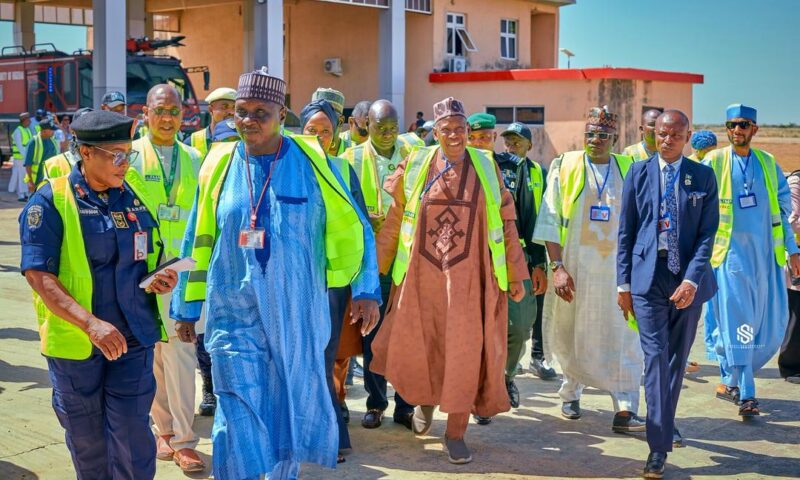
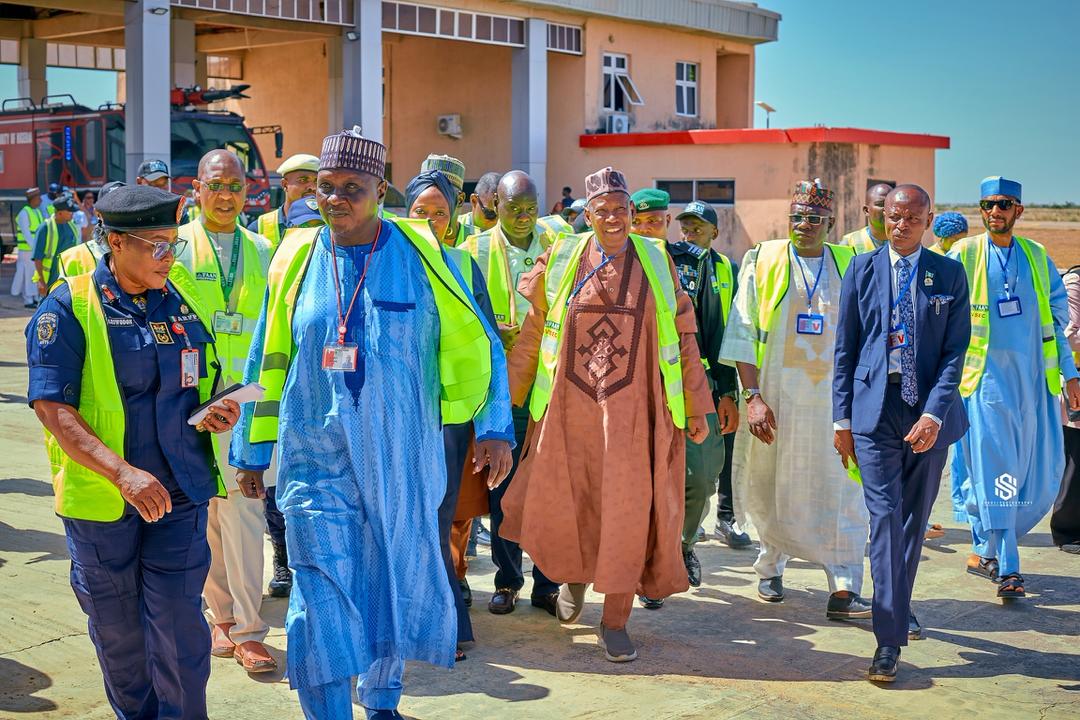
In a bold demonstration of commitment to operational excellence and infrastructural renewal, the Chairman of the Board of the Federal Airports Authority of Nigeria (FAAN), His Excellency, Dr. Umar Abdullahi Ganduje, CON, on Tuesday,  led members of the FAAN Board of Directors on an extensive inspection tour of the Mallam Aminu Kano International Airport (MAKIA).


The high-powered delegation, which included the Managing Director/Chief Executive of FAAN, Mrs. Olubunmi Kuku, the Board Secretary and Director of Legal Services, Mrs. Bridget Gold, Engr. Nasiru Muazu and Dr. Ahmad Ibrahim Suleiman (Members of the FAAN board) embarked on a comprehensive tour covering the airside, terminal, and landside areas of the airport. Also on the entourage was the Director of Public Affairs and Consumer Protection, Mr. Henry Agbebire, who provided insights on communication and stakeholder engagement strategies aligned with FAAN’s transformation agenda.

The team inspected critical facilities, including the Fire Bay, Water Treatment Plant, and both the Domestic and International Terminals, as well as key airside infrastructure vital to airport safety and efficiency. The Chairman, while commending FAAN for its visible strides in maintaining operational standards, underscored the need to expedite the completion of ongoing projects and address lingering infrastructural challenges to enhance service delivery at the Kano Airport.

Dr. Ganduje, known for his pragmatic and action-oriented leadership, issued a two-week marching order to the contractor handling the domestic terminal project to complete all outstanding works, including the VIP Lounge, without further delay. He reaffirmed the Board’s determination to ensure that all airports under FAAN’s management deliver on the Authority’s renewed culture of excellence, accountability, and efficiency.

The visit, which felt like a homecoming for Dr. Ganduje, having served two terms as Governor of Kano State, was marked by optimism and a collective resolve among Board members and management to reposition the Mallam Aminu Kano International Airport as a symbol of pride and progress for northern Nigeria.

FAAN remains steadfast in its mission to uphold safety, infrastructure renewal, and superior service quality across all its airports, in line with the strategic vision of the Honourable Minister of Aviation and Aerospace Development and the dynamic leadership of the Managing Director/Chief Executive, Mrs. Olubunmi Kuku.

Shell Highlights Contributions To Nigerian Economy In NAPE exhibition

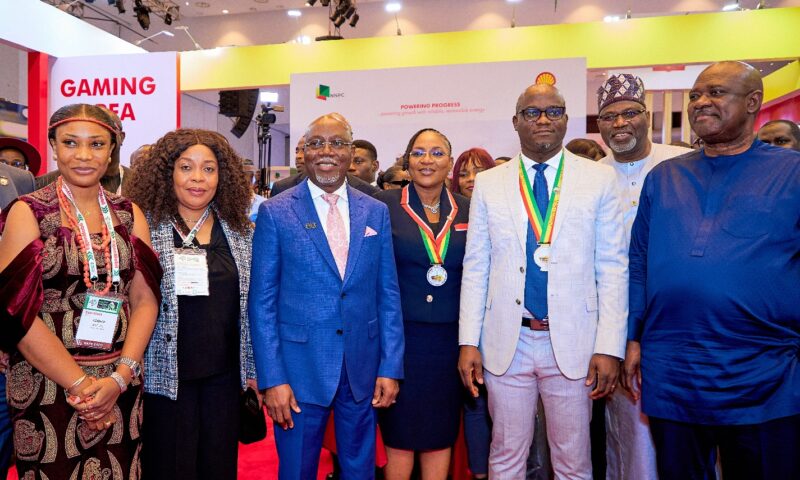
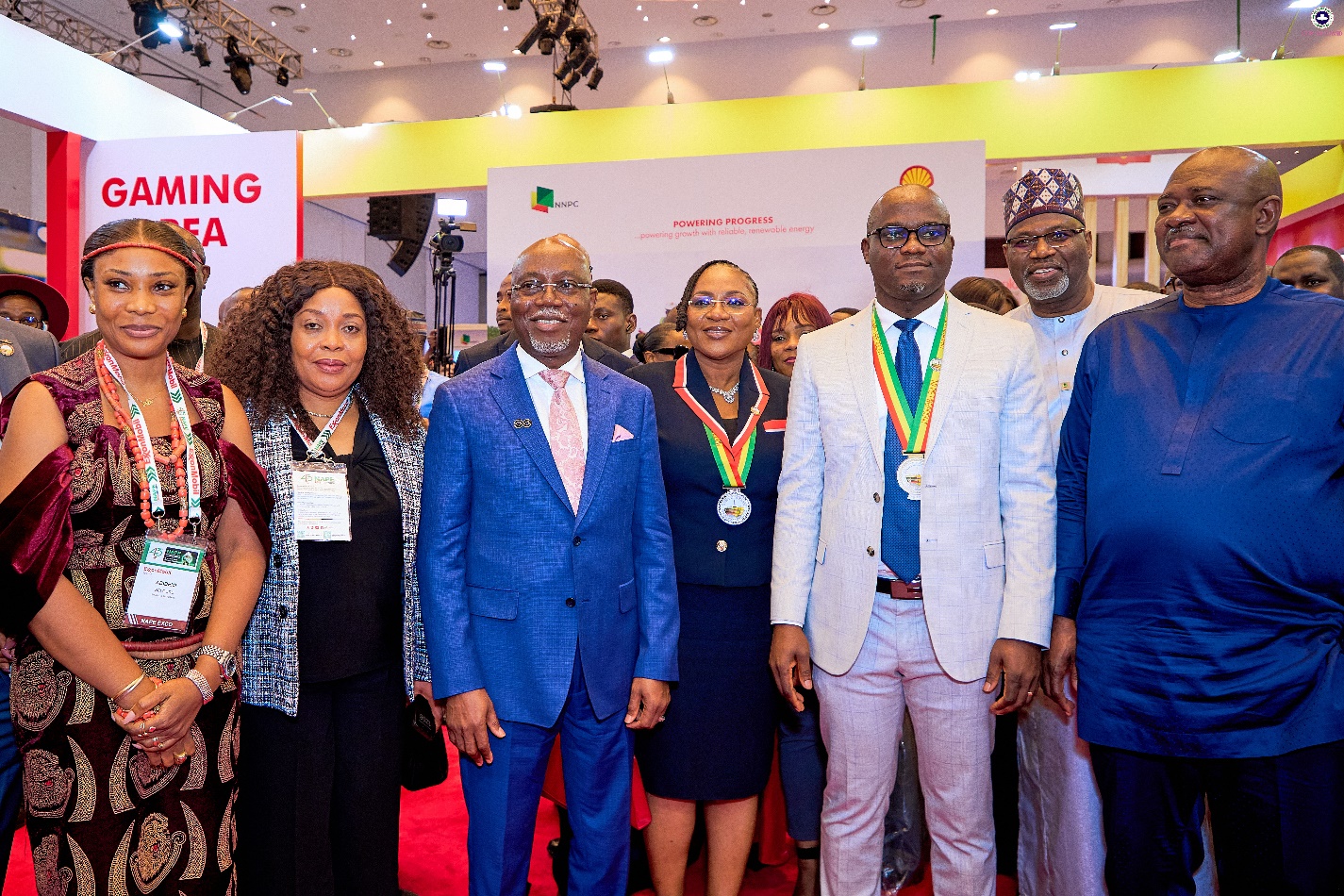
L-R: Senior Production Geologist, Shell Nigeria Exploration and Production Company Limited (SNEPCo), Abidemi Belgore; SNEPCo’s Communications Manager, Gladys Afam-Anadu; Ondo State Governor, Dr Lucky Aiyedatiwa; Incoming NAPE President , Olajumoke Ajayi ;President NAPE, Uche Johnbosco; Chairman of the Nigerian National Petroleum Company Limited (NNPC) Ahmadu Musa Kida and Minister of State for Petroleum Resources (Oil), Heineken Lokpobiri at Shell booth during at the 43rd Annual International Conference and Exhibition of the Nigeria Association of Petroleum Explorationists in Lagos.

Shell is highlighting its contributions to the Nigerian economy in an exhibition at the 2025 International Conference and Exhibition of the Nigeria Association of Petroleum Explorationists (NAPE) which began in Lagos yesterday. The 43rd NAPE conference comes as the professional body turns 50 this year, having been founded in 1975.


The theme of the conference is, “Revitalising the Nigerian Petroleum Exploration and Production Strategies for Energy Security and Sustainable Development.”


Shell, a Titanium sponsor of the event, is complimenting its support and participation with an exhibition on the full range of its businesses in Nigeria – Shell Nigeria Exploration and Production Company Ltd (SNEPCo), Shell Nigeria Gas, All On and Daystar Power Limited.


Executive Vice President Nigeria and Country Chair, Shell Companies in Nigeria, Marno de Jong commented: “Shell has powered progress in Nigeria for over 60 years through our businesses and social investments. The Final Investment Decisions on Bonga North and HI projects underscore our commitment to the development of the country. Our exhibition tells this story of progress and partnership.”


Minister of State for Petroleum Resources (Oil), Heineken Lokpobiri and Ondo State Governor, Lucky Aiyedatiwa were among dignitaries who visited the Shell stand as the exhibition got underway. Senior Production Geoscientist & Subsurface Integrator, Abidemi Belgore conducted visitors round the stand, which featured Shell’s footprints in deep-water production, domestic gas distribution and empowerment of businesses through provision of renewable energy and other power solutions.                    


“We’re pleased that our presentations have been well received by visitors,” Abidemi said.

 Prosperous Nigeria Dependent On Affordable, Reliable, Accessible Energy – Seplat

 Seplat Energy PLC, leading Nigerian independent energy Company listed on both the Nigerian Exchange and the London Stock Exchange, says in the quest to build a prosperous Nigeria, the country must target an affordable, reliable and accessible energy regime for all.

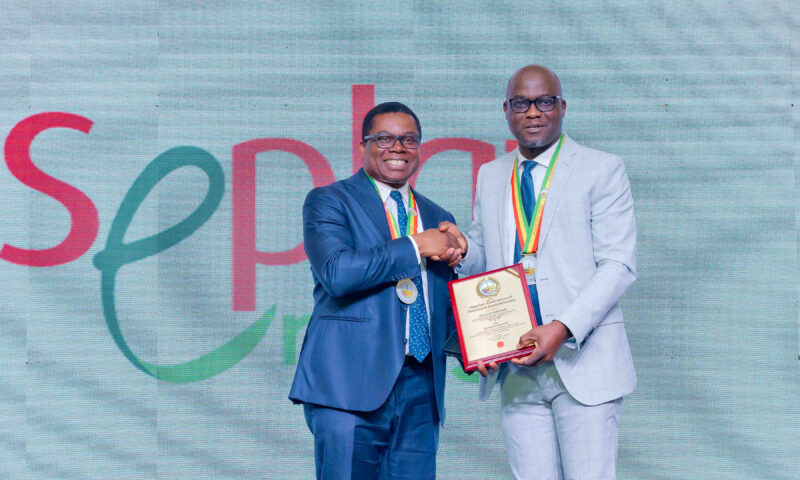
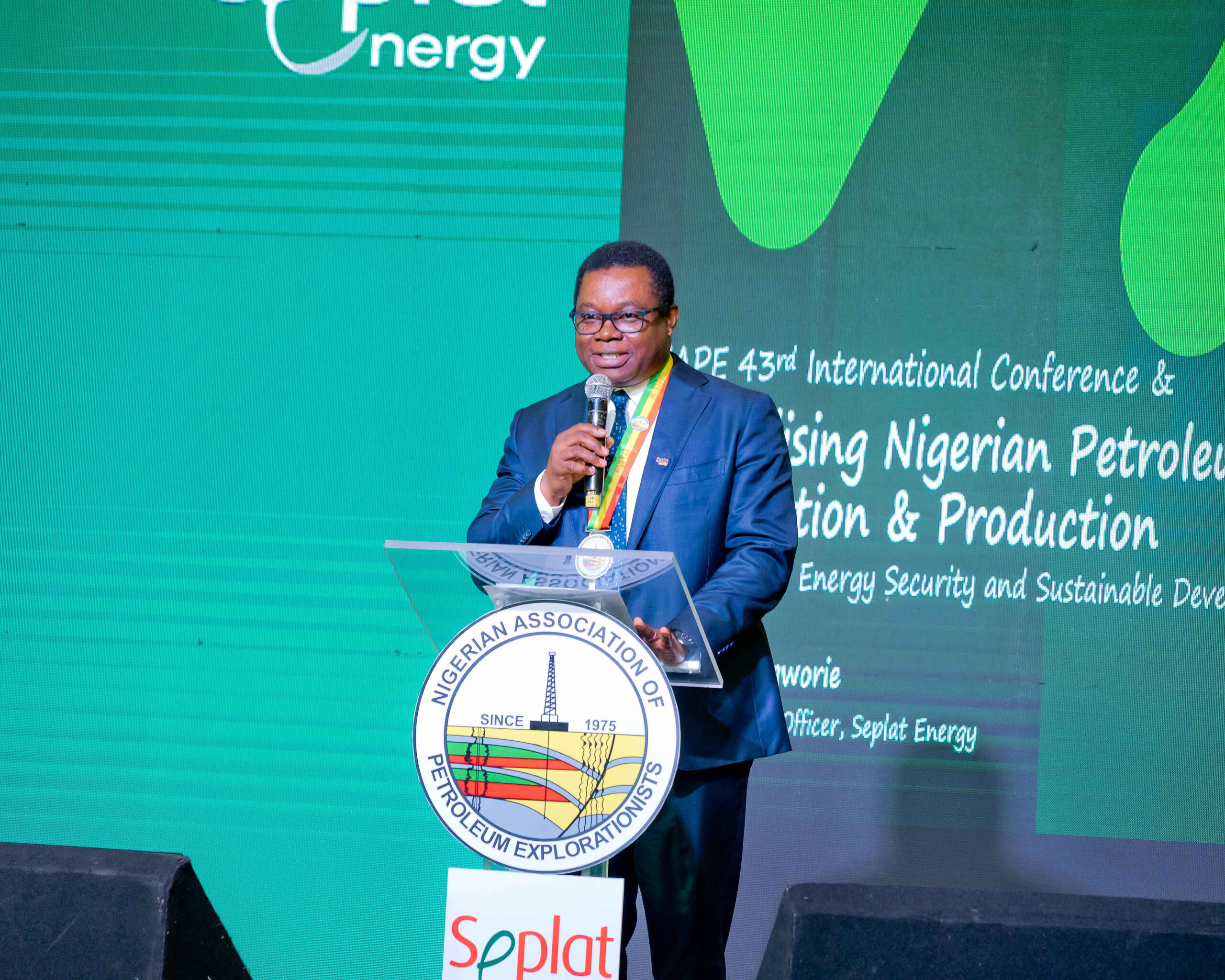
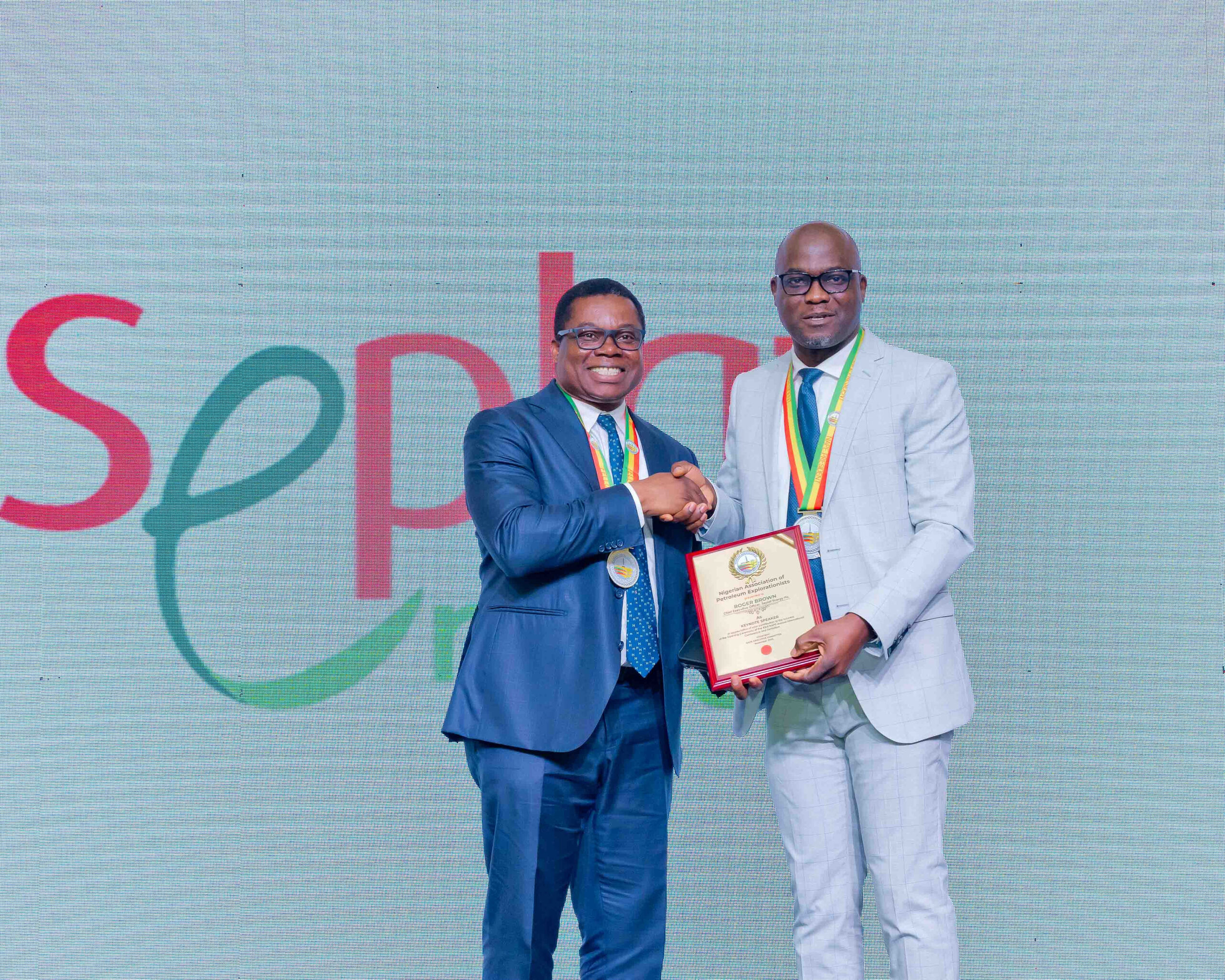
The Chief Operating Officer, Seplat Energy, Samson Ezugworie, said this whilst giving a keynote at the Opening Ceremony of the 43rd Nigerian Association of Petroleum Explorationists (NAPE) Annual International Conference & Exhibition held in Lagos.

The Seplat Energy COO, who spoke on the conference theme: ‘Revitalizing the Nigerian Petroleum Exploration and Production: Strategies for Energy Security and Sustainable Development’, stated that: “The imperative before us is clear. We must build a prosperous Nigeria, and we can only do that with affordable and reliable energy that is accessible to all,” according to a statement from the company by the Manager Corporate Communications, Stanley Opara.

Today, more than 70 million Nigerians still lack access to electricity. More than 170 million rely on biomass for cooking and that’s terrible for the environment and for our households. And with Nigeria’s population projected to reach 237 million by 2025 and 400 million by 2050, the urgency to act is undeniable, because today’s problems will become far worse if we don’t take actions now to solve them. We will have 160 million more people to feed and house, and we need to create 100 million new jobs. But imagine what Nigeria can achieve if we do?

According to Ezugworie, to meet these challenges, Nigeria must increase oil production — not just to boost national revenues and reduce current shortfall so our government can meet its budgetary needs, but also to drive GDP growth that reinforces the country’s position as the economic powerhouse of the African continent.

He said: “We must also harness our huge reserves of gas and scale up gas and NGL production to expand domestic energy access, displace polluting imported generators, provide clean cooking for our people, and power our basic industries to support our national growth.

“The global energy landscape is shifting, and so too is our own. We are witnessing a transition in the ownership and operation of Nigeria’s vast natural resources as assets pass from well-funded, well-resourced international giants to local Nigerian operators, blessed with enthusiasm and expertise but less global in their outlook.  It’s a shift that creates new capital dynamics in our need to raise international finance, while at the same time increasing our focus on managing risks and looking after our natural environment. 

“But with these challenges come opportunities: opportunities to harness and enhance local knowledge, build resilient partnerships with our industry partners, and with our host communities, and most of all, build an industry that is owned and managed by Nigerians, for Nigerians.”

At Seplat Energy, we believe the future of Nigerian production lies in three core principles our industry must adopt: Leadership, Partnership, and Stewardship, Ezugworie stressed, adding that  the principles had played out since Seplat Energy took control of its Offshore assets, following its recent acquisition. 

“We’ve worked on rehabilitating 33 wells and had success with 26, which are now producing about 33,000 barrels between them. That’s a step in the right direction to closing the current gap in production that could leave Nigeria with a shortfall in its revenues. We will continue to rehabilitate wells, which isn’t costing us much, and we’re optimistic that we can get more production to help our industry reach the production targets the government has set,” the Seplat COO informed.   

On the company’s gas business, he said Seplat Energy was close to delivering first gas from its joint venture ANOH Gas  Processing Plant, and “we’ve also recently delivered our first cargoes of LPG from the newly upgraded Sapele Gas Plant, and I’m pleased to report that we’re well on track to ending routine flaring in our onshore operations, enabling us to reduce emissions, capture gas and monetise it, which is a win-win for Seplat, for the environment and for our communities.

“Our progress on gas initiatives like ANOH, Sapele, and LPG shipments is a testament to our commitment to Nigeria’s prosperity. These projects are not just about energy; they are about transforming lives and powering Nigeria’s development.”

Polaris Bank Wins MSME Digital Bank Of The Year Award For Inclusive Growth

L-R; Ladi Ene Garba, Head, Commercial Banking, Polaris Bank; Njideka Nwabueze, Head, Retail Banking, Polaris Bank ;Abubakar Usman Bello, the Executive Director, North & Public Sector, Keystone Bank and Mathew Oji, Product Strategy, Polaris Bank at the MSME Digital Bank award ceremony in Lagos recently.

By Winifred Bosa

Polaris Bank has once again reaffirmed its leadership in digital innovation and inclusive banking, emerging as the MSME Digital Bank of the Year (Inclusive Growth) at the second edition of the MSME Finance & CEO Awards held recently in Lagos.
The event, organized by the Africa Global Economic Forum BBBin partnership with PROSHARE, recognized outstanding institutions and other notable stakeholders driving MSME development and financial inclusion across Nigeria.
The award celebrates Polaris Bank’s unwavering commitment to empowering small and medium-scale enterprises through technology-driven financial solutions, notably its flagship digital banking platform, VULTe.
In the last few years, VULTe has revolutionized how MSMEs access finance by providing seamless, self-service banking and loan solutions — a reflection of the Bank’s mission to bridge financial access gaps and foster entrepreneurship nationwide.
This latest honour comes on the heels of VULTe’s recent win as “Digital Bank of the Year” and the Best MSME support Bank for the record fifth consecutive time at the 2025 BusinessDay Banks and Other Financial Institutions (BAFI) Awards, underscoring Polaris Bank’s consistent digital excellence and customer-centric innovation.
Speaking on the award, Polaris Bank’s Managing Director/CEO, Mr. Kayode Lawal, noted that the recognition reinforces the Bank’s strategic focus on inclusive growth and digital transformation.
“We are committed to building a future where technology and innovation empower businesses and individuals, particularly MSMEs, to thrive in the digital economy,” he said.
With a growing footprint in digital banking and sustainable finance, Polaris Bank continues to demonstrate leadership in enabling access to financial services that drive entrepreneurship, job creation, and national economic growth.
Edun Reassures Investors, Pledges Balanced Capital Gains Tax Outcomes As NGX Lists MREIF

Edun reassures investors, pledges balanced Capital Gains Tax outcomes as NGX  lists MREIF - Businessday NG


Nigerian Exchange (NGX) today hosted the Minister of Finance and Coordinating Minister for the Economy, Mr. Wale Edun, at the Closing Gong Ceremony to commemorate the listing of the Ministry of Finance Incorporated (MOFI) Real Estate Investment Fund (MREIF) Series 2. The event underscored the capital market’s pivotal role in national development, particularly in addressing Nigeria’s housing deficit.


The listing took place against the backdrop of cautious trading in the equities market, as investors recalibrate portfolios in response to geopolitical tensions arising from the US–Nigeria diplomatic standoff, the proposed Capital Gains Tax (CGT), year-end portfolio rebalancing, and expectations of window-dressing by institutional players. While liquidity remains robust, analysts emphasize that aligning fiscal policy with investor expectations is critical to sustaining confidence and deepening long-term market participation.


Temi Popoola, Group Managing Director/Chief Executive Officer, NGX Group, reaffirmed the capital market’s role as a catalyst for inclusive growth and called on the Federal Government to ensure balanced outcomes in the implementation of the Capital Gains Tax. “The capital market is not only a platform for attracting investment but also a tool for creating wealth for Nigerians. Policies such as the capital gains tax must be carefully designed to balance government revenue objectives with investor confidence and market growth. NGX Group remains committed to supporting the Renewed Hope Agenda by channeling private capital into initiatives that deliver sustainable, long-term impact.”


Responding, Mr. Wale Edun assured stakeholders that the Federal Government has noted the concerns around Capital Gains Tax and remains committed to ongoing consultation with the market. “We have noted the concerns around Capital Gains Tax and will continue to engage with the capital market to ensure any decisions deliver optimal outcomes for both Nigerians and the market. At ₦100 per unit, MREIF allows ordinary Nigerians to participate in savings and investment, leveraging local resources to grow our economy, especially in the housing sector.”


The ceremony also highlighted the strength of collaboration between the Federal Government, MOFI, and the private sector in mobilising innovative financing for housing.


Ahonsi Unuigbe, Chairman, NGX, described the listing as a “defining step toward transforming Nigeria into a leading economy that ensures shared prosperity for all Nigerians.”


In his remarks, Jude Chiemeka, CEO, NGX, said MREIF demonstrates how the capital market can deliver practical solutions to national challenges: “By channeling private capital into housing, we are creating opportunities for long-term investment and wealth creation while addressing Nigeria’s housing deficit.”


Dr. Armstrong Ume Takang, Managing Director/CEO, MOFI, added: “MREIF provides long-term, low-cost mortgage financing to make homeownership a reality for millions of Nigerians, stimulating local economies across the housing value chain.”


The Closing Gong Ceremony positioned MREIF as a model for inclusive economic growth, illustrating how institutional capital can drive both financial stability and social impact. With over 1,000 mortgages already disbursed, the initiative continues to expand middle-class wealth and deepen Nigeria’s capital market.