BY BLAISE UDUNZE
In a welcome display of policy sensitivity and economic rationality, the Federal Government has suspended the planned 15 percent ad-valorem import duty on petrol and diesel. This move, announced by the Nigerian Midstream and Downstream Petroleum Regulatory Authority (NMDPRA), is more than a technical adjustment, it is a timely intervention that reflects empathy for the prevailing economic realities confronting citizens and businesses alike.
Just weeks ago, in my earlier article titled, “Tinubu’s 15% Fuel Duty: Taxing Pain in a Broken Economy,” I had argued that the proposed import duty, though designed with reformist intentions, was ill-timed and risked compounding Nigeria’s inflationary crisis. The central message was simple, which is reform must not inflict further hardship on already struggling citizens. It is therefore commendable that the Federal Government heeded that call, demonstrating a rare responsiveness to constructive public criticism. The decision to suspend the 15 percent duty shows that this administration is willing to listen, to adjust, and to prioritise the welfare of Nigerians above bureaucratic rigidity.
Nigeria’s economy is still recovering from the inflationary aftershocks of subsidy removal, exchange rate harmonization, and fiscal tightening. Against that backdrop, any additional import tariff on fuel which is the single most critical commodity in the nation’s cost structure would have triggered a cascade of price increases across transportation, food, manufacturing, and logistics. The government’s decision to halt the policy therefore represents a holistic step toward economic relief and market stability.
When the import duty was first approved in October 2025, it was presented as a forward-looking reform. The Federal Inland Revenue Service (FIRS), led by Zacch Adedeji, proposed the measure to align import costs with local refining realities and discourage importers from undercutting domestic producers. In principle, the idea had merit. It sought to strengthen local refining, promote crude oil transactions in the naira, and ensure a stable, affordable supply of petroleum products.
Yet, good intentions alone cannot override economic timing. The implementation, scheduled for late November, risked amplifying inflation at a time when Nigerians were already grappling with high transport fares, shrinking disposable incomes, and rising living costs. It would also have widened the gap between policy aspiration and market readiness, given that domestic refineries, including the Dangote Refinery and several modular plants, are still ramping up to full capacity.
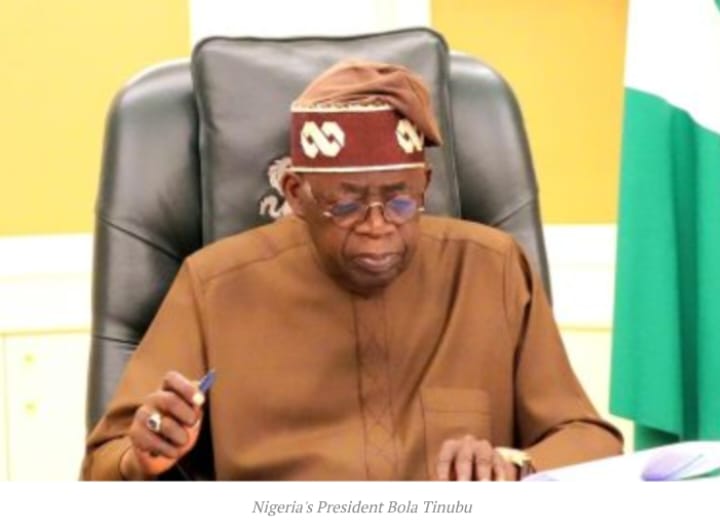
By suspending the policy, the Tinubu administration has demonstrated that economic reform is not about rigid adherence to plans but about flexibility and responsiveness to market signals. This decision not only stabilizes prices but also strengthens public confidence that government is capable of balancing fiscal goals with social welfare.
The economic logic of this suspension is straightforward that in an energy-dependent economy like Nigeria’s, any increase in fuel import cost transmits directly into inflation. Transport fares go up. Food distribution costs rise. Manufacturing inputs become more expensive. Even small scale traders in the street feel the pinch as diesel prices affect electricity alternatives. Therefore, by preventing an artificial rise in fuel prices, the government has effectively averted another wave of inflationary pressure. It has also given room for other economic stabilisers such as improved power supply, localized production, and currency management to take effect.
Moreover, the NMDPRA’s assurance of a robust domestic fuel supply underscores the government’s effort to ensure market stability while preventing hoarding or profiteering. Its commitment to monitor distribution and discourage arbitrary price increases is a critical safeguard for consumers and businesses alike.
However, while the suspension offers immediate relief, it also presents an opportunity to rethink the broader framework for achieving energy security and local refining growth. If the ultimate goal is to strengthen local refining, stabilize fuel prices, and secure energy independence, there are smarter and more inclusive alternatives than import tariffs. The government should guarantee crude oil supply to modular refineries through transparent contracts and fair pricing mechanisms. Many smaller refineries struggle not because they lack capacity, but because they face erratic access to feedstock. Ensuring predictable crude allocation will allow them to operate profitably and contribute meaningfully to domestic supply.
Instead of penalizing importers through duties, the government can offer targeted tax incentives and financing support for smaller refineries to expand capacity. Access to credit at concessionary rates and tax holidays for equipment importation would accelerate output growth, create jobs, and foster competition. Regulatory fairness is equally essential. The downstream sector must remain open and competitive. The government must ensure regulatory equity so that no single player, whether public or private, dominates the market. Fair competition, not favoritism, will drive efficiency, innovation, and lower prices for consumers.
Nigeria must also address the hidden costs embedded in its energy logistics. The government should invest heavily in energy infrastructure like pipelines, depots, and transport networks to reduce non-tariff costs that inflate fuel prices. Currently, poor infrastructure adds unnecessary layers of cost to the final pump price. Reforming the power sector remains pivotal. Many industries and small businesses rely on diesel generators due to inadequate grid supply. A more reliable electricity system would ease demand for diesel, freeing up supplies for transport and export, while improving overall energy efficiency.
The government should also adopt a transparent pricing mechanism that allows market participants and consumers to understand how fuel prices are determined. Transparency discourages manipulation, hidden subsidies, and monopolistic practices. When prices reflect actual costs, trust grows, and market discipline follows. Such reforms will not only strengthen local capacity but also build a foundation for competition, accountability, and long-term sustainability, which are the true pillars of a resilient energy economy.
As the government nurtures the growth of local refining, it must also guard against a creeping danger of monopolistic capture. Protecting Dangote’s investment as the largest single-train refinery in the world is understandable. The refinery represents national pride and an enormous private commitment to Nigeria’s industrialization. However, promoting a monopoly, even unintentionally, would undermine the very goals of competition and consumer protection. No single operator, however efficient, should control access to crude supply, dictate market prices, or influence import policy. The Petroleum Industry Act (PIA) empowers the government to create fiscal measures that promote investment, but these must be implemented with fairness, transparency, and a clear focus on public interest.
A healthy downstream sector requires multiple active players involving modular refineries, state refineries under revitalization, and independent marketers, all operating on a level playing field. The government must therefore guarantee open access to crude oil, enforce transparent pricing of both feedstock and finished products, and prevent any operator from cornering market advantage through political influence. Monopoly breeds inefficiency, stifles innovation, and ultimately hurts consumers. What Nigeria needs is a competitive ecosystem that rewards efficiency, not proximity to power. A balanced and inclusive market structure is the surest path to sustainable self-sufficiency.
Beyond economics, this policy reversal underscores a deeper truth showing that reform must be humane. Citizens are not fiscal instruments but human beings whose welfare defines the legitimacy of policy. The suspension of the 15 percent import duty shows that the government can still listen, learn, and adapt, which is a welcome shift from the top-down approach that has often characterized Nigerian policymaking. But this responsiveness must become institutionalized. Policymaking should be driven by data and dialogue, not decrees. Stakeholders from refinery operators to transport unions and consumer groups must be part of the conversation before policies take effect. Reform, to succeed, must be sequenced with empathy, not arrogance.
Economic transformation is not measured merely by revenue gains or fiscal alignment, but by how it improves the quality of life of ordinary citizens. A humane reform process ensures that no policy, however noble, becomes a burden too heavy for its people to bear. The reversal of the 15 percent import duty on petrol and diesel is more than a temporary reprieve; it is a course correction toward sustainable and inclusive growth. It demonstrates that reform, when guided by compassion and common sense, can build confidence rather than resentment.
But government must go further to institutionalize competition, prevent monopolistic dominance, and pursue energy self-sufficiency without sacrificing fairness. Only by balancing protection with competition, efficiency with empathy, and ambition with accountability can Nigeria achieve the promise of the “Renewed Hope” Agenda. If this new direction is sustained, the suspension will not merely be remembered as a fiscal decision but as a moment when government rediscovered its moral compass, proving that in economic policy, the best outcomes are those that serve both the market and the people.



 By Winifred Bosa

 The Minister of State for Health, Iziaq Salako, says Nigeria is not yet capable of producing vaccines locally.



 LarryBravo Nwaiwu