

CBN Advert
WES 2025: BOI Urges Broad Coalition Of Players To Boost Nigeria’s Productivity

 *** As Nigeria continues to face deep productivity constraints that weaken economic competitiveness, limit job creation, affect welfare of millions
 
By Winifred Bosa
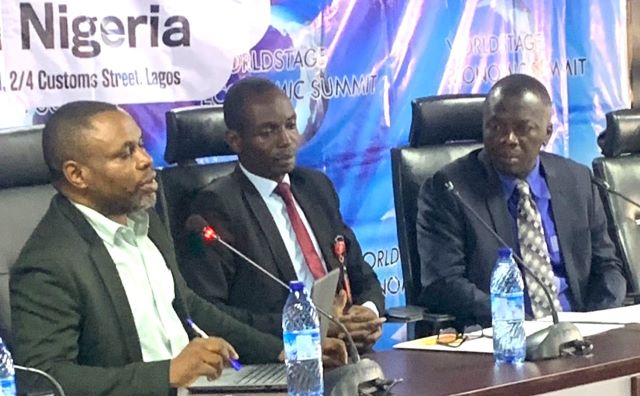
L-R: Dr Abidemi Cornelius Adegboye, Department of Economics, University of Lagos; Mr Adeniran Adebayo, Chief Superintendent of EFCC representing Mr. Olanipekun Olukoyede, Executive Chairman, Economic and Financial Crimes Commission (EFCC); and Mr Segun Adeleye, President/CEO, World Stage Limited at WorldStage Economic Summit 2025 at the Event Centre, Nigeria Exchange Limited, Lagos on November 21, 2025.
 The Managing Director/Chief Executive Officer of the Bank of Industry, Dr. Olasupo Olusi has advocated a multiple players alignment for Nigeria to overcome low productivity.
Speaking  at the 2025 WorldStage Economic Summit (WES), the BOI boss represented by Lanre Babalola, Group Head, Climate Finance and Sustainability, Bank of Industry said this year’s theme of WES 2025 -Tackling the Issue of Low Productivity in Nigeria—is both relevant and urgent.
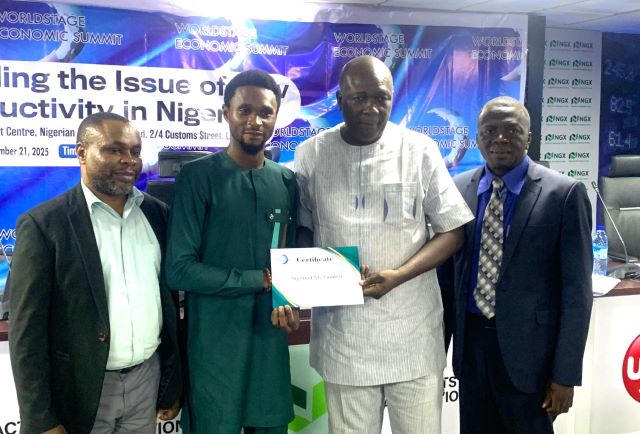
Mr Wilson Okoro of the Corporate Communications department, NLNG receiving WES 2025 Award for NLNG from Mr Dotun Ladipo, Publisher of The Eagle Online
Recognising that BOI cannot act alone, he said the country needed infrastructure that supports industry, policies that reduce bottlenecks, universities that produce industry-ready talent, and private sector collaboration that accelerates innovation.
“No single institution—not even BOI—can solve this independently. But together, we can create an ecosystem where every Nigerian business has a fair chance to thrive,” he said.
“That is why gatherings like this summit are critical. They enable us to step back, reflect on the root causes of our productivity challenges, and design solutions anchored in data, collaboration, and practical experience. Today is an opportunity for us to ask the tough questions: How do we move from exporting raw materials to producing high-value products? How do we strengthen supply chains and reduce leakages? How do we modernize our MSMEs, the backbone of our economy? How do we build a workforce equipped for the demands of a modern, innovation-driven world?”
As he encouraged bold and collaborative thinking, he said “Nigeria’s story is one of resilience, creativity, and immense potential. Our people are not afraid of hard work. What they need is the enabling environment to convert that hard work into prosperity.
“At the Bank of Industry, we remain committed to being a strong and reliable partner in this journey. We are ready to innovate, to collaborate, and to continue investing in enterprises that can transform our economy from one of consumption to one of production.
“Productivity is the engine that powers national prosperity. It is what transforms effort into outcomes, ideas into industries, and talent into tangible progress.”
He said at the Bank of Industry, the conversation is not abstract as every day they interfaced with the real faces behind Nigeria’s productivity challenge.
“We see the factory owner who can only run one shift instead of three because of power issues. We see the agro-processor who cannot expand because they lack modern equipment. We see the small business with incredible demand but inadequate working capital.
 We see young Nigerians with brilliant ideas but limited access to skills, mentorship, or finance,” he said.
“These are not just statistics; these are the people we serve. And that is why, for us at BOI, improving productivity is a mission, not a metric. It is at the heart of why we exist.”
He spoke about the mandate of BoI to catalyze domestic production, create jobs, and enhance industrial competitiveness being fundamentally about unlocking productivity across sectors.
“Whether through long-term financing, structured working capital, credit guarantees, cluster support, or technology adoption, our goal is consistent: to help Nigerian enterprises work better, produce more, and compete smarter,” he said.
“Over the years, we have seen the transformative impact that targeted financing can have when it is combined with technical support and an enabling environment. We have supported manufacturers who now export, agro-processors who have doubled capacity, local brands that have replaced imports, and MSMEs who have grown from micro-level operations into structured businesses employing dozens. These successes affirm that Nigerians are not unproductive; they are simply under-enabled.
“This is why BOI continues to strengthen our interventions along key thematic areas—Climate & Sustainability, Youth & Skills, Digital Economy, MSMEs, Infrastructure, and Gender.”
He listed the positive impacts  of the themes as lever for productivity in form of ; When we promote renewable energy solutions, we reduce operating costs and strengthen industrial uptime; When we invest in technology and digital capabilities, we improve efficiency and unlock new business models; When we empower youth with skills, we create a workforce that can compete in the industries of the future; When we support women-led businesses, we expand national output and tap into an underutilized segment of the economy.
The Bank of Industry therefore advised that the WES’  convening should be used as a turning point—a moment “where we move from diagnosing the problem to scaling the solutions. The time for productivity-led growth is now, and BOI stands ready to support it every step of the way.”
He commended the organisers for sustaining this important platform for dialogue and policy reflection—one that continues to gather some of the brightest minds in business, government, academia, and development.
Other speakers at the summit held at the Nigerian Exchange, Lagos include Mr. Olanipekun Olukoyede, Executive Chairman, Economic and Financial Crimes Commission (EFCC) and Dr Abidemi Adegboye, Ph.D (Economics), Lecturer at University of Lagos.
Antimicrobial Resistance: NAFDAC Seeks Joint Efforts To Curb Threat

By Winifred Bosa
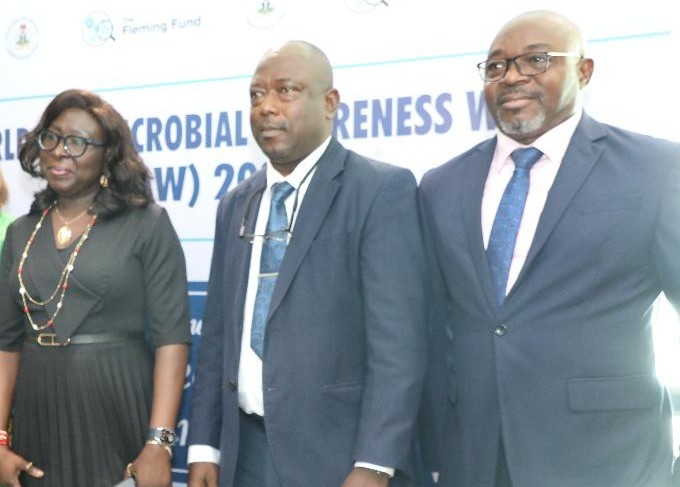
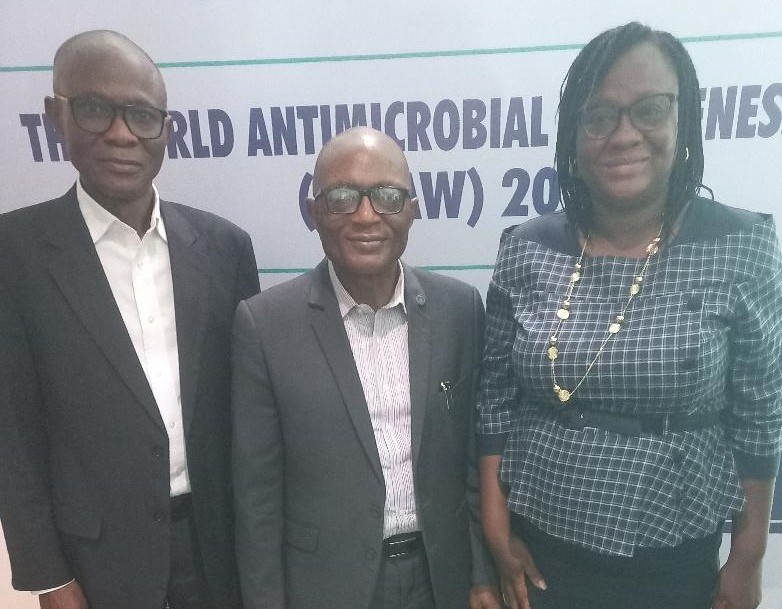
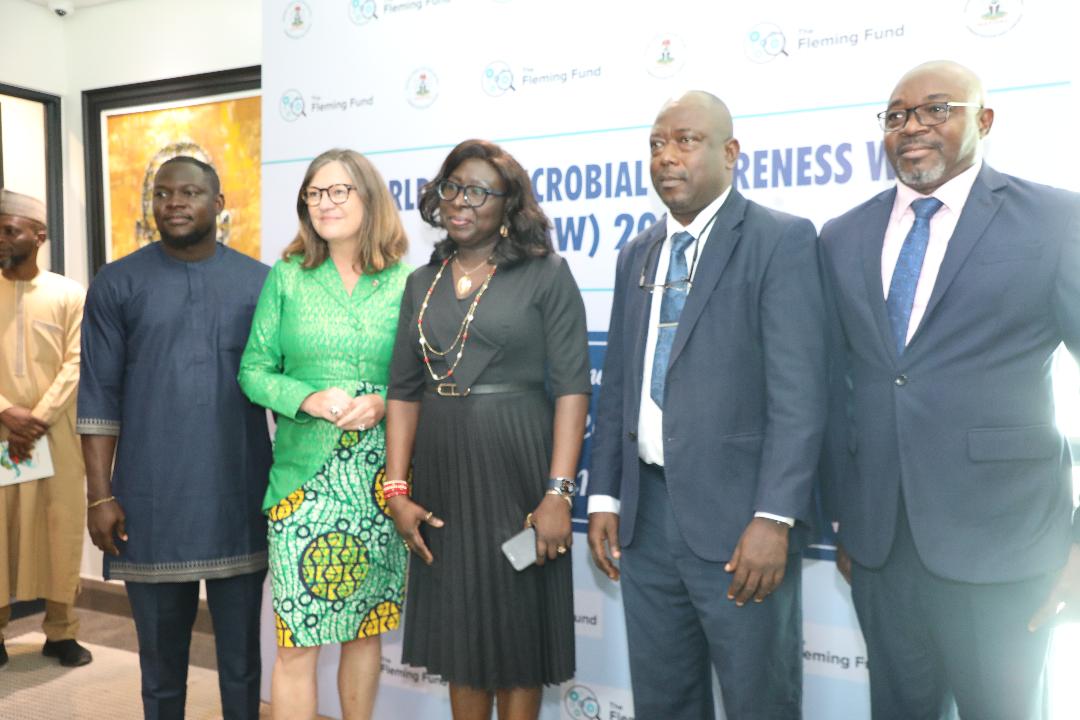
Director, Veterinary Medicine and Applied Products (VMAP) NAFDAC, Mrs. Adeoye Stephanie Temitayo, Deputy Director (i/c) Lagos Office, NAFDAC, Dr. Sigbeku Tunde and Dr. Bayor Adebola Ajayi, Snr.Manager Regulatory Affairs and Compliance, Zartech Limited. at the 2025 World Antimicrobial Awareness Week in Lagos recently. 
The Director General of National Agency for Food and Drug Administration and Control NAFDAC, Prof. Mojisola Adeyeye has called for collaborative effort by critical stakeholders in the fight against Antimicrobial Resistance in the Nigeria medical ecosystem.
While antimicrobials remain indispensable tools for treating infections, Prof. Adeyeye noted that their misuse and overuse have accelerated the rise of resistancecompromising our ability to treat even common diseases.
According to a press release by Sayo Akintola
Resident Media Consultant, NAFDAC, Prof Adeyeye who was represented by her Special Assistant, Dr Gbenga Fajemirokun at the 2025 World Antimicrobial Awareness Week (WAAW) commemoration in Lagos avowed that the health of humans, animals, and our environment is inseparably linked, adding that stakeholders should reaffirm their collective commitment to addressing one of the most urgent and silent public health threats of our timeAntimicrobial Resistance (AMR).
Director, Drug Evaluation and Research (DER) NAFDAC, Mr. Amuda Kayode Isiaka, Special Assistant to the DG-NAFAC, Dr. Gbenga Fajmirokun and another attendee at the 2025 World Antimicrobial Awareness Week in Lagos recently. 
She pointed out that the theme for this year, Act Now: Protect Our Present, Secure Our Future, is a powerful call to action, adding that it reminds us that the fight against AMR extends beyond hospitals and pharmacies; it also begins on our farms, in our veterinary clinics, and across our food production systems.
The choices we make todayboth in human and animal healthwill determine the health security of our nation for generations to come.’
In human health, the NAFDAC boss warned that AMR leads to treatment failures, prolonged illness, higher mortality rates, and increased risks during medical procedures.
In animal health and agriculture, she maintained that the indiscriminate use of antimicrobials for growth promotion, routine disease prevention, or unregulated application in aquaculture and crop farming has created a breeding ground for resistant pathogens.
According to the DG, these resistant bacteria can spread to humans through the food we consume, water sources, and direct contact with animals.
 ‘In effect, resistance anywhere is a threat everywhere.’
To protect our shared future, Prof Adeyeye said we must Act Nowby promoting sustainable agricultural practices, enforcing biosecurity, and encouraging good animal husbandry and responsible antimicrobial use.
As Nigerias regulatory authority for food, human and animal drugs, and allied products, she emphasised the pivotal role that NAFDAC plays in safeguarding public health, adding that the Agencys strategy to combat AMR is rooted in the One Health approach and implemented through a comprehensive, multi-sectoral framework.
She highlighted the four key priorities that guide the NAFDACs effort in combatting AMR which include strengthening regulation and surveillance, antibiotic stewardship in the community and hospitals, promoting rational use in animal care, engaging the agricultural value chain and public and professional enlightenment.
The NAFDC DG disclosed that the Agency is intensifying oversight of both human and veterinary antimicrobials, adding that this includes curbing the circulation of substandard and falsified veterinary drugs, enforcing compliance with quality standards, and strengthening pharmacovigilance and post-marketing surveillance systems.
She said NAFDAC is committed to ensuring that antimicrobials for animals are used strictly under veterinary supervision, only for treatmentnot for growth promotion or as a substitute for good farm practices.
 ‘We are working closely with the Federal Ministry of Livestock Development and the veterinary community to promote safer alternatives and ensure best practices.’
Prof Adeyeye further stated that NAFDAC is actively partnering with farmers, feed producers, veterinarians, and industry stakeholders to raise awareness and promote alternatives, such as vaccines, biosecurity measures, and improved farm management practices, noting that we are also regulating the use of antimicrobials in medicated feeds to prevent non-therapeutic use.’
Through nationwide campaigns, she said we are educating the public, farmers, and professionals alike. ‘Our message is simple: Responsible antimicrobial use is everyones responsibility. Protecting animals means protecting peopleand preserving the power of antimicrobials for the future.’
She urged healthcare professionals and veterinarians whom she described as the frontline defenders of public health to use antimicrobials judiciously and always under evidence-based guidance.
She however, urged the farmers and livestock producers to adopt good animal husbandry, hygiene, and vaccination practices to reduce the need for antibiotics.
She also admonished pharmacists to dispense antimicrobials only with valid prescriptions and educate consumers on responsible use.
To every Nigerian, she said; avoid self-medication, seek professional care, and demand responsibly produced food as she also urged media to continue to amplify awareness. ‘The story of AMR is one that must be toldclearly, urgently, and repeatedly.’
Prof Adeyeye envisions a Nigeria where infections in humans and animals remain treatable, our food chain is safe, and modern medicine continues to save livesis one we must build together.
 ‘That future is not assured; it must be earned through coordinated action and sustained vigilance.’
The NAFDAC boss reiterated that the fight against AMR will be won or lost based on our collective and coordinated efforts across the humananimalenvironment interface, adding that NAFDAC remains fully committed to playing its regulatory and leadership role with integrity, diligence, and innovation.
‘Let this years WAAW mark a renewed commitment to unity, collaboration, and sustained action. Together, let us Act Nowto protect our present and secure a healthier, safer, and more prosperous Nigeria.
Speaking in same vein, Director of the Veterinary Medicine and Allied Products Directorate of NAFDAC, Mrs. Temitayo Stephanie Adeoye noted with dismay that Antimicrobial Resistance (AMR) threatens the very foundation of modern medicine and food security.
 She maintained that the overuse and misuse of antimicrobials in both human and animal health sectors, and the release of drug residues into the environment, have accelerated the emergence of resistant pathogens.
If not urgently addressed, she warned that the country risks returning to a time when minor infections could once again become fatal.
‘Our call to Act Now is a call to strengthen surveillance systems, enforce responsible antimicrobial use, and ensure the availability of safe, quality medicines through robust regulatory oversight, she said.
At NAFDAC, she further stated that through the Veterinary Medicine and Allied Products Directorate (VMAP) and other Directorates in the Agency ‘we continue to ensure that all medicinal products circulating within Nigeria are safe, effective, and of assured quality, adding that our team is leading inter-agency collaborations on AMR surveillance in the veterinary sector, promoting rational antimicrobial use, and integrating stewardship principles across the livestock and aquaculture value chains.
The Directorate also collaborates with partners under the One Health platform to harmonize data, enhance AMU/AMC reporting, and enhance laboratory capacities for AMR testing, ensuring that our interventions are science-based, traceable, and impactful.’