CBN Advert
SEC Tasks Market Operators On Sustained Compliance Culture After Nigeria’s Exit From FATF Grey List

The Director General of the Securities and Exchange Commission (SEC), Dr. Emomotimi Agama, has urged financial sector stakeholders to strengthen and sustain a culture of proactive compliance to safeguard Nigeria’s position in the global financial system following its recent exit from the Financial Action Task Force (FATF) Grey List.
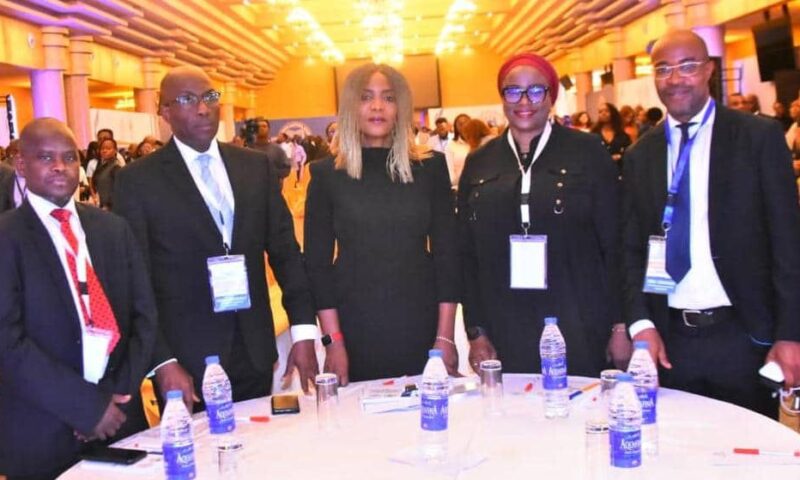
Speaking at the Nigerian Capital Market Institute Compliance Summit on Monday, Agama described the gathering as crucial to the future of the country’s financial markets, noting that discussions at the summit touch “the very heart of the market’s integrity, stability and future.”
Agama said Nigeria’s removal from the FATF Grey List was a major national achievement and a strong global endorsement of the country’s resolve to strengthen its Anti-Money Laundering and Counter-Financing of Terrorism (AML/CFT) framework.
He said: “This was not a mere administrative update; it was a resounding global affirmation of our collective and unwavering commitment”.
Crediting the success to the joint efforts of public and private sector institutions, he commended operators, regulators and compliance professionals for their roles in achieving the milestone.
The SEC boss, however, cautioned that the exit should not be seen as the end of the journey.
“Exiting the grey list is not the finish line; it is the starting block for a new race. The world is watching,” he said.
Agama stressed that international investors and global financial institutions will continue to monitor Nigeria to determine whether the reforms are sustainable and whether the country’s compliance culture is deeply entrenched.
He said the theme of the summit underscored the need to shift from compliance driven by external pressure to a more strategic, proactive and permanent culture of adherence to global standards.
“Robust compliance is no longer a regulatory burden; it is our single most powerful competitive advantage. A compliant market is a transparent market, and a trustworthy market is the destination for capital.”
According to him, Nigeria’s strengthened compliance regime signals to the international community that the country is “open for business, safe, secure and sophisticated.”
Agama called for continuous improvement across institutions, especially through the adoption of RegTech and SupTech solutions, regular training of compliance officers, and promotion of ethical conduct across the financial services ecosystem.
He assured stakeholders that the SEC would continue to provide strong regulatory guidance, constructive supervision and the necessary engagement to keep Nigeria aligned with global standards.
The SEC DG urged participants at the summit to share insights and develop practical solutions that will “future-proof” the Nigerian capital market.
“Let us work together to ensure that Nigeria never again finds itself on that list,” Agama said, expressing hope that the country would instead feature among the world’s most resilient and compliant emerging markets.
In her remarks, Executive Commissioenr Legal and Enforcment at the SEC, Ms. Frana Chukwuogor said the capital market has a new law that was signed by the President in 2025 saying that one of the greatest challenges that compliance officers and even market operators face, when there’s a change in regulation is that they don’t have enough information on what has changed.
She said “How can you be compliant if you don’t know what has changed? So our focus here today is to bring the attention, call the attention to some of the new issues, some of the new areas that may pose risks to them and the market.
Ms. Chukwuogor said Some of those issues will deal with some of the threats being faced with Ponzi schemes and digital assets.
“All of you remember that this October, this just past October, we were removed from the gray list. So, yes, we want every participant, every capital market operator, especially the CEOs, to first know, to compel the people who work with them, especially the compliance officers, to learn the new issues that the Investment and Securities Act 2025 requires of them.
The Executive Commisisoner disclosed that the Commission intends to measure compliance by ensuring that operators file returns adding that failure to do so could result in sanctions.


ASTUC Celebrates Star Role Models In Anambra Communities 

By Chikaodi Chukwuleta
President General of Anambra State Town Union Council( ASTUC), Ken  Okoli, has lauded the fourth pillar of the Solution Agenda,  governance and value system, which has uplifted Anambra communities.
He made the statement  during the celebration of three Mega Star Role Models from the 179 communities in the state,  held at the ASTUC Secretariat, Old Government House, Awka.
He said that Governor Soludo’s vision for Anambra’s value system aimed to revive the old ways of doing things, focusing on core values that will guide the Anambra  project.
He maintained that these values, which he identified as articles of faith, including fear of God, patriotism, self reliance, discipline, truth, liberty, justice, dignity of labour, religious and ethnic alliance, and love, among others,  aren’t tied to Soludo’s  tenure, but are meant to be Anambra’s enduring  principle as the Light of the Nation.
 “The annual recognition of role models puts human faces to these values, inspiring  youths and reinforcing  accountability,” he said.
He highlighted the role models’ impact in Amanuke community, where the role model bought a bike for the town’s youth leader, showing active participation and grassroots progress.
He added that generations come and pass, but value system remains, adding that Anambra’s strength lies in core values.
Okoli said the leadership aimed to solve Nigeria’s  broader leadership  challenges through these values, adding that only U.K ( 1709) and USA ( 1776), have enshrined  core values as national  foundations.
 He observed that Anambra aspires to lead Nigeria this way, adding that Governor Soludo’s renewed mandate till March 2026, aligns with this vision, focusing on values-driven leadership.
He stated that Soludo’s second term will continue to empower youths and inclusive governance.
Regarding the voter turnout report by the ASTUC Youth team, which was described as a roadmap for progress, the ASTUC President said that the APGA election saw varying levels of voter engagements across wards, adding that that the team focused on three critical metrics – registered voters, accredited voters and actual votes cast.
“APGA’ s 65% turnout sends a message that when voters are mobilised, they turn out. Using accredited voter data offers a blueprint for data driven campaign and governance. We are not just reporting  numbers, we are empowering Anambra democracy. The future of election is not who shows up, and they know exactly where to focus,” he concluded.
Soludo’s Governance And Value System Agenda Inspires Anambra Youths –  ASTUC President 

By Chikaodi Chukwuleta
President General of Anambra State Town Union Council( ASTUC), Ken  Okoli, has lauded the fourth pillar of the Solution Agenda,  governance and value system, which has uplifted Anambra communities.
He made the statement  during the celebration of three Mega Star Role Models from the 179 communities in the state,  held at the ASTUC Secretariat, Old Government House, Awka.
He said that Governor Soludo’s vision for Anambra’s value system aimed to revive the old ways of doing things, focusing on core values that will guide the Anambra  project.
He maintained that these values, which he identified as articles of faith, including fear of God, patriotism, self reliance, discipline, truth, liberty, justice, dignity of labour, religious and ethnic alliance, and love, among others,  aren’t tied to Soludo’s  tenure, but are meant to be Anambra’s enduring  principle as the Light of the Nation.
 “The annual recognition of role models puts human faces to these values, inspiring  youths and reinforcing  accountability,” he said.
He highlighted the role models’ impact in Amanuke community, where the role model bought a bike for the town’s youth leader, showing active participation and grassroots progress.
He added that generations come and pass, but value system remains, adding that Anambra’s strength lies in core values.
Okoli said the leadership aimed to solve Nigeria’s  broader leadership  challenges through these values, adding that only U.K ( 1709) and USA ( 1776), have enshrined  core values as national  foundations.
 He observed that Anambra aspires to lead Nigeria this way, adding that Governor Soludo’s renewed mandate till March 2026, aligns with this vision, focusing on values-driven leadership.
He stated that Soludo’s second term will continue to empower youths and inclusive governance.
Central Bank Reports Exchange Rate Stability As External Reserves Exceed $46 Billion

CBN Reports Exchange Rate Stability As External Reserves Exceed $46 Billion  - Oriental News NigeriaThe Central Bank of Nigeria (CBN) has promised to broaden monetary tightening measures as part of overall economic stimulus to ensure stability in Nigeria’s economy. The Bank said its guided policy measures has resulted in inflation decline to 16.05 per cent, while the exchange rate has stabilised below ₦1,500/$ with minimal volatility, and external reserves now exceed $46 billion, providing over 10 months of import cover. Monetary policy adjustments are supporting lower lending rates as inflation continues to ease, the Bank reported. The the Deputy Governor, of the Bank, Ms. Emem Usoro, in address at the Seminar for Finance Correspondents and Business Editors, which opened in Lagos on November 20–21, 2025, recalled that when the Governor, Olayemi Cardoso management team assumed office two years ago, the macroeconomic environment was challenging.

Inflation was high, the naira was unstable due to forex scarcity, external reserves and oil receipts were low, and the economy faced significant FX backlogs and dependence on ways and means financing. These conditions stressed the financial system and highlighted the urgent need for reforms.

Represented by Mrs Hakama Sidi Ali, Ag. Director, Corporate Communications Department CBN, Usoro, said the theme of the engagement, “Aligning Monetary and Fiscal Policies Towards Achieving a Robust Financial System,” is timely, as it provides an opportunity for open discussions and recommendations that will enhance understanding of current government reforms and the collaboration needed to ensure positive outcomes for Nigerians.

She said the Apex Bank, guided by strong and transparent leadership, has implemented well-sequenced and compliance-driven measures, including orthodox monetary policies, strengthened corporate governance, and the ongoing bank recapitalisation programme. These actions, aligned with the Federal Government’s reform agenda, have helped restore stability and improve key macroeconomic indicators.

These achievements reflect the commitment of the Central Bank of Nigeria under the leadership of Governor Olayemi Cardoso and his team, and underscores the importance of the media in communicating the benefits and progress of reforms to the public. Effective communication strengthens public understanding and supports successful policy outcomes.

While progress has been made, more work is required to improve macroeconomic fundamentals and the standard of living for Nigerians.

This makes partnerships among policymakers, regulators, and the media even more important, she added.

How Insecurity Is Bleeding Nigeria About $15bn Annually And Destroying Its Economic Future

BY BLAISE UDUNZE


Nigeria is undergoing one of the stormiest periods in the history of its post-independence. This is not because of global oil shock, recession, or political instability; it is because of a far prevalent and devastating threat of the incessant insecurity. These once emanated as isolated insurgent attacks have now evolved into a nationwide web of terrorism, banditry, mass abductions, militancy, separatist violence, and organized crime. The repeated attacks across the North-East, North-West, North-Central, and increasingly the South have created an environment where fear, uncertainty, and instability have become the daily reality for millions of Nigerians.


But beyond the tragic loss of lives and communities torn apart, insecurity is quietly becoming Nigeria’s most devastating economic burden. It is the silent dagger cutting into the country’s gross domestic product (GDP), sabotaging investments, crippling agriculture, eroding human capital, and dragging millions deeper into poverty.


Recent events illustrate the depth of the crisis. In one of the most alarming incidents in Nigeria’s history, 315 students and staff were abducted from St. Mary’s Catholic School in Papiri, Niger State and a figure surpassing the infamous 2014 Chibok kidnapping. The Christian Association of Nigeria confirmed that 303 students and 12 teachers were taken after a verification exercise, making it one of the worst mass abductions the country has ever witnessed.


Parents wept openly on camera. A distressed woman told the BBC that her nieces, aged six and 13, were among the abducted: “I just want them to come home.” All schools in Niger State were ordered to close afterward as a move that, while necessary for safety, further chokes already strained educational access.


This tragedy was not isolated. It was the third mass abduction in a single week. In Kebbi State, over 20 schoolgirls were kidnapped days earlier. A church attack in Kwara State left two dead and 38 abducted. The rapid succession of attacks forced President Bola Tinubu to cancel foreign trips, underscoring the gravity of the situation. These incidents reveal a terrifying truth that insecurity has become a pervasive national emergency, one that carries enormous economic, financial, human, and socio-economic costs.


Agriculture, which accounts for more than 25 percent of Nigeria’s GDP and employs over 60 percent of the workforce, is one of the worst-hit sectors. Across the North-West and North-Central, Nigeria’s food-producing zones, its farmers live in fear. Bandits ambush farmlands, burn crops, extort communities, and abduct farmers for ransom. Recent estimates suggest that over 200,000 farmers and rural inhabitants have been displaced, abandoning vast hectares of arable land. The Northern Governors Forum admits that up to 60 percent of farmlands in key agricultural states have either been abandoned or severely underutilized due to unrelenting attacks.


The consequences are severe, resulting in reduced food production, escalating food prices, declining rural income, worsened inflation, and deepening threats to national food security. Nigeria now faces the possibility of a major food crisis by 2026, as farmers in Niger, Nasarawa, Kaduna, and Kogi warn that high insecurity, rising input costs, and massive post-harvest losses are driving them away from agriculture entirely. The United Nations Food and Agriculture Organization (FAO) warned that about 34.7 million Nigerians could face severe food insecurity during the next lean season (June to August 2026) if timely and coordinated interventions are not implemented.

A Niger State rice farmer, Ibrahim Abdullahi, lamented: “The cost of fertiliser, pesticides, and fuel has tripled. Most of us are running into debt. If this continues, many will leave farming completely.” If farmers retreat en masse, hunger will deepen and Nigeria’s dependence on food imports will worsen.


Kidnapping for ransom has also evolved into one of Nigeria’s most lucrative criminal enterprises. SBM Intelligence reports that kidnapping has grown into a self-sustaining industry, no longer merely a symptom of weak security but a thriving criminal ecosystem. In the first half of 2021 alone, 2,371 people were kidnapped, an average of 13 per day. By 2024, the numbers had surged, with hundreds of kidnappings recorded within months. Ransoms worth billions of naira change hands monthly. These payouts drain household savings, wipe out small business capital, push families into debt, and funnel enormous sums into criminal networks that reinvest the proceeds in more sophisticated weaponry.


The wider economic effect is crippling. Families sell properties and liquidate businesses to rescue loved ones. Schooling, commerce, and inter-state travel are disrupted. Regional trade routes deteriorate. Investors, both local and foreign, flee high-risk zones. Entire communities slip deeper into poverty. Insecurity has dismantled the confidence required for investment, expansion, and long-term planning.


Business confidence in Nigeria has fallen sharply as insecurity spreads. Large corporations, manufacturing firms, logistics companies, agribusinesses, and multinationals now operate in fear. Many are either scaling down or completely exiting Nigeria. Factories operate on skeletal staff; supply chains are strained; transportation costs skyrocket; and insurance premiums become prohibitive.

Foreign Direct Investment has steadily declined over the past decade, while Nigerian investors increasingly relocate capital abroad. No investor thrives in fear, and no economy thrives without investment.


The human cost is even more devastating. Millions have been displaced, forcing entire communities to flee their homes, farms, and businesses. Displaced populations lose their homes, farms, schools, livelihoods, and community networks. Their absence from productive work reduces national output, shrinks tax revenue, and overwhelms urban centres already battling unemployment, rising crime, and overstressed public services. The theoretical perspective by Stewart (2004), which argues that insecurity destroys productive capacity by killing workers, damaging infrastructure, and displacing populations, finds painful validation in Nigeria’s current reality.


Nigeria’s insecurity is multidimensional and regionally distinct. In the North-East, Boko Haram and ISWAP continue to operate, exploiting porous borders and challenging state authority. In the North-West and North-Central, banditry and mass kidnapping have become entrenched. In the South-East, separatist-linked violence and illegal sit-at-home orders shut down economic activity weekly. In the South-South, oil theft, pipeline vandalism, and militancy drain billions in oil revenue. In the South-West, urban crime, ritual killings, and gang violence create pockets of insecurity that hinder business operations. Each zone suffers differently, but collectively, the threats cost Nigeria billions of dollars annually, hinder trade, restrict mobility, and erode state authority.


The financial implications of insecurity are staggering, far greater than many realize. Conservative estimates from security trackers, development agencies, and fiscal analysts indicate that Nigeria loses approximately $15 billion (N20 trillion) annually due to insecurity-induced disruptions in agriculture, trade, manufacturing, transportation, and extractive industries. These losses weaken GDP growth and deepen the country’s fiscal strain.


Meanwhile, Nigeria’s security spending has ballooned. Defence and security now consume between 20 and 25 percent of the federal budget annually. More than N4 trillion has been spent on security in the past three years alone, excluding off-budget defence allocations, special interventions, and state-level spending. The opportunity cost is devastating: every naira spent fighting endless waves of violence is a naira not spent on education, healthcare, infrastructure, power, water systems, or technological advancement. Insecurity is not just costing Nigeria money; it is robbing the nation of future development.


This prevalent violence deepens poverty and inequality. Businesses shut down, schools close, markets collapse, food becomes scarce, jobs disappear, and vulnerable groups, especially women and children, bear disproportionate hardship. Healthcare deteriorates, rural communities empty out, and social cohesion breaks down.


Transportation and logistics, which happen to be the backbone of commerce, are particularly affected. Nigeria’s highways are now labelled among the most dangerous in West Africa. Haulage firms require armed escorts. Farmers cannot safely transport produce to major markets. Supply chains are broken, pushing prices even higher. When transportation collapses, commerce collapses, and so does the economy.


Food insecurity is escalating rapidly. Banditry is blocking farms, fuel prices are rising, fertiliser costs have tripled, farmlands are abandoned, and post-harvest losses are mounting. A nation that cannot feed itself cannot grow its economy.


Nigeria cannot achieve sustainable economic growth without restoring order. The solutions must be comprehensive: modernizing security infrastructure with drones, satellite imaging, and digital surveillance; building a unified national intelligence framework; empowering local and community policing systems; addressing youth unemployment; strengthening judicial processes; securing borders; and rebuilding public trust through transparency and accountability.


Nigeria’s insecurity crisis is not merely a security challenge; it is an economic emergency. It drains national resources, scares away investors, cripple’s agriculture, destroys human capital, and sabotages the nation’s pursuit of sustainable development. Until Nigeria defeats insecurity decisively, all economic reforms will remain fragile.


No investor thrives in fear.

No farmer plants on a battlefield.

No child learns in captivity.

No economy grows in chaos.


Security is the foundation of development. Nigeria must rebuild that foundation now or risk watching its economic future slip further away.


Blaise, a journalist and PR professional, writes from Lagos, can be reached via: blaise.udunze@gmail.com

Union Bank Unveils “Save & Gain” Campaign To Reward Smart Savers

Amaka Obiefuna


Union Bank of Nigeria, one of Nigeria’s most trusted financial institutions, is excited to announce the launch of its new customer reward initiative designed to deepen engagement, drive premium account activity, and promote consistent savings behaviour among its customers.


Open to new and existing customers, the Save and Gain promo requires participants to open accounts, maintain and grow a monthly average balance of ₦50,000, complete at least five transactions monthly, and actively use digital channels such as cards, USSD, mobile, or internet banking.
Top deposit contributors will receive monthly rewards ranging from free debit cards, cash prizes of N50,000 and N100,000, respectively, within each level of participation. A special reward of ₦30,000 cash vouchers will be awarded to top depositors and contributors for December.


The grand prize of ₦5 million will be awarded to the highest average deposit contributors over the six-month campaign period.


The campaign builds on the success of the Save & Win Palli Promo, through which the bank has disbursed over ₦330 million in cash and prizes to more than 5,000 customers since 2021.


Unlike previous campaigns, Save & Gain demonstrates the bank’s focus on digital adoption and inclusion, with a performance-based reward system that prioritises transparency and consistency. Customers who reflect responsible account usage, maintain savings discipline, and embrace digital banking channels will be rewarded.
Prospective customers can download the UnionMobile app on their smartphones to open accounts or walk into any Union Bank branch. Returning customers can call the 24-hour Contact Centre on 07007007000 or visit any Union Bank branch nationwide to reactivate dormant accounts.


About Union Bank


Union Bank of Nigeria, which has undergone different phases of transformation, has been a cornerstone of the Nigerian banking sector since 1917. With a commitment to delivering simple, smart, and personalised financial services, the bank continues to support individuals, SMEs, and corporations in achieving their growth aspirations.
As part of its ongoing expansion plan, Union Bank recently acquired Titan Trust Bank, one of the newest entities in the Nigerian banking space, further boosting the bank’s branch network and customer base.

NNPC/Seplat JV Commissions, Hands Over Power System/Underground Cabling Project To NCDMB

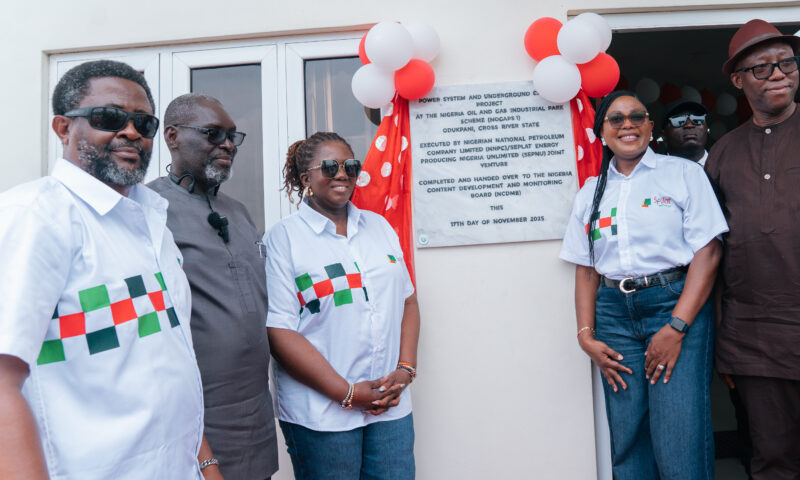
Engr. Chinedu Emeka, Project Manager, Seplat Energy Producing Nigeria Unlimited (SEPNU); Taridouye Gagariga, Manager NCDMB Properties; Emo Udobong-Ntia, GM Corporate Services, SEPNU; Blessing Adagbasa, GM Procurement & Nigerian Content, SEPNU; and Engr. Ndubuisi Akachikelu, Deputy Manager JVA NUIMS, during the commissioning/handover of Power System and Underground Cabling Project to NCDMB by Seplat Energy in Odukpani, Cross River State … recently

 The NNPC/Seplat Joint Venture commissioned and formally handed over a fully integrated Power System and Underground Cabling Project to the Nigerian Content Development and Monitoring Board (NCDMB) at the Nigerian Oil and Gas Industrial Parks Scheme (NOGAPS 1) in Odukpani, Cross River State.

Senior officials from the NNPC Upstream Investment Management Services (NUIMS), Seplat Energy Producing Nigeria Unlimited (SEPNU), and NCDMB, gathered for the ceremony, which marked the deivery of one of the most advanced power distribution systems built under the NOGAPS initiative.

In his remarks, the Managing Director of SEPNU, Mr. Oladotun Isiaka, represented by the company’s General Manager, Corporate Services, Mrs. Emoh Udobong-Ntia, said the project represents “a story of partnership, progress and shared commitment to sustainably grow the Nigerian hydrocarbon industry.”

He described the system as an advanced, multi-layered infrastructure designed for long-term industrial readiness. “This is not just a single power project. It is an enabling system comprising of multiple project layers including a modern switchgear building, 19 packaged substations, over 27 kilometres of medium-voltage cabling, SCADA-enabled smart power systems and synchronized backup generators, to guarantee uninterrupted operations,” he said.

He further emphasized that the success of the project demonstrates the NNPC/Seplat JV’s commitment to building local capacity, enhancing infrastructure reliability and empowering indigenous participation across Nigeria’s hydrocarbon value chain.

Representing the Executive Secretary of NCDMB, Felix Omatsola Ogbe, the Board’s Manager, Properties, Mr. Taridouye Gagariga, delivered the keynote address at the event.

He emphasized the strategic importance of power infrastructure and thanked SEPNU for the driving the project by introducing power to NOGAPS – “Power drives an economy, and we thank Seplat Energy for commissioning power to the park.”

He stated that the vision of NCDMB is “to create an enabling environment for growth which the NOGAPS visualizes.”

On the future of the initiative, he added: “This is not the end but just the beginning of more Joint Venture in achieving the vision the NCDMB has for the oil and gas park.”

He subsequently led the ribbon-cutting and plaque unveiling ceremony.

In his closing remarks, the Chief Upstream Investment Officer, NUIMS, Engr. Seyi Omotuwa, said the industrial park will create significant opportunities for local empowerment and development and help reduce Nigeria’s dependence on imported industrial components. He remarked that the underground power installation “brings the park closer to global standards,” adding that: “In this industry excellence is not optional and SEPNU’s work reinforces what partnership should look like.”

With today’s commissioning and handover, NOGAPS Odukpani moves closer to becoming a fully functional industrial hub—energizing local participation, attracting investment and reinforcing Nigeria’s competitive position in the oil and gas value chain.

The Nigerian Oil and Gas Park Scheme is a flagship initiative aimed at creating purpose-built industrial parks across the country to support in-country manufacturing for the oil and gas sector. The scheme promotes local capacity development, encourages technology transfer, and fosters sustainable industrial growth.

Nigeria Joins CNN’s Call To Earth Day Landmark Fifth Year

Schools, non-governmental organisations, and individuals from across Nigeria took part in the fifth anniversary of CNN’s Call to Earth Day, taking collective action to protect and restore the natural world, with more participants joining this instalment than ever before.
As part of a day of global action to raise awareness of environmental issues and engage with conservation education, CNN celebrated Call to Earth Day with special multiplatform programming on November 6th. Over 650,000 people in more than 100 countries signed up to take part. This year’s theme focused on Guard Your Green Space with CNN using its international scope to celebrate efforts – large or small – that are making a difference.
In Nigeria, one of the participants, FABE International Foundation, reimagined its Upcycled Eco Garden at Teetop School, a project that perfectly embodies the theme of this year’s Call to Earth Day.
“At FABE International Foundation, our mission is to nurture a generation that lives sustainably, learns through nature, and leads with circular innovation. Since 2018, our Upcycled Eco Garden at Teetop School has served as a living classroom of sustainability, a zero-waste, circular, and healing space where waste tyres, wood chips, bottles, bamboo, and buckets are transformed into life. Inspired by @CNN #CallToEarthDay 2025 to #ProtectOurGreenSpaces, the garden, once a source of joy for students, staff, and parents but later overgrown, has now been restored to life, providing medicinal herbs, spices, and vegetables.” ,” said Temitope Okunnu, Founder of FABE International Foundation”.
She added, “We have reimagined the Upcycled Eco Garden to reflect everything we stand for: sustainability, circular economy, zero waste, and community in action. Every tree tells a story of healing, nourishing bodies, minds, and the planet. For us, it is hope restored, lessons renewed, and proof that when we care for nature, nature heals us back.”
SustyVibes, a previous participant, joined the Call To Earth celebration again this year. They hosted a virtual advocacy campaign highlighting how Nigerians protect and cherish their natural environments. The campaign featured a Vox Pop video titled “Voices from the Park,” filmed at Millennium Park, Abuja, capturing reflections from everyday people on why green spaces matter. Across Nigeria, SustyVibers also joined a Postcard Challenge, sharing digital postcards that showcased how they guarded their green spaces. Together, these activities raised awareness, inspired youth action, and connected local stories to the global conversation on caring for our planet.
Participants in Nigeria were part of a global initiative that saw a record number of participants registering. These organisations made a difference to their local communities by holding events including clean-ups, tree plantings, designing art projects, and making environmental awareness videos.
Other programming on CNN during the day included a special documentary featuring a conversation between CNN’s Chief Climate Correspondent Bill Weir and leading oceanographer and Rolex Testimonee Sylvia Earle. CNN Creators: The Intro also aired a special show dedicated to Call to Earth Day and CNN’s daily ten-minute student-focused news show, CNN10, aired a theme week in the lead up to Call to Earth Day. Bespoke digital content ran across CNN.com, including an interactive feature examining the impact of invasive fire ant species.
CNN correspondents visited schools around the world in Africa, Asia, Europe, the Middle East, and both North and South America, showcasing environmental reporting on CNN International and CNN en Español’s TV networks, digital, and social media platforms as well as on CNN Arabic.
Call to Earth Day is part of Call to Earth, a major network initiative launched by CNN in 2019, in partnership with Rolex and its Perpetual Planet Initiative, shining a light on those committed to safeguarding our planet for future generations. Over the last six years, this award-winning programming has told stories of changemakers, visionaries, and ground-breaking projects making a difference to the world around them.