CBN Advert


‎Journalists have been charged to stay sane in the high-stakes working environment and recognize the signs of stress which could lead to burnout and possibly illness.
‎Dr. Tunde Jesusina, Director of Medical Science, Federal Polytechnic, Ilaro, gave the advice at a training for insurance journalists organised by the Insurance Industry Consultative Council (IICC) at the College of Insurance and Financial Management, Ogun State.


‎Speaking on the topic “Beyond the Byline: Managing Burnout in Nigerian Journalism” Jesusina stated that burnout is more than just stress.


‎He highlighted the progression to exhaustion to be in three dimensions, namely, emotional, physical, and mental exhaustion; increased mental distance or cynicism toward work; as well as reduced professional efficacy and effectiveness.


‎According to him, the Nigerian factor is a perfect storm for burnout with economic pressure such as low pay and high cost of living create constant financial stress. Information overload of 24/7 news cycle and relentless speed demands. Security risks of physical danger and threats to personal safety. Poor conditions of lack of resources, support, and proper facilities.


‎To recognize the signs of burning out, he said: “The physical & emotional signs include, chronic fatigue and exhaustion; frequent illnesses; insomnia or sleep disruption; anxiety and irritability; as well as feeling helpless or defeated.”
‎He stated that the behavioral & work-related signs include, “Cynicism and detachment; procrastination; difficulty concentrating; substance reliance; as well as withdrawal from people.”


‎On the long-term resilience for rebuilding foundation, he said: “Protect your sleep as a non-negotiable rest for recovery. Move your body as physical activity for mental health. Reclaim your identity by engaging in hobbies and life outside work. Mindfulness & prayer by being spiritual and mental grounding. Seek professional help as therapy and counseling are strengths.”
‎He charged journalists to embrace newsroom & peer support because we are stronger together.


He said: “Advocate for Yourself: communicate your needs and boundaries clearly to colleagues and management.
‎”Peer debriefing: process trauma and difficult experiences with trusted colleagues who understand.
‎”Mentorship: seek guidance and share experiences with more experienced journalists.
‎”Push for Institutional Change: Collectively advocate for better working conditions and mental health support.
‎”Changing the Narrative: Our Industry’s Duty of Care: Media Houses Must: Pay living wages, provide safety & trauma training, ensure realistic workloads, remove stigma for mental health.


‎”The Nigeria Union of Journalists (NUJ) Can: Champion mental health awareness,
‎organize workshops and support groups,
‎negotiate better working conditions, as well as provide accessible resources.”

SON DG, Ifeanyi Okeke And Council Chairman During A Courtesy Visit to Honourable Minister of FMITI

DG/CEO SON, Dr. Ifeanyi Chukwunonso Okeke; Hon. Yahuza Ado Inuwa, Chairman, SON Standards Council; Dr. Jumoke Oduwole, Honourable Minister, Federal Ministry of Industry, Trade and Investment; and Amb. Nura Abba Rimi, Permanent Secretary, Federal Ministry of Industry, Trade and Investment (FMITI), during a courtesy visit of the DG and Council Chairman to the Honourable Minister of FMITI.
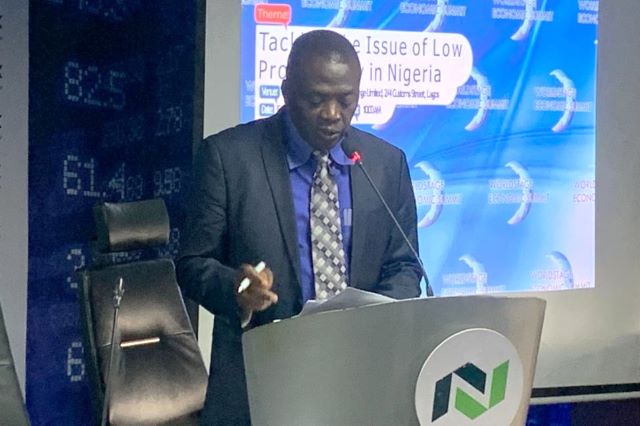
WES 2025:  WorldStage Boss Advocates Tinubu–Trump Partnership On Military Exercises To Fight Terrorism

Mr Segun Adeleye, President/CEO, World Stage Limited has advised Nigeria to look at different options of solving the insecurity challenges including possible collaboration with the United States on joint military exercises that will flush out terrorists in the country.

In his opening address at the WorldStage Economic Summit (WES) 2025 in Lagos on Friday with the theme Tackling the Issue of Low Productivity in Nigeria, he said, “Interestingly, insecurity is attracting more attention in recent time, including from abroad. Insecurity in parts of the country negatively affects economic activity.”

He said as U.S President Donald Trump is threatening to launch attacks in Nigeria due to insecurity related issues, the government can engage him and agree on joint military exercises that will flush out the terrorists.

He said, “It will be helpful if the federal government can flow with the current momentum and grab the right strategy, including possible foreign assistance to finally end insecurity… after all if Boko Haram has been existing since the Olusegun Obasanjo administration of 1999 to 2007 and we are yet to see the end of it till now, we don’t need anyone to tell us again that we need help.”

At the summit which attracted top public and business leaders including Mr Olanipekun Olukoyede , Executive Chairman , Economic And Financial Crimes Commission (EFCC) and Dr. Olasupo Olusi, Managing Director/CEO, Bank of Industry (BoI), Adeleye said economic productivity in Nigeri will be a mirage without security.

He made reference to the theme of the summit compared with the theme for WES 2024 which was ‘Nigeria: Setting a Stage For Business And Economic Recovery’, saying, “If we ask whether the economy has recovered in one year since WES 2024, the answer we will likely get is yes. Nigeria’s economy has shown strong signs of recovery, marked by significant GDP growth, increased foreign reserves, and a more stable foreign exchange rate.”

However, despite the macroeconomic recovery, he said challenges like high food inflation, widespread poverty, and the high cost of living persist for many citizens.

“Between WES 2024 and now, four major tax reforms were enacted, specifically in June 2025 to improve revenue collection; the combination of high inflation and a weakened currency has severely eroded household purchasing power; many households are struggling to afford basic necessities, leading to changes in consumption patterns, such as rationing food or seeking cheaper alternatives,” he said.

“The World Bank has projected cautious optimism, with growth expected to accelerate modestly in the coming years, assuming sustained monetary discipline and structural reforms.”

He said the developments made it easy for WES to choose the theme for this year summit ‘Tackling The Issue Of Low Productivity In Nigeria’ with the logic that “if we can get the economy to produce, high food inflation, widespread poverty, and the high cost of living will be checked.”

He said the current situation in Nigeria is that while many are working, almost half of Nigerians are estimated to be poor, living below the national poverty line with multidimensional poverty at 63% and income poverty at 40%, just because the right jobs are not available.

He asked, “Flashing back again to our last year theme, if Nigeria’s economy is recovering, how do we get it to deliver higher productivity jobs to raise living standards?

“With the evidence of structural transformation, there remains concerns that the pace is insufficient to propel industrial take-off as industry’s share of employment increasing only marginally over the past 20 years, while low-quality jobs characterized by high informality remains high at 92.6%.

“It’s important that as we discuss low productivity today, we should not lose sight of the government reforms like subsidy removal, exchange rate unification aim to stabilize it; the macroeconomic reforms and tax changes to address these issues.

“The question we should be able to answer with this summit is whether these reforms are effective enough or are there other alternatives to spur economic productivity?

“As Nigeria’s real GDP grew by 3.19% in Q2 2024 and 4.23% in Q2 2025, some analysts project lower growth for 2025 due to factors like lower-than-expected oil production and insecurity.”

WES over the years has been consistent in addressing economic challenges through deliberation and recommendation of practicable solutions with public and private sector engagement in an innovation setting to inspire new thinking in business, policy formulation/implementation, economic reform and development.

The Guest Speaker at the Summit, an economic expert, Dr Abidemi C. Adegboye of the Department of Economics, University of Lagos described Nigeria’s productivity challenge as both a human tragedy and a defining opportunity.

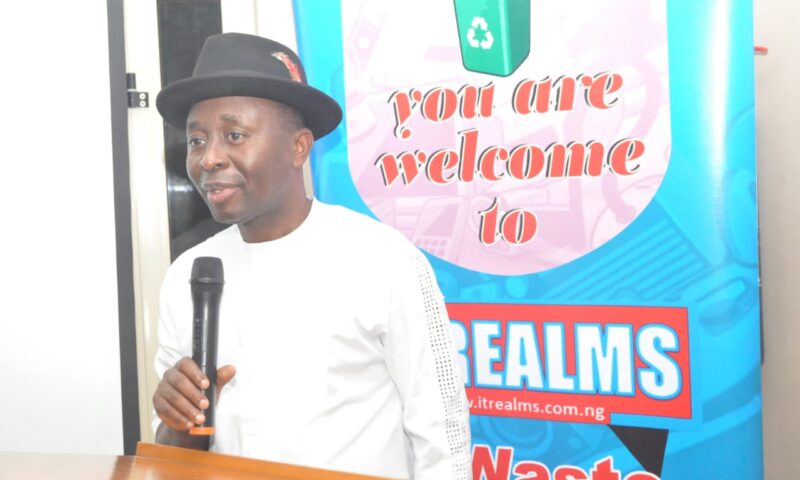
NLNG’s Metseagharun Urges United Effort To Tackle Nigeria’s Growing e-Waste Crisis

The Head of Environment at Nigeria LNG Limited (NLNG), Mr. Weyinmi Metseagharun, has emphasized the need for a collaborative effort to address the growing e-waste challenge in Nigeria.


Speaking at the 2025 ITREALMS E-Waste Dialogue in Lagos, Weyinmi highlighted the importance of corporate responsibility in e-waste management.


“As part of consumers and the public, NLNG, like many Multinationals, currently practices green procurement, responsible disposal, and transparent reporting of our e-waste management practices,” Weyinmi stated.


He urged other sectors to adopt similar practices, emphasizing that “this drive should be taken to other sectors to raise the percentage of businesses that responsibly recycle their e-waste.”


Weyinmi also stressed the importance of multinationals supporting brands and policies that prioritize circularity and environmental responsibility.


“Multinationals should support brands and policies that prioritize circularity and environmental responsibility,” he said.


Furthermore, he called on government and policymakers to enforce Extended Producer Responsibility (EPR) and provide incentives for investing in advanced recycling technologies.


“Government and policymakers should pay more attention to the enforcement of EPR and provide incentives for people to invest in advanced recycling technologies where critical raw materials (CRM) can be recovered in-country,” he emphasized.


The 2025 ITREALMS E-Waste Dialogue, themed “Nigeria: Recycle your e-waste – it’s critical!”, brought together key stakeholders from environmental, telecommunications, and energy sectors. The event was moderated by Ogbuefi Remmy Nweke, Group Executive Editor of ITREALMS Media Group.


Other panelists included Mr. Uchechukwu Ugwuanyi, Assistant General Manager at Internet Exchange Point of Nigeria (IXPN), who represented the Managing Director, Mr. Muhammed Rudman; Publisher of Political Economy, Mr. Ken Ugbechie; and Azeezat Alabere, Executive Assistant at E-Waste Producer Responsibility Organisation of Nigeria (EPRON); while Olaide Oyedele-Taiwo, Chief Scientific Officer at NESREA Lagos Liaison Office, represented the Director-General/CEO of NESREA.


The panel highlighted Nigeria’s significant e-waste challenge, with an estimated 1.2 million tonnes generated annually, posing environmental and health risks. They emphasized the need for a unified national strategy, Extended Producer Responsibility (EPR), and efficient systems to recover critical raw materials from discarded electronics.


The dialogue underscored the importance of collective action in addressing Nigeria’s e-waste challenge and promoting sustainable practices.

Ibru Varsity Pro-Chancellor, Anthony Kila, To Chair Business Journal Annual Lecture 2025

Professor Anthony Kila, Pro-Chancellor, Michael & Cecilia Ibru University, will Chair the Business Journal Annual Lecture 2025 scheduled for Tuesday, December 16, 2025 at Oriental Hotel, Lekki Road, Victoria Island, Lagos. Time is 10.00 am prompt.

The THEME of the lecture is: AI & Digital Economy: Projecting the Future of Economic Growth in Nigeria.

Anthony Kila is a Jean Monnet Professor of Strategy and Development.

He is a jurist, political economist, strategist, policy analyst, popular essayist and the Director at the Institute of the Commonwealth. He also serves as an international Director of Studies at the European Centre for Advanced and Professional Studies. He is also the Pro-chancellor and Chairman of Council at the Ibru University

Kila is a regular commentator on the BBC and a columnist for the Independent, Telegraph, Europa and Panorama; his articles and essays are also published in various other news outlets.

Anthony was educated in Cambridge, London, Perugia, and Suffolk. He earned a first-class degree in Political Economy and further specialised in Political Anthropology, Law, Management and Public Policy.

His teaching career includes roles at several renowned institutions across Cambridge, Ipswich, Lagos, Lecce, London, Perugia and Siena.

Anthony Kila’s corporate background includes working as a banker in the City of London, and he has also made a name for himself as a project and management consultant. He is recognised as an authority in internationalisation and joint ventures, having contributed to numerous international projects worldwide.

He currently serves on several boards and works with organisations across sectors such as Aviation, Agriculture, Finance, Healthcare, ICT, Media, Public Affairs, and Security.

As a seasoned policy analyst and adviser, he has contributed his expertise to many organisations within European and Commonwealth countries.

Commenting, Prince Cookey, the Publisher/Editor-in-Chief of Business Journal Media Group said:

“We are indeed delighted to have Prof. Anthony Kila as Chairman of the Business Journal Annual Lecture 2025. A renowned economist and public policy icon, he would bring his vast wealth of experience to bear on the proceedings, content and output of the annual lecture.”

Cookey said the theme of the lecture reflects the current policy direction of major economies and organisations around the world to drive sustainable economic and business growth respectively on the back of AI and digitalisation.

“AI and digitalisation are two key concepts shaping the future of national economies and corporate entities across the globe. Our purpose is to draw them into focus for a better today and tomorrow. The objective of the annual lecture series of the Business Journal Media Group is to raise key issues of importance in the national economy and business of corporates in Nigeria.”