
CBN Advert
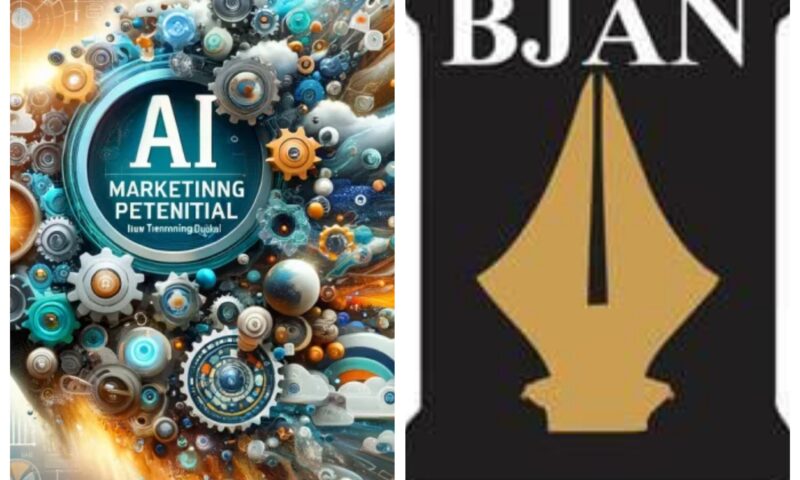
CEO Vault Hill Set To Inspire Participants As Countdown Begins For BJAN 2025 Conference On AI , Marketing


By Winifred Bosa
Folajimi Daodu, Chief Executive Officer of Vault Hill and one of the keynote speakers at the 2025 National Brands and Marketing Conference powered by Brand Journalists Association of Nigeria (BJAN), has tasked participants at this year’s conference to be expectant.

Daodu, one of Africa’s most prominent voices in artificial intelligence (AI), blockchain, and immersive technology, will be speaking at the BJAN-organised event on the theme: “AI and Marketing Workflow: Disruption or Opportunity,” at the Brand Journalists’ Conference scheduled for Friday, November 28, 2025, at the Oriental Hotel, Lekki, Lagos.

According to Daodu, participants at the conference should come with a broad mindset to exchange ideas on Artificial Intelligence (AI) to be able to appreciate the many advantages it offers.

“AI is no longer a futuristic concept, but a present reality shaping industries and economies,” Daodu stated.

He noted that, like every major innovation, AI has both positive and negative sides, and innovators need to open their minds to the opportunities while they should also prepare for what could go wrong.

“AI is here to stay, and we must figure out how to work with it as co-collaborators,” Daodu said, adding that the BJAN conference will provide opportunities for discussion on AI come November 28.

The Brands and Marketing Conference is an annual event that brings stakeholders in the Integrated Marketing Communications sector together to discuss issues that affect not just the sector but the economy at large.

This year’s conference, which is the 13th in the series, will explore the benefits of AI in marketing to create a balance as the world grapples with this new trend.

Other seasoned professionals who will deliver the keynote alongside Folajimi Daodu, are Dr Cherry Eromosele, the Executive Vice President and Group Chief Marketing & Communications Officer at Interswitch Group and ARCON DG, Dr. Lekan Fadolapo, who will speak on “AI and Advertising Regulation in the Digital Age: Challenges and Opportunities”.

Their papers are expected to be dissected by a lineup of professionals and seasoned experts in a panel discussion. They are, Morolake Emokpaire, Marketing Lead at Cadbury Nigeria Plc., Lanre Basamta,
CEO/Co-founder Optimus AI Labs, Austin Onyebuchi Akosa, Chief Information Officer, UBA and Emma Adeniran, an ICT expert.

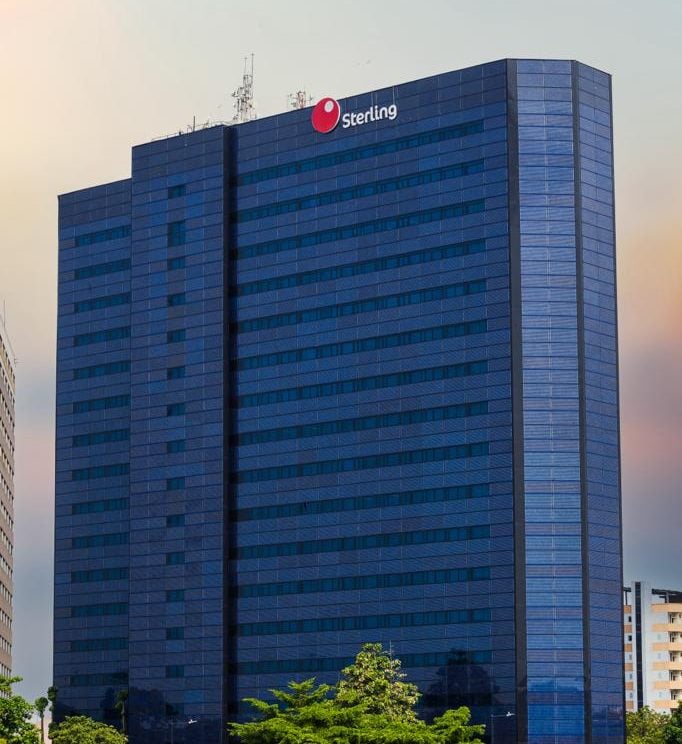
Sterling HoldCo Builds On Upward Earnings Trajectory With 127% Profit Growth


Amaka Obiefuna


Sterling Financial Holdings Company Plc (“Sterling HoldCo” or “the
Group”) has announced its unaudited financial results for the nine-month-period
ended September 30, 2025, posting an impressive 127% year-on-year growth in profit after tax (PAT) to ₦62.3 billion. The performance is testament to the Group’s robust earnings capacity, operational efficiency, and disciplined execution.


The Group’s gross earnings rose by 44.1% to ₦341.7 billion (September 2024: ₦237.2 billion), driven by solid performances in both interest and non-interest income lines. Interest income grew by 38.7% to ₦262.4 billion, supported by an expanded earning asset base, while non-interest income surged by 65.1% to ₦79.2 billion, reflecting the Group’s continued success in diversifying its revenue streams.


Sterling HoldCo maintained a healthy balance sheet, with total assets rising by 15.5% from ₦3.54 trillion in December 2024 to ₦4.09 trillion in September 2025, driven by growth in loans, investment securities, and liquid assets. Customer deposits also grew by 14.3% to ₦2.88 trillion, while shareholders’ funds increased by 32.9% to ₦405.5 billion, up from ₦305.2 billion in December 2024, highlighting the Group’s solid capital base and its capacity to sustain future expansion.

Commenting on the results, Yemi Odubiyi, Group Chief Executive, Sterling Financial
Holdings Company Plc, said: “Our performance over the first nine months of 2025 demonstrates the strength and adaptability of our Group structure. The significant growth in profit after tax underscores the success of our strategy to operate as a diversified financial services Group delivering value through both our conventional, non-interest banking, and asset management subsidiaries.


Our results highlight disciplined risk management, innovative product delivery, and an unrelenting focus on sectors that drive real economic impact. We are equally
grateful to our shareholders and the investing public for their confidence in the
Group, as reflected in the resounding success of our recently concluded public offer of 12.58 billion ordinary shares.

As we continue to invest in technology and operational excellence, our goal remains
clear: to build a resilient institution that consistently delivers sustainable returns.”
With deepening synergies across its subsidiaries, Sterling HoldCo remains firmly on course to sustain its growth momentum through the final quarter of the year. The
Group is strategically positioned to scale its presence across Nigeria’s high impact
sectors, advance financial inclusion, and power innovation that drives real-sector
growth. Guided by its heritage of trust and a commitment to excellence, Sterling
HoldCo continues to champion sustainable finance and technology-driven solutions
shaping the future of African financial services.

About Sterling Financial Holdings Company
Sterling Financial Holdings Company PLC is a leading Nigerian financial services group committed to enriching lives through innovation and impact with a diversified portfolio that includes Sterling Bank Limited, The Alternative Bank Limited, SterlingFI Wealth Management among others. As a HoldCo, Sterling provides strategic direction, governance, and resources across its subsidiaries, enabling each to focus on its core mandate while benefiting from group wide expertise, technology, and oversight.

With a heritage of trust built over six decades, Sterling HoldCo is committed to financial innovation, advancing inclusion, and shaping sustainable growth in Nigeria’s economy. The Group champions customer-focused solutions and socially responsible initiatives while creating value for shareholders, employees, and the communities it serves. The Group continues to pioneer offerings across its core businesses in banking, payments, and technology-driven financial services.

Igala Community holds Cultural  Carnival in Anambra

By Nnedinma Michael
The Igala community, comprising Onuh Igala, Ogohi Attah, Palace Executive, Ogah Onuh lgala Kingdom, in Anambra State and beyond, weekend, held her maiden carnival in Amawbia, Anambra State.
In his welcome address, the Chief of Staff and Omachi Oda Onuh Igala, Comrade  Emmanuel Ochia, said the event could be traced to the highly cultural and traditional annual Ocho/Eva  Festival, which is a harvest and ancestral worship festival, which is still practiced unto these days in some communities.
Chariman of the occasion, Bar.Dr Joe Onuoha, emphasised the importance of unity among the Igala speaking people, not just in Anambra State but beyond, noting that such events will foster stronger relationships and a sense of community, advising Ndị Anambra to ensure peaceful conduct of the coming election.
Mother of the occasion, Mrs Dorcas Ashebe, expressed  her joy and excitement  about the gathering, aimed at promoting unity among Igala people in state.
Chairman of Middle Belt, Kogi State, Alhaji Abubakar,  expressed gratitude to the Igala people in Anambra  State, for welcoming them and showcasing  their culture, emphasising the importance of unity and recognition among Igala people, particularly in areas like leadership and governance.
Chairman, Ofu Local Government Area, Anambra  Chapter, Ibrahim Siaka, said he was happy to celebrate  the Igala Cultural Day and Carnival in the state, attributing the success to the efforts of the Onu Igala, Dr Mohammed Sani Ali Abuka.
 A prophet from Holy Christ Church, Onitsha, Gabriel Ohaekenyem, described the Igala Carnival as impressive, saying that it was the collective efforts and enthusiasms of the community that made the event possible, expressing concern about the integrity  of the electoral process on the upcoming election in the state.
He pointed out that corruption and focus on personal gains are major obstacles to fair and clear election.
In their separate speeches, Secretary, Nkpa LGA, Mr Samuel Negedu, Dr Omojal Victor from Ibazi LGA, Anambra State Chairman  from Ankpa LG of Kogi State, Comrade Sulema, Comrade Samuel Ushene from Odomagwu community, Omoja Ibaji from Kogi State, Senior Special Assistant(SSA)  to Oni Igala of Anambra State, Jeremiah Onewa, Baba Dalami ( known as Adoja Ede) from Ibaji LGA in Kogi State, Chief Doctor Edidan, Mustafa Omoru from Anambra East, Chief Garuba Oshia Oluwan from Anambra, Chief Doctor Mohammadu Sani Ali Ogoyi, a high ranking chief and ambassador of the Ata of Igala Kingdom in Anambra State, said they were thrilled to see the Igala community come together from parts of Nigeria, including Lagos , Abuja, ltokoja, Kaduna to celebrate the Igala Carnival  in the state, believing  that the celebration will bring  peace, unity, and prosperity  to Igala people and Anambra State as a whole.
They encouraged everyone to treat each other like family, regardless of their state or country of origin, while urging them to go in peace and live in harmony.
Sanwo-Olu, NGX Group, Champion Creative Economy Financing At Closing Gong Ceremony For Lagos Fashion Week

Sanwo-Olu, NGX Group, Champion Creative Economy Financing at Closing Gong  Ceremony for Lagos Fashion Week - Nigerian Exchange Group

Amaka Obiefuna

Lagos State Governor, Babajide Sanwo-Olu, on Friday performed the Closing Gong Ceremony at Nigerian Exchange Group (NGX Group) in commemoration of Lagos Fashion Week, highlighting how Nigeria’s creative economy can leverage capital market financing to scale innovation and achieve sustainable growth.


The ceremony brought together Governor Sanwo-Olu, members of the Lagos State Executive Council, renowned American singer and fashion model Ciara Wilson, and key industry players to explore the intersection of creativity and capital. Organized by Style House Files, Lagos Fashion Week has evolved into one of Africa’s foremost platforms for creativity, sustainability, and enterprise development, enhancing the global competitiveness of Nigerian fashion.


In his remarks, Governor Sanwo-Olu commended NGX Group for spotlighting the potential of the creative economy, noting that Lagos continues to lead in galvanizing growth across fashion, film, music, and the arts. He reaffirmed his administration’s commitment to strengthening the ecosystem for the creative sector through access to finance, infrastructure, and supportive policies.


“Lagos stands at the forefront of Africa’s creative renaissance, a city where innovation, culture, and enterprise intersect,” said Sanwo-Olu. “Our ambition is to position Lagos as a global hub for creativity and investment. By deepening linkages with the capital market through institutions like Nigerian Exchange Group, we can unlock financing that empowers creative entrepreneurs to scale sustainably and compete on the world stage.”


Echoing this sentiment, Alhaji Umaru Kwairanga, Group Chairman of NGX Group, described the ceremony as a model for how the capital market can support emerging sectors of the economy. He commended Governor Sanwo-Olu for his leadership in leveraging the market through bond issuances that have financed critical infrastructure and social projects.


“At NGX Group, we believe the creative economy and the capital market share a common purpose—transforming ideas into enduring value,” said Kwairanga. “Across the fashion value chain, there are countless SMEs with the potential to become industry leaders if they can access sustainable financing and institutional support.”


Temi Popoola, Group Managing Director/Chief Executive Officer, NGX Group, reaffirmed the Group’s commitment to driving innovation across all segments of the economy.

“The creative economy represents one of the most dynamic frontiers of growth in Africa,” said Popoola. “We see immense potential in connecting creativity with capital, enabling designers, entrepreneurs, and innovators to grow sustainably through the discipline and transparency the capital market provides.”


American singer, Ciara Wilson, also praised Nigeria’s creative momentum. “It’s amazing to see Lagos and Nigeria levelling up, not just creatively, but economically,” said Wilson. “The energy, talent, and innovation here are world-class. Connecting that creativity to the kind of structure and investment the capital market provides is how you build something truly global and sustainable.”


Chairman of Style House Files and Lagos Fashion Week, Mr. Tokunbo Akerele, emphasized the growing economic significance of Nigeria’s creative industries. “Today’s ceremony reflects the recognition of fashion as a key contributor to economic development,” Akerele said. “Lagos Fashion Week has always championed creativity, sustainability, and enterprise. Engaging platforms like the Exchange helps amplify the message that the creative economy is an engine for growth, investment, and social impact.”


The event also underscored the role of sustainability in creative enterprise, positioning Lagos Fashion Week as a driver of circular economy practices and eco-conscious design. Participants noted that as investors increasingly prioritize Environmental, Social, and Governance (ESG) standards, integrating sustainability enhances credibility, attracts long-term investment, and strengthens competitiveness globally.


By bridging creativity with capital, NGX Group and Lagos Fashion Week reaffirmed Lagos State’s position as Africa’s emerging investment gateway for the creative economy.


Nigeria Can Replicate World-Class Transport Systems- Ngwama


Organiser of the 2025 Transport Summit, Mrs. Pearl Ngwama, has called for an integrated transport masterplan to propel Nigeria’s growth, stressing that Nigeria’s transport infrastructure must become the engine of national development.


Speaking at the opening of the 2025 Transport Summit in Lagos with the theme ‘Nigeria’s Transport Infrastructure: Innovation for a Sustainable Future’, Ngwama said the world’s most advanced nations are built on formidable multimodal transport systems integrating road, rail, air and sea.


She said Nigeria’s geographical location and economic diversity offered an unparalleled opportunity to build such networks, linking farms, factories, ports and airports into a seamless logistics chain.


“We only have to look around the world to see how advanced nations are built on multimodal transport systems. These systems facilitate trade, improve productivity, reduce costs and drive innovation,” she said.


Highlighting Nigeria’s economic momentum, Ngwama noted that maritime trade surged to N130.75 trillion in 2024, marking a 91% increase over 2023. She added that the aviation sector contributed N215.6 billion to GDP, while the rail system recorded sharp increases in both passenger and freight movement in 2025.

“These numbers tell us we have momentum and potential, but also work to do,” she stressed.

Ngwama emphasised that transport infrastructure remains the bloodstream of the economy, asserting that when it flows freely, other sectors thrive, but when blocked, growth is stunted.


She urged collaboration among public and private stakeholders to ensure sustainability and innovation drive future transport development.


“Our ambition must be to move beyond quick fixes and stop-gap solutions. We must plan, finance and execute systems built to last and adapt as technology evolves,” she added.


Ngwama expressed optimism that under the government’s Renewed Hope Agenda, Nigeria could build transport infrastructure capable of transforming trade and connectivity across West and Central Africa.
Ngwama Links ‘Japa Syndrome’ to Poor Infrastructure, Calls for Sustainable Transport Innovation


Ngwama also emphasised that Nigeria’s human capital widely regarded as its greatest resource cannot realise its full potential in the absence of robust infrastructure that connects people, markets, and industries.


“If transport infrastructure remains underdeveloped, every other sector of agriculture, mining, manufacturing, banking, health, and education will struggle,” she said. “Transport is the bloodstream of the economy. When it flows freely, the organs of the economy thrive; when it is weak, growth is stunted.”


She explained that sustainable transport innovation is not merely about constructing new roads or rail lines, but about creating systems that can adapt to new technologies, enhance productivity, and generate local opportunities.


“Our young people leave in search of better prospects abroad because we have not created enabling systems at home,” Ngwama said, referring to the rising wave of youth migration known as Japa syndrome. “If we build world-class infrastructure that supports jobs and innovation, our talents will stay and thrive here.”


“We must move beyond quick fixes and stop-gap measures,” she added. “We must plan, finance, and execute transport systems that are sustainable, resilient, and built to last.”

Nigeria’s Freight Forwarding Enters New Era with Multimodal Infrastructure Push


Nigeria’s freight forwarding industry is witnessing a structural revolution driven by massive investment in freight forwarding infrastructure modernization aimed at cutting inefficiencies, improving trade competitiveness, and diversifying cargo movement beyond roads.


Presenting a paper at the Nigeria Transport Infrastructure Summit 2025, Chairman of Widescope International Group, Dr. Oluwasegun Musa, represented by Mr. Mark Onuchi, noted that Nigeria’s freight sector has begun a deep transformation through strategic public-private partnerships and multimodal integration designed to enhance efficiency and sustainability.


“Nigeria loses an estimated $8 billion annually to logistical inefficiencies,” Dr. Musa stated, citing data from the Lagos Chamber of Commerce and Industry (LCCI). “That’s why modernization is not optional it’s an economic imperative.”


A major symbol of this transformation is the $1.5 billion Lekki Deep Sea Port, commissioned in 2023. According to Musa, the facility has already begun to ease congestion at Apapa Port by enabling direct international shipping links and bypassing costly transshipment routes.


The port’s 2.7 million TEU annual capacity makes it a crucial hub for Nigeria’s growing container traffic, while its multimodal design linking directly to rail and road networks marks a decisive shift from the country’s outdated mono-modal system that once depended almost entirely on trucks.


Studies referenced in Musa’s paper predict the new port could help meet projected container demand increases by 2025 and save shippers up to $300 per forty-foot container, directly boosting Nigeria’s trade competitiveness.


Complementing port expansion, Nigeria’s rail infrastructure revival, particularly the Lagos-Kano and Kano-Maradi lines is reshaping how cargo moves inland.


“Rail cargo volumes grew by an astonishing 132% in 2018, showing the untapped potential for modal shift,” Musa observed. “Shifting freight from road to rail can reduce emissions by up to 76%.”

Inland water transport (IWT) is also seeing a resurgence after years of neglect. Freight forwarders are increasingly using barges and inland vessels to move containers from Lagos ports, reducing truck congestion and cutting transit times for terminal evacuation.


“Water transport not only decongests our roads but provides an environmentally friendly alternative,” Onuchi said, noting that barge operations emit far less carbon per ton-kilometer than road freight.


These multimodal improvements are translating into measurable benefits: lower costs, reduced travel time, and greater resilience in supply chains.


Musa noted that these investments, coupled with policy reforms by the Council for the Regulation of Freight Forwarding in Nigeria (CRFFN) and improved customs procedures, are positioning Nigeria for a major leap on the World Bank’s Logistics Performance Index (LPI) where the country ranked 88th in 2023.


However, he cautioned that more investment in regional connectivity, particularly the integration of dry ports and logistics corridors, will be essential to sustain momentum.


“What we’re building today is not just infrastructure but the backbone of Nigeria’s trade future,” Musa concluded. “Every new rail line and every barge movement brings us closer to a seamless logistics ecosystem.”

Nigeria’s Freight Forwarding Enters New Era With Multimodal Infrastructure Push


Nigeria’s freight forwarding industry is witnessing a structural revolution driven by massive investment in freight forwarding infrastructure modernization aimed at cutting inefficiencies, improving trade competitiveness, and diversifying cargo movement beyond roads.


Presenting a paper at the Nigeria Transport Infrastructure Summit 2025, Chairman of Widescope International Group, Dr. Oluwasegun Musa, represented by Mr. Mark Onuchi, noted that Nigeria’s freight sector has begun a deep transformation through strategic public-private partnerships and multimodal integration designed to enhance efficiency and sustainability.


“Nigeria loses an estimated $8 billion annually to logistical inefficiencies,” Dr. Musa stated, citing data from the Lagos Chamber of Commerce and Industry (LCCI). “That’s why modernization is not optional it’s an economic imperative.”


A major symbol of this transformation is the $1.5 billion Lekki Deep Sea Port, commissioned in 2023. According to Musa, the facility has already begun to ease congestion at Apapa Port by enabling direct international shipping links and bypassing costly transshipment routes.


The port’s 2.7 million TEU annual capacity makes it a crucial hub for Nigeria’s growing container traffic, while its multimodal design linking directly to rail and road networks marks a decisive shift from the country’s outdated mono-modal system that once depended almost entirely on trucks.


Studies referenced in Musa’s paper predict the new port could help meet projected container demand increases by 2025 and save shippers up to $300 per forty-foot container, directly boosting Nigeria’s trade competitiveness.


Complementing port expansion, Nigeria’s rail infrastructure revival, particularly the Lagos-Kano and Kano-Maradi lines is reshaping how cargo moves inland.


“Rail cargo volumes grew by an astonishing 132% in 2018, showing the untapped potential for modal shift,” Musa observed. “Shifting freight from road to rail can reduce emissions by up to 76%.”


Inland water transport (IWT) is also seeing a resurgence after years of neglect. Freight forwarders are increasingly using barges and inland vessels to move containers from Lagos ports, reducing truck congestion and cutting transit times for terminal evacuation.


“Water transport not only decongests our roads but provides an environmentally friendly alternative,” Onuchi said, noting that barge operations emit far less carbon per ton-kilometer than road freight.


These multimodal improvements are translating into measurable benefits: lower costs, reduced travel time, and greater resilience in supply chains.


Musa noted that these investments, coupled with policy reforms by the Council for the Regulation of Freight Forwarding in Nigeria (CRFFN) and improved customs procedures, are positioning Nigeria for a major leap on the World Bank’s Logistics Performance Index (LPI) where the country ranked 88th in 2023.


However, he cautioned that more investment in regional connectivity, particularly the integration of dry ports and logistics corridors, will be essential to sustain momentum.


“What we’re building today is not just infrastructure but the backbone of Nigeria’s trade future,” Musa concluded. “Every new rail line and every barge movement brings us closer to a seamless logistics ecosystem.”