CBN Advert
Nestlé Nigeria Announces Judging Panel For The 2025 Media Awards

Nestlé Nigeria Announces Judging Panel for the 2025 Media Awards - DConnectNews

Nestlé Nigeria is pleased to announce the distinguished panel of judges for the 2025 Nestlé Nigeria Media Awards. This year’s panel brings together accomplished professionals in journalism, academia, nutrition, communications, and development, reinforcing Nestlé’s commitment to recognizing excellence in impactful and socially relevant storytelling.


The panel welcomes Dr. Yvonne Kanalio Olaloku, Nutrition Specialist with the Nestlé Nutrition Institute for Central and West Africa, whose extensive work in fortification advocacy and evidence-based nutrition brings valuable expertise to the Awards. Also joining the ranks this year is Dr. Margaret Agada-Mba, Senior Lecturer in Communication, Media and Cultural Studies at the School of Media and Communication, Pan-Atlantic University, known for her strong background in development communication, media research, and broadcasting.


They join a team of returning judges whose continued service strengthens the Awards’ credibility and rigor. Dr. Sunday John, Senior Lecturer at the School of Media and Communication, Pan-Atlantic University, recognized nationally for his works in environmental communication, media evaluation, and editorial excellence. Dr. Chioma Emma-Nwachukwu, Programmes Lead for the Lagos Chapter of the Nutrition Society of Nigeria, brings her well-regarded leadership in public health nutrition. Completing the judging panel is Dr. Rosemary Otalor, Account Director, Public Relations and Strategic Communications at APO Group, continues to contribute her seasoned experience in media relations, strategic communications, and public affairs.


The 2025 Awards received 281 entries from journalists across the country, reflecting strong national interest in themes such as nutrition and food systems, environmental sustainability, youth empowerment, women empowerment, community development, agriculture, and finance. Submissions will be evaluated based on accuracy, originality, impact, balance, depth, and adherence to ethical standards. The combined experience of the judges, those newly joining and those returning, ensures a rigorous and fair review grounded in a deep appreciation for journalism’s role in shaping public understanding and driving progress.


Victoria Uwadoka, Head of Corporate Communications, Public Affairs & Sustainability at Nestlé Nigeria, said, “We are honoured to present a judging panel whose professional accomplishments and commitment to societal advancement so closely align with the values of the Nestlé Nigeria Media Awards. Their expertise and integrity strengthen our mission to highlight journalistic work that brings critical issues to the forefront. Through this Awards platform, we remain committed to encouraging factual, insightful, and solution-oriented reporting that not only informs and inspires, but also contributes meaningfully to the well-being of individuals, families, and communities across Nigeria.”


The Nestlé Nigeria Media Awards remains a celebration of journalistic excellence, shining a light on stories that reflect the country’s most pressing challenges and opportunities. Through this platform, Nestlé reaffirms its commitment to supporting impactful storytelling that drives awareness and meaningful change.

Fidelity Bank Reaffirms Support For Indigenous Oil, Gas Development


L – R: Executive Director -South, Mrs. Pamela Shodipo; Managing Director/Chief Executive Officer, Dr. Nneka Onyeali-Ikpe,OON (both of Fidelity Bank Plc); Group Managing Director/Chief Executive Officer, Mr. Adebowale Olujimi; Group Executive Director, Mrs. Olugbesoye Olujimi (both of Emadeb Energy); Executive Director -Lagos and South West, Fidelity Bank Plc, Dr. Ken Opara; and Group Executive Director, Finance/Strategy, Emadeb Energy, Mr. Tosin Adewuyi; at the First Oil presentation event by Emadeb Energy at the Fidelity Bank headoffice in Lagos recently.


Amaka Obiefuna


Fidelity Bank Plc has restated its commitment to advancing Nigeria’s oil and gas industry, with a strong focus on supporting indigenous operators. This was highlighted by the bank’s Managing Director and Chief Executive Officer, Dr. Nneka Onyeali-Ikpe,OON, during a first oil presentation event for Emadeb Energy at Fidelity Place, the bank’s corporate headquarters in Lagos.


At the event, Emadeb Energy’s Group Managing Director and Chief Executive Officer, Mr. Adebowale Olujimi, expressed appreciation for the bank’s role in enabling the company’s progress.


“What makes Fidelity Bank unique is its willingness to take calculated risks. Many banks prefer to work with companies only after they have achieved first oil because they want already-established customers. Fidelity Bank reviewed our proposal thoroughly, including legal, technical, financial and character assessments. We met these requirements and that is why they supported us,” Olujimi said.

Dr. Onyeali-Ikpe congratulated Emadeb Energy on its milestone and reaffirmed Fidelity Bank’s commitment to strengthening Nigeria’s energy sector.

“At Fidelity Bank, we are dedicated to supporting indigenous companies in developing oil and gas assets that enhance energy security and promote sustainable growth. Our interventions include financing Nigeria’s first privately built and operated onshore crude export terminal in over fifty years at the Otakikpo Marginal Field in Rivers State.

“We also led funding for the Pinnacle Oil and Gas Terminal in Lekki, Lagos, which improves petroleum product distribution and reduces costs. In addition, we part-financed the production of a 23,000-cubic-meter Liquefied Petroleum Gas carrier for Temile Development Company Limited, which supports cleaner energy use and strengthens local maritime participation,” she said.

Emadeb Petroleum Exploration and Production Company Limited, operator of Petroleum Prospecting License (PPL) 236, recently achieved first oil from the Ibom Field, a milestone regarded as a significant breakthrough in Nigeria’s upstream sector.


“Our next phase will be exciting. We plan to drill two additional wells and increase production to 12,000 barrels per day by the end of 2026. After that, we aim to expand our gas business and raise oil output to 30,000 barrels per day,” Olujimi added.

Sovereign Trust Insurance PLC Receives Board Approval To Raise N5 Billion Through Rights Issue


Amaka Obiefuna


Sovereign Trust Insurance Plc (the “Company”) notifies its shareholders and the investing public that its Board of Directors, chaired by Mr. Abimbola Oguntunde, has approved an initial capital raise of N5 billion through a Rights Issue. This represents a strategic first step in the Company’s phased recapitalisation agenda, undertaken in alignment with the requirements of the Nigerian Insurance Industry Reform Act (NIIRA) recently signed into law by His Excellency, President Bola Ahmed Tinubu, GCFR. The NIIRA framework mandates stronger capital buffers and enhanced solvency positions across the insurance sector, reinforcing the need for proactive capital planning by responsible operators.

The Rights Issue is projected to be completed within the first quarter of 2026. In line with global best practice, the Company has commenced structured engagements with all appointed professional parties, including issuing houses, legal advisers and auditors, and is currently finalizing the necessary regulatory approvals prior to the formal opening of the offer to shareholders.

At the Company’s 30th Annual General Meeting held on 25 September 2025; shareholders approved a set of key resolutions designed to strengthen Sovereign Trust Insurance Plc’s strategic and financial position. Chief among these was the endorsement of a capital raise of up to N20 billion to reinforce the balance sheet, improve liquidity buffers, and expand underwriting capacity in line with the heightened capital expectations introduced under the NIIRA regime. Shareholders also approved the payment of a 5 kobo dividend per share, affirming confidence in the Company’s financial discipline and commitment to sustained value creation. The market responded positively to these developments, with the Company’s stock emerging among the top gainers on the Nigerian Exchange (NGX) over several trading sessions in October 2025 – a clear indication of growing investor confidence and the strength of the Company’s operational fundamentals.

Commenting on this development, the Managing Director/Chief Executive Officer, Mr. Olaotan Soyinka, reiterated Management’s resolve to position the Company among the top five insurers in Nigeria – a target aligned with industry benchmarks for operational efficiency, premium growth, and digital service delivery. He encouraged shareholders to participate fully in the Rights Issue when it opens, noting that the Company remains firmly committed to innovation, digital transformation, market agility, and underwriting excellence. According to him, these pillars are critical for sustaining long-term performance, improving customer experience and consolidating the Company’s position in a rapidly evolving insurance landscape.


‎Journalists have been charged to stay sane in the high-stakes working environment and recognize the signs of stress which could lead to burnout and possibly illness.
‎Dr. Tunde Jesusina, Director of Medical Science, Federal Polytechnic, Ilaro, gave the advice at a training for insurance journalists organised by the Insurance Industry Consultative Council (IICC) at the College of Insurance and Financial Management, Ogun State.


‎Speaking on the topic “Beyond the Byline: Managing Burnout in Nigerian Journalism” Jesusina stated that burnout is more than just stress.


‎He highlighted the progression to exhaustion to be in three dimensions, namely, emotional, physical, and mental exhaustion; increased mental distance or cynicism toward work; as well as reduced professional efficacy and effectiveness.


‎According to him, the Nigerian factor is a perfect storm for burnout with economic pressure such as low pay and high cost of living create constant financial stress. Information overload of 24/7 news cycle and relentless speed demands. Security risks of physical danger and threats to personal safety. Poor conditions of lack of resources, support, and proper facilities.


‎To recognize the signs of burning out, he said: “The physical & emotional signs include, chronic fatigue and exhaustion; frequent illnesses; insomnia or sleep disruption; anxiety and irritability; as well as feeling helpless or defeated.”
‎He stated that the behavioral & work-related signs include, “Cynicism and detachment; procrastination; difficulty concentrating; substance reliance; as well as withdrawal from people.”


‎On the long-term resilience for rebuilding foundation, he said: “Protect your sleep as a non-negotiable rest for recovery. Move your body as physical activity for mental health. Reclaim your identity by engaging in hobbies and life outside work. Mindfulness & prayer by being spiritual and mental grounding. Seek professional help as therapy and counseling are strengths.”
‎He charged journalists to embrace newsroom & peer support because we are stronger together.


He said: “Advocate for Yourself: communicate your needs and boundaries clearly to colleagues and management.
‎”Peer debriefing: process trauma and difficult experiences with trusted colleagues who understand.
‎”Mentorship: seek guidance and share experiences with more experienced journalists.
‎”Push for Institutional Change: Collectively advocate for better working conditions and mental health support.
‎”Changing the Narrative: Our Industry’s Duty of Care: Media Houses Must: Pay living wages, provide safety & trauma training, ensure realistic workloads, remove stigma for mental health.


‎”The Nigeria Union of Journalists (NUJ) Can: Champion mental health awareness,
‎organize workshops and support groups,
‎negotiate better working conditions, as well as provide accessible resources.”

SON DG, Ifeanyi Okeke And Council Chairman During A Courtesy Visit to Honourable Minister of FMITI

DG/CEO SON, Dr. Ifeanyi Chukwunonso Okeke; Hon. Yahuza Ado Inuwa, Chairman, SON Standards Council; Dr. Jumoke Oduwole, Honourable Minister, Federal Ministry of Industry, Trade and Investment; and Amb. Nura Abba Rimi, Permanent Secretary, Federal Ministry of Industry, Trade and Investment (FMITI), during a courtesy visit of the DG and Council Chairman to the Honourable Minister of FMITI.
WES 2025:  WorldStage Boss Advocates Tinubu–Trump Partnership On Military Exercises To Fight Terrorism

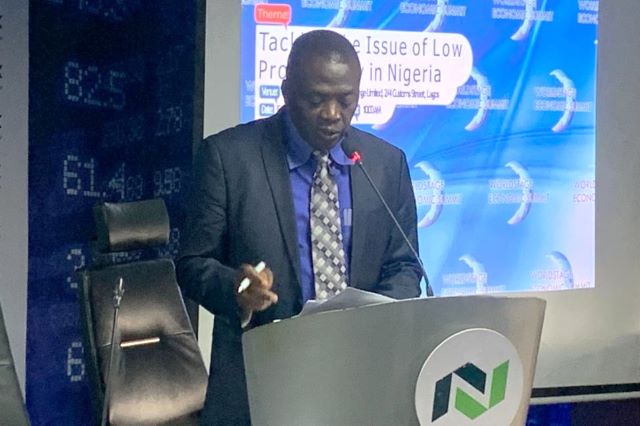
Mr Segun Adeleye, President/CEO, World Stage Limited has advised Nigeria to look at different options of solving the insecurity challenges including possible collaboration with the United States on joint military exercises that will flush out terrorists in the country.

In his opening address at the WorldStage Economic Summit (WES) 2025 in Lagos on Friday with the theme Tackling the Issue of Low Productivity in Nigeria, he said, “Interestingly, insecurity is attracting more attention in recent time, including from abroad. Insecurity in parts of the country negatively affects economic activity.”

He said as U.S President Donald Trump is threatening to launch attacks in Nigeria due to insecurity related issues, the government can engage him and agree on joint military exercises that will flush out the terrorists.

He said, “It will be helpful if the federal government can flow with the current momentum and grab the right strategy, including possible foreign assistance to finally end insecurity… after all if Boko Haram has been existing since the Olusegun Obasanjo administration of 1999 to 2007 and we are yet to see the end of it till now, we don’t need anyone to tell us again that we need help.”

At the summit which attracted top public and business leaders including Mr Olanipekun Olukoyede , Executive Chairman , Economic And Financial Crimes Commission (EFCC) and Dr. Olasupo Olusi, Managing Director/CEO, Bank of Industry (BoI), Adeleye said economic productivity in Nigeri will be a mirage without security.

He made reference to the theme of the summit compared with the theme for WES 2024 which was ‘Nigeria: Setting a Stage For Business And Economic Recovery’, saying, “If we ask whether the economy has recovered in one year since WES 2024, the answer we will likely get is yes. Nigeria’s economy has shown strong signs of recovery, marked by significant GDP growth, increased foreign reserves, and a more stable foreign exchange rate.”

However, despite the macroeconomic recovery, he said challenges like high food inflation, widespread poverty, and the high cost of living persist for many citizens.

“Between WES 2024 and now, four major tax reforms were enacted, specifically in June 2025 to improve revenue collection; the combination of high inflation and a weakened currency has severely eroded household purchasing power; many households are struggling to afford basic necessities, leading to changes in consumption patterns, such as rationing food or seeking cheaper alternatives,” he said.

“The World Bank has projected cautious optimism, with growth expected to accelerate modestly in the coming years, assuming sustained monetary discipline and structural reforms.”

He said the developments made it easy for WES to choose the theme for this year summit ‘Tackling The Issue Of Low Productivity In Nigeria’ with the logic that “if we can get the economy to produce, high food inflation, widespread poverty, and the high cost of living will be checked.”

He said the current situation in Nigeria is that while many are working, almost half of Nigerians are estimated to be poor, living below the national poverty line with multidimensional poverty at 63% and income poverty at 40%, just because the right jobs are not available.

He asked, “Flashing back again to our last year theme, if Nigeria’s economy is recovering, how do we get it to deliver higher productivity jobs to raise living standards?

“With the evidence of structural transformation, there remains concerns that the pace is insufficient to propel industrial take-off as industry’s share of employment increasing only marginally over the past 20 years, while low-quality jobs characterized by high informality remains high at 92.6%.

“It’s important that as we discuss low productivity today, we should not lose sight of the government reforms like subsidy removal, exchange rate unification aim to stabilize it; the macroeconomic reforms and tax changes to address these issues.

“The question we should be able to answer with this summit is whether these reforms are effective enough or are there other alternatives to spur economic productivity?

“As Nigeria’s real GDP grew by 3.19% in Q2 2024 and 4.23% in Q2 2025, some analysts project lower growth for 2025 due to factors like lower-than-expected oil production and insecurity.”

WES over the years has been consistent in addressing economic challenges through deliberation and recommendation of practicable solutions with public and private sector engagement in an innovation setting to inspire new thinking in business, policy formulation/implementation, economic reform and development.

The Guest Speaker at the Summit, an economic expert, Dr Abidemi C. Adegboye of the Department of Economics, University of Lagos described Nigeria’s productivity challenge as both a human tragedy and a defining opportunity.

NLNG’s Metseagharun Urges United Effort To Tackle Nigeria’s Growing e-Waste Crisis

The Head of Environment at Nigeria LNG Limited (NLNG), Mr. Weyinmi Metseagharun, has emphasized the need for a collaborative effort to address the growing e-waste challenge in Nigeria.


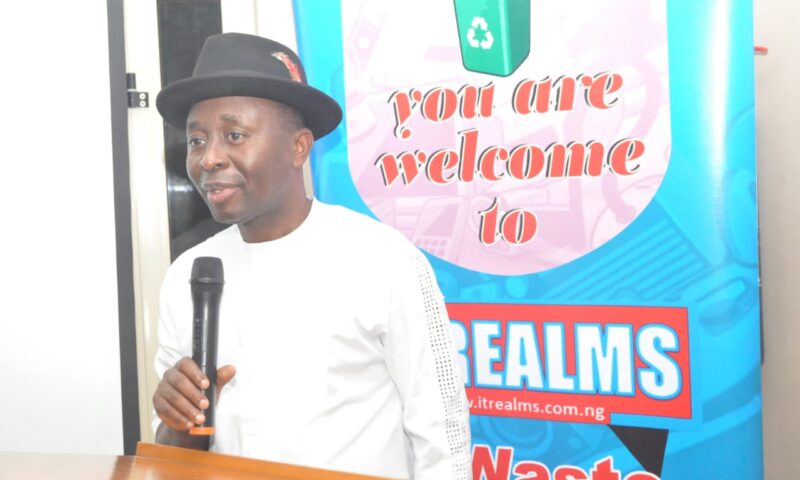
Speaking at the 2025 ITREALMS E-Waste Dialogue in Lagos, Weyinmi highlighted the importance of corporate responsibility in e-waste management.


“As part of consumers and the public, NLNG, like many Multinationals, currently practices green procurement, responsible disposal, and transparent reporting of our e-waste management practices,” Weyinmi stated.


He urged other sectors to adopt similar practices, emphasizing that “this drive should be taken to other sectors to raise the percentage of businesses that responsibly recycle their e-waste.”


Weyinmi also stressed the importance of multinationals supporting brands and policies that prioritize circularity and environmental responsibility.


“Multinationals should support brands and policies that prioritize circularity and environmental responsibility,” he said.


Furthermore, he called on government and policymakers to enforce Extended Producer Responsibility (EPR) and provide incentives for investing in advanced recycling technologies.


“Government and policymakers should pay more attention to the enforcement of EPR and provide incentives for people to invest in advanced recycling technologies where critical raw materials (CRM) can be recovered in-country,” he emphasized.


The 2025 ITREALMS E-Waste Dialogue, themed “Nigeria: Recycle your e-waste – it’s critical!”, brought together key stakeholders from environmental, telecommunications, and energy sectors. The event was moderated by Ogbuefi Remmy Nweke, Group Executive Editor of ITREALMS Media Group.


Other panelists included Mr. Uchechukwu Ugwuanyi, Assistant General Manager at Internet Exchange Point of Nigeria (IXPN), who represented the Managing Director, Mr. Muhammed Rudman; Publisher of Political Economy, Mr. Ken Ugbechie; and Azeezat Alabere, Executive Assistant at E-Waste Producer Responsibility Organisation of Nigeria (EPRON); while Olaide Oyedele-Taiwo, Chief Scientific Officer at NESREA Lagos Liaison Office, represented the Director-General/CEO of NESREA.


The panel highlighted Nigeria’s significant e-waste challenge, with an estimated 1.2 million tonnes generated annually, posing environmental and health risks. They emphasized the need for a unified national strategy, Extended Producer Responsibility (EPR), and efficient systems to recover critical raw materials from discarded electronics.


The dialogue underscored the importance of collective action in addressing Nigeria’s e-waste challenge and promoting sustainable practices.

Ibru Varsity Pro-Chancellor, Anthony Kila, To Chair Business Journal Annual Lecture 2025

Professor Anthony Kila, Pro-Chancellor, Michael & Cecilia Ibru University, will Chair the Business Journal Annual Lecture 2025 scheduled for Tuesday, December 16, 2025 at Oriental Hotel, Lekki Road, Victoria Island, Lagos. Time is 10.00 am prompt.

The THEME of the lecture is: AI & Digital Economy: Projecting the Future of Economic Growth in Nigeria.

Anthony Kila is a Jean Monnet Professor of Strategy and Development.

He is a jurist, political economist, strategist, policy analyst, popular essayist and the Director at the Institute of the Commonwealth. He also serves as an international Director of Studies at the European Centre for Advanced and Professional Studies. He is also the Pro-chancellor and Chairman of Council at the Ibru University

Kila is a regular commentator on the BBC and a columnist for the Independent, Telegraph, Europa and Panorama; his articles and essays are also published in various other news outlets.

Anthony was educated in Cambridge, London, Perugia, and Suffolk. He earned a first-class degree in Political Economy and further specialised in Political Anthropology, Law, Management and Public Policy.

His teaching career includes roles at several renowned institutions across Cambridge, Ipswich, Lagos, Lecce, London, Perugia and Siena.

Anthony Kila’s corporate background includes working as a banker in the City of London, and he has also made a name for himself as a project and management consultant. He is recognised as an authority in internationalisation and joint ventures, having contributed to numerous international projects worldwide.

He currently serves on several boards and works with organisations across sectors such as Aviation, Agriculture, Finance, Healthcare, ICT, Media, Public Affairs, and Security.

As a seasoned policy analyst and adviser, he has contributed his expertise to many organisations within European and Commonwealth countries.

Commenting, Prince Cookey, the Publisher/Editor-in-Chief of Business Journal Media Group said:

“We are indeed delighted to have Prof. Anthony Kila as Chairman of the Business Journal Annual Lecture 2025. A renowned economist and public policy icon, he would bring his vast wealth of experience to bear on the proceedings, content and output of the annual lecture.”

Cookey said the theme of the lecture reflects the current policy direction of major economies and organisations around the world to drive sustainable economic and business growth respectively on the back of AI and digitalisation.

“AI and digitalisation are two key concepts shaping the future of national economies and corporate entities across the globe. Our purpose is to draw them into focus for a better today and tomorrow. The objective of the annual lecture series of the Business Journal Media Group is to raise key issues of importance in the national economy and business of corporates in Nigeria.”

SEC Tasks Market Operators On Sustained Compliance Culture After Nigeria’s Exit From FATF Grey List

The Director General of the Securities and Exchange Commission (SEC), Dr. Emomotimi Agama, has urged financial sector stakeholders to strengthen and sustain a culture of proactive compliance to safeguard Nigeria’s position in the global financial system following its recent exit from the Financial Action Task Force (FATF) Grey List.
Speaking at the Nigerian Capital Market Institute Compliance Summit on Monday, Agama described the gathering as crucial to the future of the country’s financial markets, noting that discussions at the summit touch “the very heart of the market’s integrity, stability and future.”
Agama said Nigeria’s removal from the FATF Grey List was a major national achievement and a strong global endorsement of the country’s resolve to strengthen its Anti-Money Laundering and Counter-Financing of Terrorism (AML/CFT) framework.
He said: “This was not a mere administrative update; it was a resounding global affirmation of our collective and unwavering commitment”.
Crediting the success to the joint efforts of public and private sector institutions, he commended operators, regulators and compliance professionals for their roles in achieving the milestone.
The SEC boss, however, cautioned that the exit should not be seen as the end of the journey.
“Exiting the grey list is not the finish line; it is the starting block for a new race. The world is watching,” he said.
Agama stressed that international investors and global financial institutions will continue to monitor Nigeria to determine whether the reforms are sustainable and whether the country’s compliance culture is deeply entrenched.
He said the theme of the summit underscored the need to shift from compliance driven by external pressure to a more strategic, proactive and permanent culture of adherence to global standards.
“Robust compliance is no longer a regulatory burden; it is our single most powerful competitive advantage. A compliant market is a transparent market, and a trustworthy market is the destination for capital.”
According to him, Nigeria’s strengthened compliance regime signals to the international community that the country is “open for business, safe, secure and sophisticated.”
Agama called for continuous improvement across institutions, especially through the adoption of RegTech and SupTech solutions, regular training of compliance officers, and promotion of ethical conduct across the financial services ecosystem.
He assured stakeholders that the SEC would continue to provide strong regulatory guidance, constructive supervision and the necessary engagement to keep Nigeria aligned with global standards.
The SEC DG urged participants at the summit to share insights and develop practical solutions that will “future-proof” the Nigerian capital market.
“Let us work together to ensure that Nigeria never again finds itself on that list,” Agama said, expressing hope that the country would instead feature among the world’s most resilient and compliant emerging markets.
In her remarks, Executive Commissioenr Legal and Enforcment at the SEC, Ms. Frana Chukwuogor said the capital market has a new law that was signed by the President in 2025 saying that one of the greatest challenges that compliance officers and even market operators face, when there’s a change in regulation is that they don’t have enough information on what has changed.
She said “How can you be compliant if you don’t know what has changed? So our focus here today is to bring the attention, call the attention to some of the new issues, some of the new areas that may pose risks to them and the market.
Ms. Chukwuogor said Some of those issues will deal with some of the threats being faced with Ponzi schemes and digital assets.
“All of you remember that this October, this just past October, we were removed from the gray list. So, yes, we want every participant, every capital market operator, especially the CEOs, to first know, to compel the people who work with them, especially the compliance officers, to learn the new issues that the Investment and Securities Act 2025 requires of them.
The Executive Commisisoner disclosed that the Commission intends to measure compliance by ensuring that operators file returns adding that failure to do so could result in sanctions.


ASTUC Celebrates Star Role Models In Anambra Communities 

By Chikaodi Chukwuleta
President General of Anambra State Town Union Council( ASTUC), Ken  Okoli, has lauded the fourth pillar of the Solution Agenda,  governance and value system, which has uplifted Anambra communities.
He made the statement  during the celebration of three Mega Star Role Models from the 179 communities in the state,  held at the ASTUC Secretariat, Old Government House, Awka.
He said that Governor Soludo’s vision for Anambra’s value system aimed to revive the old ways of doing things, focusing on core values that will guide the Anambra  project.
He maintained that these values, which he identified as articles of faith, including fear of God, patriotism, self reliance, discipline, truth, liberty, justice, dignity of labour, religious and ethnic alliance, and love, among others,  aren’t tied to Soludo’s  tenure, but are meant to be Anambra’s enduring  principle as the Light of the Nation.
 “The annual recognition of role models puts human faces to these values, inspiring  youths and reinforcing  accountability,” he said.
He highlighted the role models’ impact in Amanuke community, where the role model bought a bike for the town’s youth leader, showing active participation and grassroots progress.
He added that generations come and pass, but value system remains, adding that Anambra’s strength lies in core values.
Okoli said the leadership aimed to solve Nigeria’s  broader leadership  challenges through these values, adding that only U.K ( 1709) and USA ( 1776), have enshrined  core values as national  foundations.
 He observed that Anambra aspires to lead Nigeria this way, adding that Governor Soludo’s renewed mandate till March 2026, aligns with this vision, focusing on values-driven leadership.
He stated that Soludo’s second term will continue to empower youths and inclusive governance.
Regarding the voter turnout report by the ASTUC Youth team, which was described as a roadmap for progress, the ASTUC President said that the APGA election saw varying levels of voter engagements across wards, adding that that the team focused on three critical metrics – registered voters, accredited voters and actual votes cast.
“APGA’ s 65% turnout sends a message that when voters are mobilised, they turn out. Using accredited voter data offers a blueprint for data driven campaign and governance. We are not just reporting  numbers, we are empowering Anambra democracy. The future of election is not who shows up, and they know exactly where to focus,” he concluded.