


CBN Advert
Leadway Assurance As First Female Board Chairperson

By Amaka Obiefuna

Leadway Assurance, Nigeria’s leading insurance company, has announced the appointment of Mrs. Adebisi Lamikanra as the new Chairperson of the Board, following the tenure expiration and formal retirement of General (Rtd) Martin Luther Agwai, CFR, who has admirably served as Board Chairman since November 2016.

A Chartered Accountant and Fellow of the Institute of Chartered Accountants of Nigeria (ICAN), Mrs. Lamikanra brings nearly four decades of exceptional leadership and advisory experience to the role. She was a Partner at Andersen Nigeria and made history as the first female Partner at KPMG Nigeria, where she retired as Head of Advisory Services and Lead for the African Region Advisory Practice.

Her career has been defined by strategic consultancy to leading local and multinational organisations across sectors. A proud alumna of the University of Lagos and the Lagos Business School, she has also honed her leadership skills through advanced executive programs at Harvard Business School, INSEAD University, and the Kellogg School of Management.

Mrs. Lamikanra currently serves on the boards of Standard Chartered Bank Nigeria, Evercare Hospital Lekki, and Nestle Nigeria, where her governance acumen and cross-sector insights continue to shape corporate excellence.

Speaking on the appointment, the outgoing Chairman, General (Rtd) Martin Luther Agwai, CFR, expressed his confidence in Mrs. Lamikanra’s leadership, stating, “It has been a profound honour to serve Leadway Assurance, a company that continues to define trust and innovation in Nigeria’s financial services sector. As I pass the baton, I take pride in the enduring culture of excellence we have built together. Mrs. Lamikanra’s appointment represents a seamless continuation of this legacy; her integrity, professionalism, and wealth of experience will ensure that Leadway continues to grow stronger and advance firmly into its next chapter of success.”

Under General Agwai’s stewardship, Leadway Assurance achieved significant milestones, including restructuring into a holding company, expanding across West Africa, and solidifying its position as one of the West Africa’s most trusted financial services institutions. His tenure will be remembered for stability, innovation, and a commitment to governance excellence. His exit, after his successful tenure, reinforces Leadway’s penchant for uploading good governance principles.

Speaking on her appointment as the first female Board Chairperson of the Company, Mrs. Adebisi Lamikanra expressed gratitude and optimism about the company’s future. “I am deeply honoured to assume this responsibility at such a pivotal moment in Leadway Assurance’s journey. The organization’s legacy of trust and innovation, built over five decades, continues to inspire confidence in Nigeria’s financial ecosystem”, she said.

She expressed gratitude to her predecessor, Gen (Rtd.) Martin Luther Agwai, recognizing his outstanding leadership and mentorship skills in steering the affairs of the Board during his tenure as the Board Chairperson.

She further called on the Board, management, and all stakeholders to collaborate and work together in strengthening the Leadway legacy, driving sustainable growth, advancing digital transformation while reinforcing Leadway’s role as a catalyst for financial inclusion and economic development.

Mrs. Lamikanra’s appointment signals a continuation of this legacy, blending experience, foresight, and the dynamism required to navigate Nigeria’s evolving financial landscape. Her leadership is expected to strengthen further the organisation’s culture of excellence, innovation, and sustainable growth.

About Leadway Assurance
Leadway Assurance is one of Nigeria’s leading insurance companies, providing a wide range of financial protection services including life, general business, and agricultural insurance. With over 50 years of experience, Leadway is dedicated to delivering innovative solutions and superior service to its customers.

About Mrs. Adebisi Lamikanra
Adebisi Lamikanra is a Chartered Accountant and Fellow of the Institute of Chartered Accountants of Nigeria (ICAN). She was a Partner in Andersen Nigeria and the first female Partner at KPMG. She retired as Head, Advisory Services KPMG Nigeria and Lead, KPMG African Region Advisory Practice having worked with leading local, international and multi-national organizations. She currently sits on the board of a couple of companies.

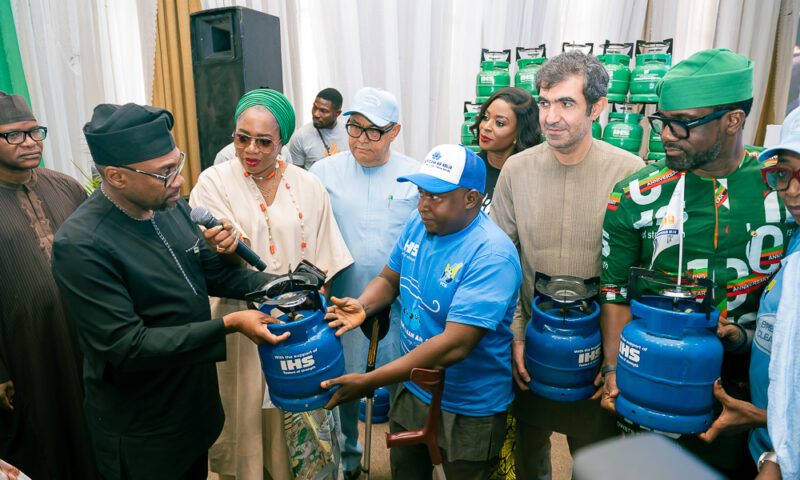
Breathe Clean Air Campaign :  IHS Nigeria , FCT-HSES Begin Distribution Of Smart Cooking Gas

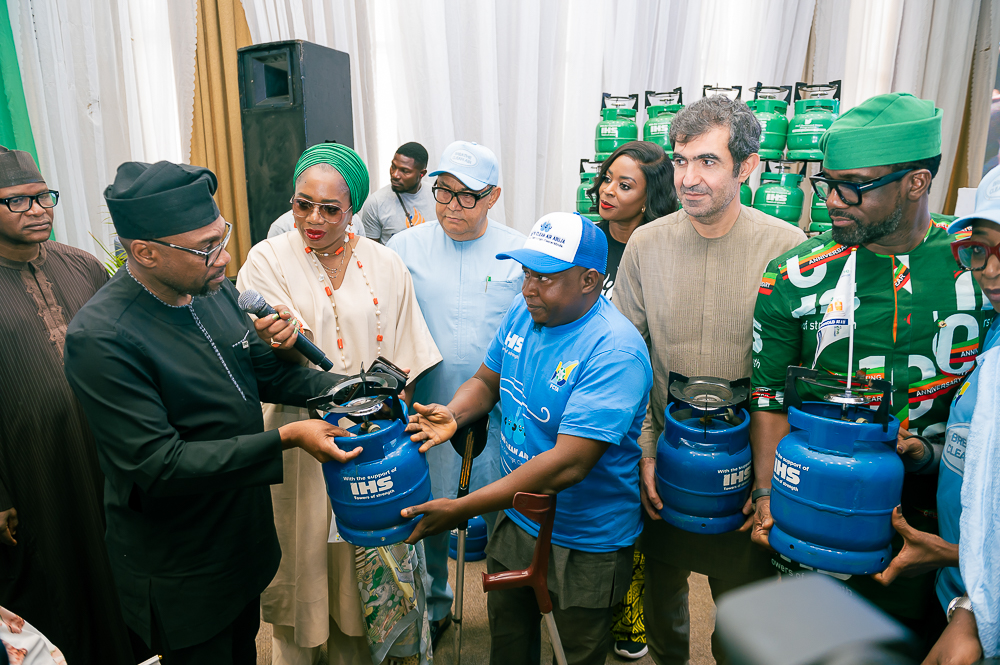
L-R: Senior Vice President and Chief Corporate Services Officer, IHS Nigeria Limited, Dapo Otunla, presenting a cooking cylinder to one of the project beneficiaries; Mandate Secretary, FCT Health Services and Environment Secretariat (HSES), Dr. Adedolapo Fasawe, Chairman, House Adhoc Committee on FCT Health, Hon. Dr. Emil Inyang; Chief Executive Officer, Smart Energies, Dr. Yinka Opeke; Chief Executive Officer, IHS Nigeria, Mohammed Darwish; and Group Chief Human Resource Officer, IHS Towers, Ayotade Oyinlola, during the launch of the Breathe Clean Air Abuja campaign, a collaboration between IHS Nigeria and FCT- HSES aimed at promoting clean energy, environmental sustainability, and improved public health, held at the Bola Ahmed Tinubu International Conference Centre, Abuja, on Saturday, November 15, 2025.

By Winifred Bosa

 IHS Nigeria, the largest communications infrastructure company in Nigeria and part of the IHS Holding Limited (NYSE: IHS) (“IHS Towers”) group, , and the Health Services and Environment Secretariat (HSES) of the Federal Capital Territory (FCT), Abuja, have commenced the distribution of smart cooking gasses to underserved households in the FCT under the  Breathe Clean Air Abuja Campaign.
 This initiative aimed at promoting clean household energy and increasing public awareness on the health impacts of air pollution in the FCT was recently launched at the Kashim Shettima Hall, Bola Ahmed Tinubu International Conference Centre, following an earlier MOU signing between both organisations in September and underscores IHS Nigeria’s continued commitment to promoting sustainable energy adoption and strengthening environmental health standards across Nigeria.
This initiative aligns with IHS Nigeria’s broader sustainability agenda especially the ‘our people and community’ and ‘environment and climate change’ pillars, particularly its focus on adopting cleaner energy across its operations and improving environmental health outcomes in host communities.
IHS Towers, the Holding company has set a target to reduce the company’s kilowatt-hour emissions intensity by approximately 50% by 2030.
In his remarks, the Chief Executive Officer of IHS Nigeria, Mohamad Darwish, spoke about the everyday realities of smoke exposure and the importance of transitioning to healthier cooking options.
“When you think about how much smoke our mothers and sisters inhale while cooking every day, you immediately understand why this project matters. If we can help thousands of families breathe cleaner air, we should all be proud to be part of it,” he said.
Darwish noted that discussions with the Mandate Secretary of the FCT-HSES made it clear that the initiative is designed to grow beyond this first rollout, with future phases expected to attract government funding as well as private-sector support.
In her keynote address, the Mandate Secretary of FCT-HSES, Dr. Adedolapo Fasawe, highlighted the growing impact of both indoor and outdoor air pollution on the health outcome of households, particularly women and children.
 She cautioned that prolonged exposure to smoke from firewood and charcoal continues to contribute to respiratory illnesses including lung cancer and other health conditions.
Dr. Fasawe described the programme as the start of a multi-phase effort to promote cleaner energy alternatives across the FCT.
 She also unveiled the Sustainability Champions Initiative, a youth-focused platform that will drive advocacy and environmental education in schools and communities.
Representing the legislature, Hon. Dr. Emil Inyang, Chairman of the House Adhoc Committee on FCT Health, commended IHS Nigeria for its commitment to the initiative and pledged to support the inclusion of the programme in the 2026 FCT budget.
He later led the symbolic presentation of gas cylinders to selected beneficiaries.
The Permanent Secretary, FCT-HSES, Dr. Babagana Adams, also delivered a goodwill message, acknowledging IHS Nigeria’s support and reaffirming the Secretariat’s commitment to improving public health outcomes across the FCT.
A key highlight of the event was the announcement by IHS Nigeria of a six-month LPG refill support for all beneficiaries of the gas cylinders distributed at the launch.
The ceremony concluded with a demonstration of the clean-cooking equipment, and distribution to beneficiaries including some members of the disabled community.
Airtel Nigeria Launches Smartphone Financing For New Devices

By Winifred Bosa
Airtel Nigeria launches a new Smartphone Financing Programme to aggressively bridge the digital divide.
The innovation provides existing Airtel customers with a flexible and convenient payment plan to own 4G smartphones and drive wider digital inclusion.
Through this innovation, Airtel will finance new smartphones via its exclusive retail network, helping customers currently using 2G and 3G devices upgrade seamlessly to 4G connectivity.
The programme will kick off with the Itel A50 smartphone, a reliable, high-performing device designed to deliver a superior mobile experience for customers across Nigeria.
Speaking on the launch, Dinesh Balsingh, Chief Executive Officer of Airtel Nigeria, said the initiative reflects Airtel’s deep commitment to empowering Nigerians with all they need to thrive in a connected world.
He said, “Connectivity is opportunity, and smartphones are the key that unlocks it.
Through the Airtel Smartphone Financing Programme, we are enabling more Nigerians to access 4G technologies, experience the full benefits of digital inclusion without financial strain, and transform the way they learn, work, and live.
This initiative goes beyond providing devices; it is about empowerment, progress, and building a truly connected future.”
To be eligible, customers must be Airtel subscribers and are advised to check their financing status by dialling *492# USSD code.
 Once approved, the final onboarding is completed at any Airtel-owned shop. Upon making the initial down payment of ₦19,000 or ₦21,000, customers will receive their smartphone and immediately gain access to fast 4G internet.
All payments, including the down payment and subsequent weekly instalments, will be made exclusively through SmartCash, Airtel’s secure mobile money subsidiary.
Also speaking on the innovation, Ismail Adeshina, Director of Marketing, emphasised the role of partnerships and technology in driving the initiative.
“Our mission is to democratise access to technology by removing financial barriers. With this programme, customers can now afford quality smartphones without the burden of full upfront payment. By leveraging SmartCash and intelligent scoring systems, we are creating a sustainable model for inclusive digital growth,” Adeshina added.
To qualify, customers must be active on the Airtel network for at least three months, have a registered SmartCash account, a valid form of identification such as NIN, Voter’s Card, or Driver’s Licence, and provide consent for data processing by Intelligra for eligibility verification.
The Airtel Smartphone Financing Programme aligns with Airtel Nigeria’s broader goal of advancing financial inclusion, digital empowerment, and innovation across the country.
To check your eligibility, dial *492# or visit any Airtel-owned retail shop nationwide to get started.
Franklin Ozekhome Features As Keynote Speaker At Creative & Branding Icons Award 2025

By Winifred Bosa

Marketing Space, Nigeria’s leading and most consistent brands and marketing magazine and the organisers of the Brand Handlers Summit & Awards has announced Mr. Franklin Ozekhome as the Keynote Speaker for the upcoming Creative & Branding Icons Award 2025.

The event is scheduled to take place on Thursday, December 18, 2025, at Suru Express Plus Hotel, opposite Marriott Hotel, GRA Ikeja, Lagos, by 1:00 PM.

The Creative & Branding Icons Award is dedicated to honouring the visionaries behind notable brands for their remarkable contributions to brand building and to serve as a convergence point for leading stakeholders, innovators and thought leaders across the creative, branding and marketing communications landscape.

The platform provides a unique opportunity to examine the evolving dynamics shaping brand growth today while recognising excellence, celebrating innovation and inspiring professionals committed to advancing the Nigerian marketing ecosystem.

Commenting on the selection of Mr. Ozekhome as keynote speaker, Lukmman Ishau, Publisher of Marketing Space magazine and Convener of the Creative & Branding Icons Award, stated that, “Franklin Ozekhome embodies the very essence of forward-thinking leadership that this year’s theme demands, his outstanding contributions, strategic depth and influence across the marketing communications ecosystem make him the ideal individual to speak on our central theme: ‘Beyond Creativity: Building Timeless Brands in a Transforming World.’

‘’We are confident that his insights will not only enrich the discourse but also inspire every professional in attendance,’’ he added”

He mentioned that, the 2025 edition will feature high-level conversations designed to shape the future of creativity and branding in an increasingly dynamic landscape.

‘’As brands continue to navigate rapid technological, cultural and market shifts, this year’s theme emphasises the importance of purposeful creativity, enduring brand strategy and visionary leadership.

Mr. Ozekhome’s proven track record in crafting compelling brand narratives, championing innovation, and influencing industry transformation firmly establishes him as the perfect voice to headline this milestone event,’’ he said.


Fidelity Bank Grows Gross Earnings By 46% To ₦748.7 Billion For H1 2025


Fidelity Bank Plc has announced its audited financial results for the half-year ended 30 June 2025, demonstrating resilience and sustained growth across key performance indicators.


Highlights of the financial results which was uploaded on the Nigerian Exchange (NGX) portal on Thursday, 13 November 2025 shows that the bank delivered robust results across key financial metrics including Gross Earnings, which stood at ₦748.7 billion, up from ₦512.9 billion in H1 2024; Net Interest Income, which rose to ₦420.4 billion, compared to ₦326.4 billion in H1 2024; and Customer Deposits, which grew to ₦7.2 trillion, from ₦5.9 trillion in FY 2024.

Similarly, the bank’s Net Revenue increased to ₦444.4 billion, compared to ₦396.8 billion in H1 2024.

Fidelity Bank continued to expand its digital banking footprint, enhance customer experience, and support key sectors of the economy. The bank’s loan book grew, with Net Loans and Advances expanding to ₦4.9 trillion, up from ₦4.4 trillion in FY 2024, reflecting increased support for businesses and individuals. Asset quality remained stable, with non-performing loans well within acceptable limits.


The bank’s capital raising initiatives have further strengthened its financial position, ensuring readiness to meet new regulatory requirements and pursue growth opportunities. Fidelity Bank’s strong liquidity profile and robust governance framework provide a solid foundation for continued success.

Ranked among the best banks in Nigeria, Fidelity Bank Plc is a full-fledged Commercial Deposit Money Bank serving over 9.1 million customers through digital banking channels, its 255 business offices in Nigeria and United Kingdom subsidiary, FidBank UK Limited.


The Bank is a recipient of multiple local and international Awards, including the 2024 Excellence in Digital Transformation & MSME Banking Award by BusinessDay Banks and Financial Institutions (BAFI) Awards; the 2024 Most Innovative Mobile Banking Application award for its Fidelity Mobile App by Global Business Outlook, and the 2024 Most Innovative Investment Banking Service Provider award by Global Brands Magazine. Additionally, the Bank was recognized as the Best Bank for SMEs in Nigeria by the Euromoney Awards for Excellence and as the Export Financing Bank of the Year by the BusinessDay Banks and Financial Institutions (BAFI) Awards

FG Moves To Bridge Housing Gap As SEC, FMBN Partner On Non-Interest Mortgage Framework

In a significant move aimed at tackling the nation’s massive housing deficit and deepening financial inclusion, the Securities and Exchange Commission (SEC) and the Federal Mortgage Bank of Nigeria (FMBN) and have announced a strategic collaboration to develop a robust Non-Interest Mortgage (NIM) ecosystem.


The partnership, unveiled at a high-level meeting in Abuja, Friday, seeks to create and regulate viable, Sharia-compliant financing structures that will enable millions of Nigerians, particularly those excluded from conventional interest-based loans, to access affordable homeownership.


With Nigeria’s housing deficit estimated to be over 28 million units, the initiative is being hailed as a potential game-changer. It directly addresses a key barrier to homeownership: the affordability and religious compliance of mortgage products for a significant segment of the population.


Director-General of the SEC, Dr. Emomotimi Agama while emphasizing the Commission’s role in ensuring the integrity and stability of the proposed financial instruments, stated that the SEC would provide the necessary regulatory guidance and framework to facilitate the issuance of Sukuk (imic bonds) and other non-interest capital market products to fund these mortgages.


“Our collaboration with FMBN is pivotal to unlocking long-term financing for the housing sector,” Dr. Agama said. “By creating a clear regulatory pathway for non-interest mortgage-backed securities, we can attract ethical investors, both domestic and international, to channel funds into this critical area. This will create a virtuous cycle of funding, construction, and ownership.”


In his remarks, the Managing Director/Chief Executive Officer of FMBN, Mr. Shehu Osidi, stated that the collaboration marks a critical step in fulfilling the bank’s mandate to provide affordable housing for all Nigerians.


“For a long time, a substantial number of our citizens have been unable to participate in the National Housing Fund (NHF) scheme due to the interest-based nature of conventional mortgages. This partnership with SEC is a strategic response to that gap. We are committed to developing non-interest mortgage products that are not only ethical and inclusive but also financially sustainable.”,”Osidi said.


Also commenting, Housing and finance expert, Mr Ebilate McYoroki , welcomed the development describing it as “long overdue.”
“This is a masterstroke in financial inclusion,” he said. “It taps into a vast pool of potential homeowners and investors who have previously been on the sidelines. If implemented transparently, it could significantly accelerate the pace of housing delivery in the country.”


The successful implementation of this framework is expected to not only reduce the housing deficit but also stimulate the construction industry, create jobs, and foster greater financial inclusion, ultimately contributing to national economic growth.
How the Non-Interest Mortgage Model Works.


Unlike conventional mortgages that charge interest, non-interest financing is based on principles of risk-sharing, asset-backing, and equitable returns. The models under consideration include:
· Musharakah (Diminishing Partnership): The bank and the customer jointly purchase a property. The customer gradually buys out the bank’s share through periodic payments, eventually becoming the sole owner.
· Ijara (Lease-to-Own): The bank buys the property and leases it to the customer for a fixed period. A portion of the rental payments goes towards the eventual ownership transfer.
· Murabaha (Cost-Plus Sale): The bank acquires the property and sells it to the customer at a pre-agreed markup, payable in installments.

PH AirportCity Positioned To Reshape High-End Housing And Spur Statewide Economic Growth


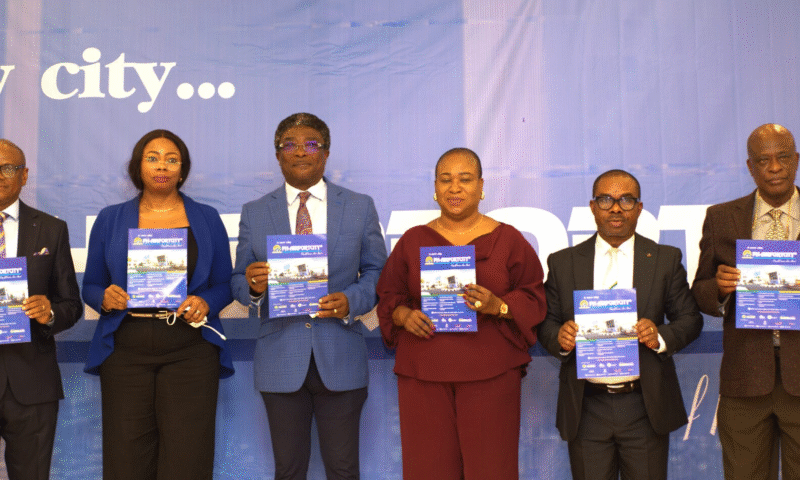
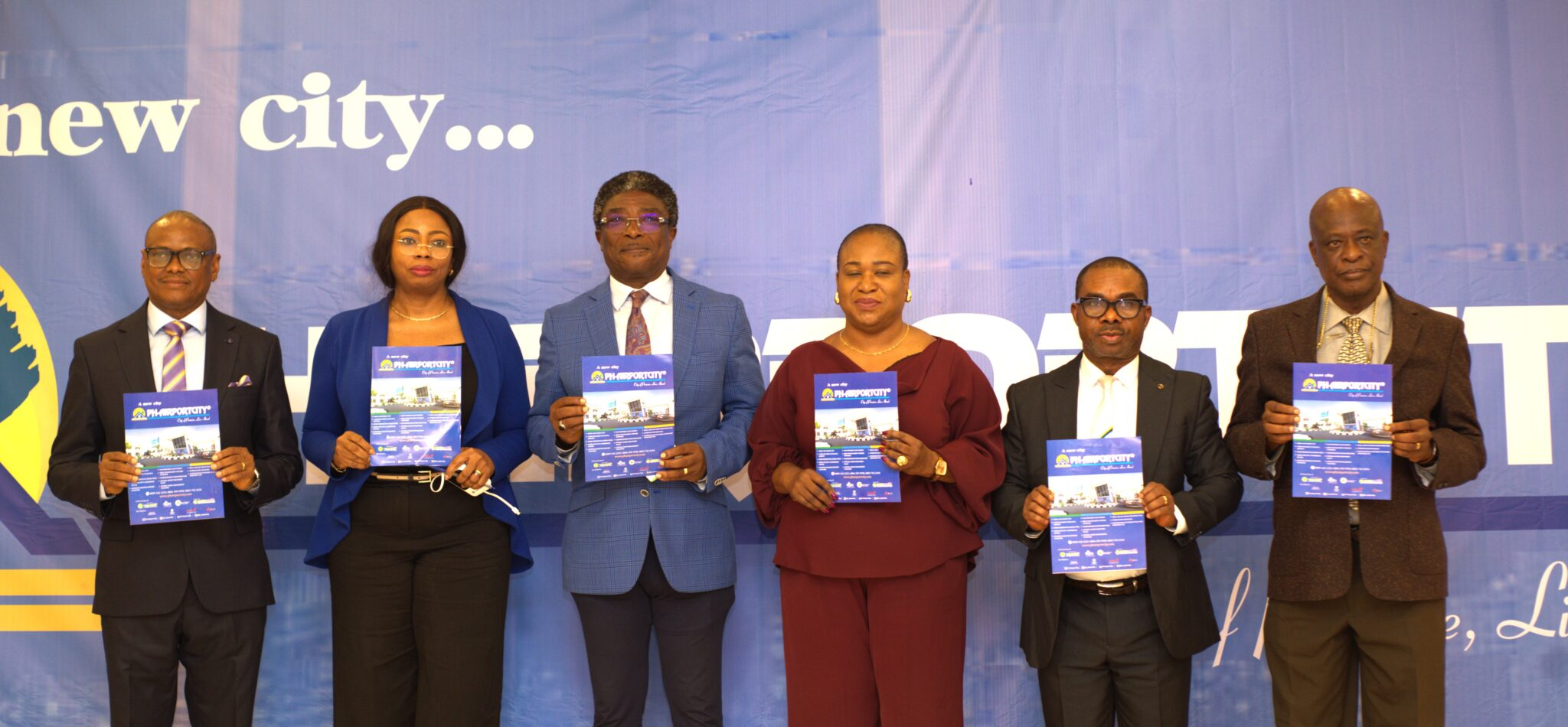
A bold new urban vision is taking shape on the outskirts of Port Harcourt as the Rivers State Government and Masta Services Company Limited jointly unveiled PH AirportCity, a self-sustaining mini city designed to attract top executives, investors, and long-time residents back to the Garden City. Located near the Port Harcourt International Airport in Omagwa, the development will deliver an initial 2000 housing units in phases, forming the foundation of what stakeholders describe as a city within a city, modern, secure, globally competitive, and purpose built for luxury living.


The project is being executed through a Special Purpose Vehicle, Masta Rivers Development Company Limited, with 70 percent equity from Masta Services and 30 percent from the Greater Port Harcourt City Development Authority (GPCDA) on behalf of the state. The official unveiling, held at Hotel Presidential in Port Harcourt, also formalised a partnership with the Federal Mortgage Bank of Nigeria (FMBN) to support prospective homeowners with accessible mortgage plans.


PH AirportCity sits within the vast Greater Port Harcourt Masterplan covering about 1900 square kilometres across eight local government areas and designed to grow into a modern urban cluster with a population projection of over two million residents. According to Ade Adeoshun, brand consultant on the project, the mini city will occupy 80 hectares, with verified land titles already prepared for investors.


He described the unveiling as a new dawn for Rivers State, noting that Port Harcourt’s vast economic potential, especially in oil and gas, has remained under maximised due to years of insecurity, infrastructural neglect, and urban flight.


Presenting the masterplan, Arc. Ugo Ohuabunwa, Managing Director of Masta Services and Managing Partner of the SPV, said PH AirportCity was conceived to reverse the trend of high value individuals relocating from the state. He explained that many top level executives fled not just because of insecurity, but because the city lacked world class, secure residential environments that match their lifestyle and productivity needs. He stressed that Port Harcourt remains one of Africa’s most strategically connected cities, with access routes linking Aba, Uyo, Owerri, Onitsha, and Yenagoa in under two hours, and therefore deserves an urban infrastructure that reflects its economic importance.


Ohuabunwa revealed that the development will serve as Nigeria’s first true aerotropolis, a modern urban model in which an international airport functions as the economic hub of a city, surrounded by interconnected residential, commercial, logistics, entertainment, and smart technology districts. Planned features include one to five bedroom smart homes, centralised electronic security and CCTV coverage, malls, entertainment centres, fibre optic connectivity, gas to power systems, central sewage and stormwater management, extensive road networks, and four fire stations. He noted that prices will start from about ₦32 million, with mortgage support from FMBN and Stanbic IBTC making luxury living more accessible. He also disclosed that buyers’ funds will not be relied upon to build, a model he said is still rare in Nigeria’s housing sector.


Melody Ukwa, Port Harcourt Branch Manager of the Federal Mortgage Bank of Nigeria, confirmed that subscribers will have access to various flexible housing products including Rent to Own, renovation loans, diaspora mortgage packages, and the National Housing Fund, with tenures of up to 30 years. Bennett Chu, Administrator of the GPCDA, added that the state government thoroughly vetted every development component and insisted on global best practice standards because of its determination to deliver mass housing without compromising quality.


As construction begins, PH AirportCity is being positioned as a lifestyle destination that blends safety, elegance, technology, and convenience, a bold attempt to rewrite the story of Port Harcourt and restore investor confidence. With its strategic location and integrated infrastructure blueprint, the mini city is expected to reshape urban living in Rivers State, while the first sets of housing units are scheduled to be delivered in phases soon.

How Access Bank Is Supporting Women Driving Africa’s Growth Story

Amaka Obiefuna

Across Africa, women are fast becoming the heartbeat of economic transformation. From bustling open-air markets to high-tech boardrooms, women-led enterprises are redefining what is possible for the continent’s future. Whether as market traders expanding their reach through digital platforms, tech founders scaling innovations across borders, or artisans turning local crafts into global brands, women’s contributions are now central to Africa’s economic resurgence.


Even as they break new ground, many still face formidable barriers. Access to finance, mentorship, business education, and supportive networks remains limited. Structural issues such as weak property rights, gender bias, and inadequate legal protections often hinder women from securing loans or expanding their businesses. Consequently, many women-owned ventures remain small, informal, and vulnerable to economic shocks.


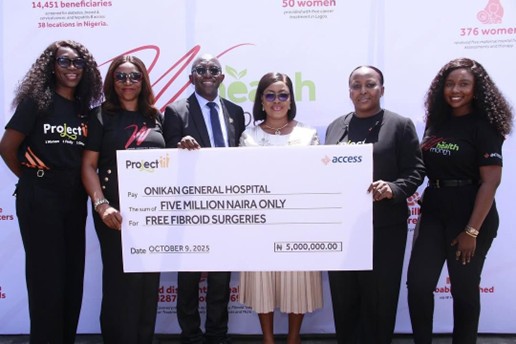
Recognising both the promise and the obstacles, Access Bank has positioned itself at the forefront of empowering women across the continent. Recently named Africa’s Best Financier for Female Entrepreneurs by the EMEA Finance Awards, the Bank has earned global recognition for its commitment to inclusion, innovation, and sustainable impact.


At the centre of this effort is the W Initiative, one of Africa’s most comprehensive women-focused banking programmes. Unlike conventional banking, it combines finance with mentorship, training, and community support, acknowledging that true empowerment requires more than access to capital. The initiative meets women wherever they are on their entrepreneurial journey, from start-ups to growing enterprises and corporate leadership.


The W Power Loan offers affordable credit with flexible terms, enabling women to invest in expansion, inventory, or technology. The W Academy provides leadership and business training on financial literacy, marketing, and regulatory compliance, while the W Community connects women to peers, mentors, and role models across industries.


Importantly, these offerings extend beyond urban centres. From microloans sustaining traders in rural markets to leadership programmes developing female executives in multinational firms, Access Bank’s approach is deliberately inclusive. By partnering NGOs, business associations, and government agencies, it reaches women in underserved communities, ensuring participation in Africa’s economic rise.


The results are evident. Thousands of women have accessed credit, training, and networks through the Bank’s initiatives, enabling them to launch and scale businesses, create jobs, and uplift their communities. The ripple effects are far-reaching: increased household income, improved family wellbeing, and greater economic resilience. Women who once faced daunting barriers now serve as role models and change-makers, inspiring others to follow their path.


Studies show that when women thrive, societies prosper. The World Bank and African Development Bank note that empowering women fuels GDP growth, improves health outcomes, and enhances social stability. By directly addressing structural gaps in access to finance and information, Access Bank helps to unlock this transformative potential.


Apart from supporting entrepreneurs, Access Bank promotes gender inclusion within its own organisation. Its leadership pipeline identifies and advances talented women, while mentorship and wellness programmes help female professionals thrive. The Bank also uses public platforms, from conferences to policy dialogues, to share success stories and advocate for gender diversity across sectors.


The EMEA Finance recognition thus goes beyond trophies and titles; it affirms that profitability and purpose can coexist. For Access Bank, supporting women’s advancement is smart economics. By embedding inclusion into its DNA, the Bank is shaping a financial ecosystem that views women as equal partners in progress.


Access Bank’s influence also extends into advocacy. Through forums, roundtables, and research collaborations, the Bank engages policymakers, civil society, and business leaders to identify and dismantle barriers facing women entrepreneurs. Its campaigns amplify women’s voices, spotlighting their achievements and driving conversations around inclusive growth.

IHS Holding Limited Chairman Credits Nigeria For Strong Q3’25 Earnings

By Winifred Bosa
New York Stock Exchange listed IHS Towers, the largest independent owner, operator and developer of shared communications infrastructure in Africa and one of the largest in the world by tower count, has delivered strong third quarter earnings ahead of expectations while revisiting its full 2025 guidance upwards.
This is on the back of its strong Nigeria performance where Sam Darwish, Chairman and CEO, tells thousands of Wall Street investors and analysts on its earnings call that “the current Nigerian administration has done in our opinion a great job in stabilizing and improving the economic outlook of the country as they increase reserves and strengthened the currency, while reducing red tape for businesses among other fundamental actions. So, we are upbeat about Nigeria.”
In Nigeria, revenue increased 10.6% year-on-year to $268.0 million, driven by organic growth during the period and supplemented by favorable movements in the Naira versus the U.S. dollar.
Across the Group, revenue for the period increased by 8.3% year-on-year to $455.1 million, despite a 3.0% inorganic revenue headwind resulting from the disposal of the Company’s Kuwait operations in December 2024.
Organic revenue growth of 6.6% reflected constant currency growth of 8.7% and the benefit of foreign exchange (“FX”) resets, partially offset by a reduction in revenues linked to power indexation.
 Constant currency growth was primarily driven by higher contributions from colocation, lease amendments, new sites, fiber, and escalators. This strong underlying performance was further supported by a 4.7% benefit from favorable FX movements, particularly the appreciation of the Nigerian Naira against the U.S. dollar.
Adjusted EBITDA rose by 6.3% year-on-year to $261.5 million, despite a 3.3% impact from the Kuwait disposal. The Adjusted EBITDA margin of 57.5% remained consistent with the second quarter of 2025, while net income for the period totaled $147.4 million.
Adjusted Levered Free Cash Flow (ALFCF) surged by 81.2% to $157.8 million, reflecting management actions to enhance free cash flow generation and the re-phasing of interest payments between quarters following the November 2024 bond refinancing.
 Cash from operations increased by 42.3% to $259.6 million.
Total capital expenditure rose 16.3% year-on-year to $77.3 million, driven by the timing of maintenance and augmentation projects.
The consolidated net leverage ratio improved to 3.3x, down 0.6x from the prior year, comfortably within the Company’s target range of 3.0x to 4.0x.
Reflecting the strong year-to-date performance and favorable currency movements, the Company has raised its full-year 2025 guidance.
In Nigeria the Group’s largest operation, organic revenue increased by $12.2 million, an increase of 5.0% year-on-year, driven primarily by foreign exchange resets and escalations, which more than offset a reduction in revenues linked to diesel prices.
 Continued growth in revenue from Colocation, Lease Amendments and New Sites was partially offset by Churn related to the approximately 1,050 sites MTN Nigeria agreed to vacate as part of the renewed and extended contracts with MTN Nigeria, signed during the third quarter of 2024.
The increase in organic revenue was supplemented by favorable movements in foreign exchange rates used to translate the results of foreign operations, with an average Naira rate of ₦1,523 to $1.00 in the third quarter of 2025 compared to an average rate of ₦1,601 to $1.00 in the third quarter of 2024.
This led to a non-core increase of $13.5 million, or 5.6% year-on-year.
FG Halts Implementation Of 15% Import Tax On Petrol, Diesel

SERAP to Tinubu: Reverse fuel price hike immediately, probe NNPCLThe federal government on Thursday announced the suspension of the fresh 15 per cent import duty on imported petrol and diesel, stressing that the implementation was ‘no longer in view’.

A statement by the Nigerian Midstream and Downstream Petroleum Regulatory Authority (NMDPRA), also assured Nigerians that the country has robust domestic supply of petroleum products sourced from both local refineries and importation to ensure timely replenishment of stocks.

It therefore warned against panic buying of petroleum products, urging Nigerians to go about their normal duties, without apprehension over the availability of critical fuels.

Nigeria’s recent decision to impose a 15 per cent import duty on petrol and diesel was conceived in some quarters as a bold step toward reducing the country’s dependence on imported refined products and encouraging the use of locally produced fuel in certain quarters.

On the other hand, the duty, many argued, would add to the per litre landing cost of petrol and diesel, which would almost certainly raise pump prices. The plan, approved by President Bola Tinubu in late October 2025, was part of efforts to protect emerging domestic refineries, particularly the Dangote Refinery, which has been increasing output.

The government’s argument was that Nigeria could not continue to rely on imported fuel when it now possessed growing refining capacity that needed to be protected and made competitive. Officials also saw the tariff as a way to curb excessive importation, strengthen the naira by reducing demand for foreign exchange, and create incentives for local value addition in the downstream oil sector.

However, the proposal immediately triggered widespread concern as labour groups, business owners, and consumer advocates warned that the duty would push up fuel prices, deepen inflation, and worsen the already heavy burden on households.

But the NMDPRA, in the statement signed by its Director, Public Affairs Department, George Ene-Ita, stated that the take-off of the initiative had been put in abeyance.

“The Authority wishes to use this opportunity to advise against any hoarding, panic buying or non-market reflective escalation of prices of petroleum products. It should also be noted that the implementation of the 15 per cent ad-valorem import duty on imported Premium Motor Spirit (PMS) and diesel is no longer in view,” it stated.

Besides, the NMDPRA assured the general public that there is adequate supply of petroleum products in the country, within the acceptable national sufficiency threshold during this peak demand period.

“There is robust domestic supply of petroleum products (AGO, PMS, LPG etc) sourced from both local refineries and importation to ensure timely replenishment of stocks at storage depots and retail stations during this period,” it added.

The Authority stated that it will continue to closely monitor the supply situation and take appropriate regulatory measures to prevent disruption of supply and distribution of petroleum products across the country, especially during this peak demand period.

While appreciating the continued efforts of all stakeholders in the midstream and downstream value chain in ensuring a smooth and uninterrupted supply and distribution, it assured the public of NMDPRA’s commitment to guarantee energy security nationwide.

Source : Arise News