BY BLAISE UDUNZE
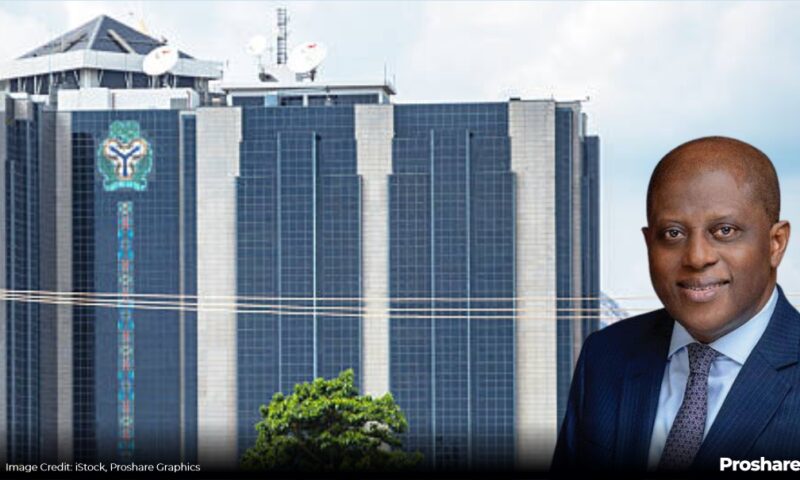
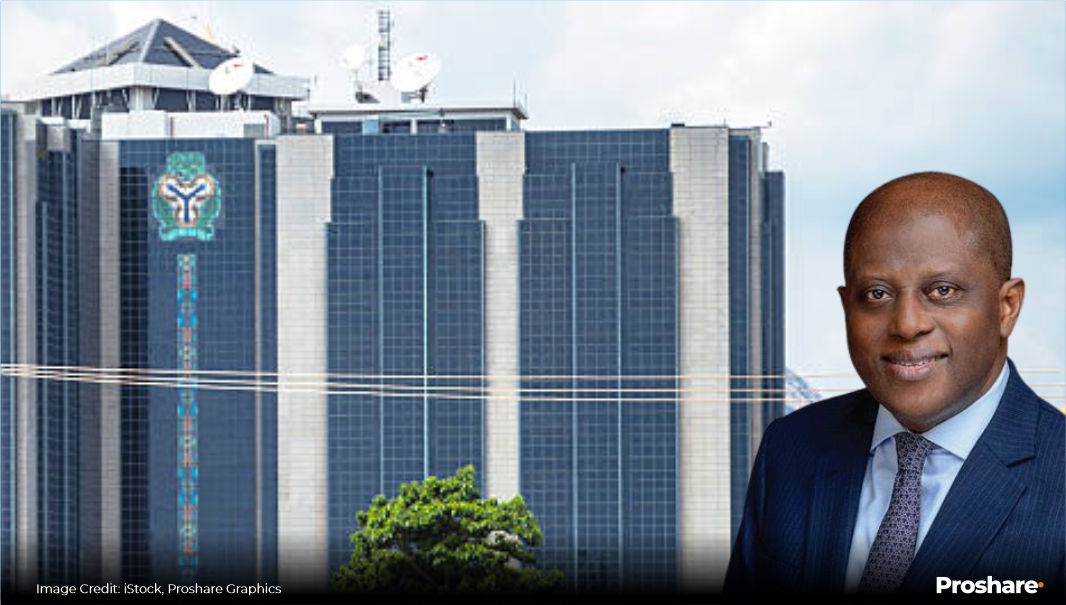
At the Annual Bankers’ Dinner, when the Governor of the Central Bank of Nigeria, Yemi Cardoso, recently stated that Nigeria had “turned a decisive corner,” his remark aimed to convey assurance that inflation was decelerating with headline inflation eased to 16.05percent and food inflation retreating to 13.12 percent, the exchange rate was stabilizing, and foreign reserves ($46.7 billion) had climbed to a seven-year peak. However, beneath this announcement, a grimmer and conflicting economic situation challenges households, businesses, and investors daily.
Stability is not announced; it is felt. For millions of Nigerians, however, what they are facing instead are increasing difficulties, declining abilities, diminished buying power, and susceptibilities that dispute any assertion of a steady macroeconomic path.
The 303rd MPC gathering was the most significant in recent times, revealing policies and statements that prompt more questions than clarifications. It highlighted an economy striving to appear stable, in theory, while the actual sector struggles to breathe.
This narrative explores why Cardoso’s assertion of “restored stability” is based on a delicate and partial foundation, and why Nigeria continues to be distant from attaining economic robustness.
Manufacturing: The Core of Genuine Stability Remains Struggling to Survive
A strong economy is characterized by growth in production, increased investment, and competitive industries. Nigeria lacks all of these elements.
The Manufacturers Association of Nigeria (MAN) expressed this clearly in its response to the MPC’s choice to keep the Monetary Policy Rate at 27 percent. MAN stated that elevated interest rates are now” hindering production, deterring investment, and weakening competitiveness.
Producers are presently taking loans at rates between 30-37 percent, an environment that renders growth unfeasible and survival challenging. MAN’s Director-General, Segun Ajayi-Kadir, emphasized that although stable exchange rates matter, no genuine industry can endure borrowing expenses to those charged by loan sharks.
The CBN’s choice to maintain elevated interest rates is based on drawing foreign portfolio investors (FPIs) to support the naira’s stability. However, FPIs are well-known for being short-term, speculative, and reactive to disturbances. They do not signify long-term stability. Do they represent genuine economic development?
Genuine stability demands assurance, in manufacturing beyond financial tightening. Manufacturers are expressing, clearly and persistently, that no progress has been made.
Oil Output and Revenue: The Engine Behind Nigeria’s Stability Is Misfiring
Nigeria’s oil sector, which is the backbone of its fiscal stability, is underperforming. The 2025 budget presumed:
· $75 per barrel oil price
· 2.06 million barrels per day production
Both objectives have fallen apart. Brent crude lingers near $62.56 under the benchmark. Contrary to the usual explanations, experts attribute the decline not mainly to external shocks but to poor reservoir management, outdated models, weak oversight, and delayed technical decisions.
Engineer Charles Deigh, a regarded expert in reservoir engineering, clearly expressed that Nigeria is experiencing production losses due to inadequate well monitoring, obsolete reservoir models, and technical choices lacking fundamental engineering precision. These shortcomings result directly in decreased revenue. By September 2025:
– Nigeria had accumulated N62.15 trillion from oil revenue
– instead of the N84.67 trillion budgeted.
– In September, the Federal Inland Revenue Service reported a startling 49.60 percent deficit in revenue from oil taxes.
A nation falling short of its main revenue goals by 50 percent cannot assert stability. Instead, it will take loans. Nigeria has taken loans.
A Stability Built on Debt, Not Productivity
Nigeria is now Africa’s largest borrower, and the world’s third-biggest borrower from the World Bank’s IDA, with $18.5 billion in commitments. By mid-2025, the total public debt amounts to N152.4 trillion, marking a 348.6 percent rise since 2023.
From July to October 2025, the government secured contracts for: $24.79 billion, €4 billion, ¥15 billion, N757 billion, and $500 million Sukuk loans. Nevertheless, in spite of these acquisitions, infrastructure continues to be manufacturing remains limited, and social welfare is still insufficient.
Uche Uwaleke, a finance and capital markets professor, cautions that Nigeria’s debt service ratio is “detrimental to growth.” Currently, the government spends one out of every four naira it earns on servicing debts. Taking on debt is not harmful in itself, provided it finances projects that pay for themselves. In Nigeria, it supports subsistence. A country funding today, through the labour of the future, cannot assert restored stability.
The Naira: A Currency Supported by Fragile Pillars
The CBN contends that elevated interest rates and enhanced market confidence have contributed to the naira’s stabilisation. However, this steadiness is based on grounds that cannot endure even the slightest global disturbance. The pillars of a stable currency are:
– Rising domestic production
– Expanding exports
– Reliable energy supply
– Strong security
– A thriving manufacturing base
None of these is Nigeria’s current reality. What Nigeria actually receives is capital from portfolio investors, and past events (2014, 2018, 2020, 2022) have demonstrated how rapidly these funds disappear.
Unemployment: “Stable” Figures Mask a Rising Youth Crisis
The CBN touts a reported unemployment rate of 4.3 percent. However, the International Labour Organisation (ILO), along with economists, cautions that the approach conceals more serious issues in the labour market.
Youth joblessness has increased to 6.5 percent, and the Nigerian Economic Summit Group cautions that Nigeria needs to generate 27 million formal employment opportunities by 2030 or else confront a disastrous labour crisis. The employment crisis is a ticking time bomb. A country cannot maintain stability when its youth are inactive, disheartened, and financially marginalized.
FDI Continues to Lag Despite CBN’s Positive Outlook
During the 2025 Nigerian Economic Summit, NESG Chairman, Niyi Yusuf stated that Nigeria’s efforts to attract direct investment (FDI) continue to be sluggish despite the implementation of reforms. FDI genuinely reflects investor trust, not portfolio inflows. FDI signifies enduring dedication, manufacturing plants, employment, and generating value. Nigeria does not have any of this as of now. An economy unable to draw long-term investments lacks stability.
139 Million Nigerians in Poverty: What Stability?
The recent development report from the World Bank estimates that 139 million Nigerians are living in poverty, and more than half of the population faces daily struggles. This is not stability. It is a humanitarian and economic crisis.
Food inflation continues to stay structurally high. The cost of a food basket has risen five times since 2019. Low-income families currently allocate much, as 70 percent of their earnings to food. A government cannot claim stability when its citizens go hungry.
A Fragile, Failing Power Sector
The power sector, another cornerstone of economic stability, is failing. Over 90 million Nigerians are without access to electricity, which is one of the highest figures globally. Even homes linked to the grid get 6.6 hours of electricity daily. Companies allocate funds to generators rather than to technology, innovation, or growth. Nigeria has now emerged as the biggest importer of solar panels in Africa, not due to environmental goals but because the national power grid is unreliable.
A country cannot achieve stability if it is unable to supply electricity to its residences, industrial plants, or medical centers.
Insecurity: The Silent Pillar Undermining All Economic Policy
Banditry, terrorism, abduction, and militant attacks persist in agriculture, manufacturing, logistics, and investment. Nigeria forfeits $15 billion each year due to insecurity and resources that might have fueled industrial development.
Food price increases are mainly caused by instability, and farmers are unable to cultivate, gather, or deliver their products. Nevertheless, the MPC approaches inflation predominantly as an issue of policy. In a country where insecurity fundamentally hinders the economy tightening policy cannot ensure stability.
Inflation Figures Under Suspicion
Questions have also emerged regarding the reliability of inflation data. Dr. Tilewa Adebajo, an economist, affirmed that the CBN might not entirely rely on the NBS inflation figures, highlighting increasing apprehension. A sharp decrease to 16 percent inflation clashes with market conditions.
Families are facing the food costs in two decades. Costs, for transport, housing rent, education fees, and necessary items keep increasing. Food prices cannot decline when farmers are abandoning their farmlands and fleeing for safety. If inflation figures are manipulated or partial, the stability story based on them becomes deceptive. There is, quite frankly, a significant disconnect between governance and the lived experience of ordinary Nigerians.
Foreign Reserves: A Story of Headlines vs Reality
Even Nigeria’s celebrated foreign reserves require scrutiny. The CBN reported $46.7 billion in reserves. However, a closer examination shows:
– Net usable reserves are only $23.11 billion
– The remainder is connected to commitments, swaps, and debts
Gross reserves make the news. Net reserves protect the currency. The difference is too large to assert that the naira is stable.
Nigeria’s Economic Contradiction: Stability at the Top, Volatility at the Bottom
In reality, Nigeria is caught between official proclamations of stability and lived experiences of volatility. The disparity between the CBN’s account and the actual experiences of Nigerians highlights a reality:
– Macroeconomic changes have failed to convert into improvements in human well-being.
– Nigeria might appear stable officially. Its citizens are experiencing instability in truth.
– Taking on debt is increasing
– Poverty is worsening
– Manufacturing is contracting
– Jobs are scarce
– Authority is breaking down
– Feelings of insecurity are growing stronger
– Inflation is undermining dignity
– Companies are struggling to breathe
– Capital is escaping
– Misery, among humans, is expanding
A strong economy is one where advancement is experienced, not announced.
What Genuine Stability Demands
To move from paper stability to real stability, Nigeria must:
1. Support domestic production. Cut interest rates for manufacturers, reduce borrowing costs, and provide targeted credit.
2. Fix oil production technically. Revamp reservoir engineering, implement surveillance. Allocate resources to adequate technical oversight.
3. Prioritize security. Secure farmlands, highways, and industrial corridors.
4. Reform the power sector. Invest in grid reliability, renewable integration, and private-sector-led transmission.
5. Attract real FDI. Streamline rules, enhance the framework, and maintain consistent policy guidance.
6. Anchor debt on productive projects. Take loans exclusively for infrastructure projects that produce income.
7. Prioritize reforms in welfare. Adopt crisis-responsive, domestically funded safety nets.
8. Improve transparency. Ensure inflation, employment, and reserve data reflect reality.
Stability Is Not Given; It Has to Be Achieved
The CBN Governor’s statement of “renewed stability” is hopeful. It remains unproven. The inconsistencies are glaring, the statistics too. The real-world experiences are too harsh. Nigerians require outcomes, not slogans. Stability is gauged not through statements on policy but by whether:
– Manufacturing plants are creating (factories operate at full capacity),
– Food is affordable,
– Young people have jobs
– The naira is strong without artificial props,
– Electricity is reliable,
– Security is assured,
– Poverty rates are decreasing.
Unless these conditions are met, Nigeria is not experiencing a period of restored stability. Instead, it is going through a phase of recovery, one that will collapse if the actual economy keeps worsening while decision-makers prematurely applaud their successes. The CBN must rethink its approach. Nigeria needs productive stability, not statistical stability.
Blaise, a journalist and PR professional, writes from Lagos, can be reached via: blaise.udunze@gmail.com