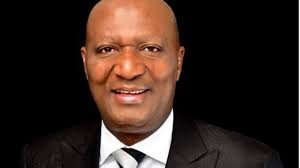
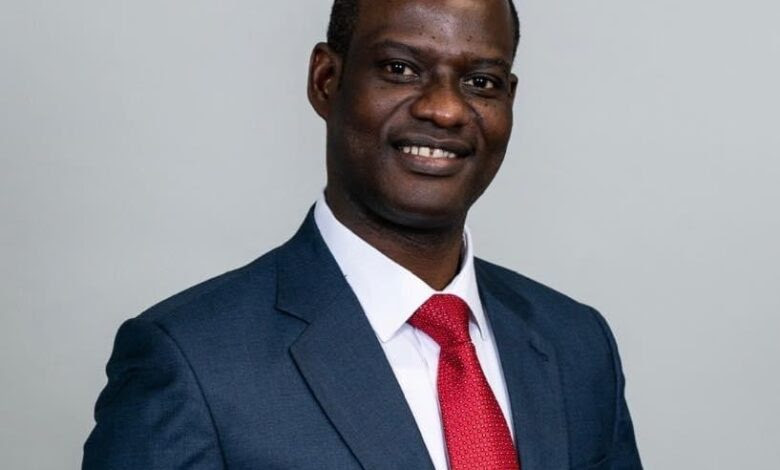
L-R: Head, Strategic Communications and Media Relations, Union Bank, Olufisayo Adelekun; Chairman, Wonder Energy, Engr. Toju Koso; Chief Brand and Marketing Officer, Union Bank, Olufunmilola Aluko, Team Lead, External Communication, Union Bank, Favour Ayeni; Executive Asst, Corporate Communication and Marketing, Union Bank, Boluwatife Lawal; Products and Partnerships Specialist, Union Bank, Oghenemaro Ebrorhie; Team Lead, Digital Marketing, Union Bank, Abisola Oluyede; and Customer Service Partner, Union Bank, Eduvie Ejakpomewhe during the Award presentation to Union Bank for Best Company in Workplace Practice at the 2025 SERAS Awards held at Lagos Oriental Hotel, Lagos recently.
Amaka Obiefuna
Union Bank of Nigeria has secured another prestigious accolade, being named Best Company in Workplace Practice at the Sustainability, Enterprise and Responsibility Awards. The ceremony took place on Saturday 29 November 2025 at the Grand Ballroom, Oriental Hotel, Victoria Island, Lagos.
This significant achievement follows a comprehensive assessment by SERAS multinational independent judges who rigorously evaluated applicants’ Corporate Social Responsibility and sustainability initiatives.
Union Bank received nominations across four categories: SERAS Education Intervention of the Year, Best Company in Workplace Practice, Best in Gender Equity and Women Empowerment, and Best Company in Reporting and Transparency. The Bank also achieved first runner up positions in both the Gender Equity and Women Empowerment and Educational Intervention categories, highlighting the strength of its commitment to these critical areas.
The Bank’s award-winning workplace practices reflect its holistic people-first philosophy that transcends conventional human resources functions. Union Bank has created an inclusive, rewarding and high performing work environment that establishes new benchmarks for Nigeria’s financial sector.
Key initiatives that distinguished Union Bank include the introduction of five months fully paid maternity leave exceeding statutory requirements, and the establishment of an onsite crèche at its head office to support work life balance and improve female retention. The Bank also recorded its highest promotion rate in ten years with 24 per cent of employees advancing across departments, demonstrating a robust meritocratic culture. A significant 40 per cent salary increase further enhanced employee financial wellbeing, reduced economic pressures and boosted productivity.
Judges recognised Union Bank’s initiatives for generating substantial social value, particularly in advancing gender equality through comprehensive maternity benefits aligned with Sustainable Development Goal 5. Enhanced wellness programmes featuring mental health support and flexible working arrangements fostered a more inclusive workplace, improving overall staff wellbeing. The Bank’s prioritisation of employee and family needs created positive ripple effects throughout the broader community.
Commenting on the award, Olufunmilola Aluko, Chief Brand and Marketing Officer at Union Bank, stated:
“Our workplace initiatives are firmly anchored in our triple pillar model of Citizenship, Sustainability and Innovation, which underpins our commitment to responsible financial, environmental and socio-economic development. This framework empowers us to champion best practices across the sector. The measurable outcomes, including enhanced employee satisfaction, increased productivity and significant progress in gender inclusion, demonstrate the strength and adaptability of our approach. We are confident these efforts will continue driving positive social transformation across Nigeria. Union Bank is deeply honoured by this recognition from SERAS and all sustainability stakeholders, and we remain dedicated to advancing these vital initiatives.”
Now in its nineteenth year, SERAS has consistently established the benchmark for corporate social responsibility and sustainability excellence. This year’s edition, themed “Sustainability 2.0: Innovating for Impact and Inclusive Growth”, celebrated corporate entities and leaders who pushed creative, technological and strategic boundaries to deliver measurable community and industry impact.
Union Bank’s workplace initiatives provide a robust model worthy of replication both within and beyond the financial sector, setting a new standard for responsible corporate citizenship in Nigeria.
Mr Taiwo Ayodele (m), speaking during the worrkshop
By Fidelia Okafor
Nigerians panic as the new tax law is about to kick-off January 2026, claiming that lots of deductions of money will be done by the banks directly from customers account by early next year.
The Chairman, Presidential Fiscal Policy and Tax Reform Committee, Taiwo Oyedele Thursday dispelled the rumours of possible deductions of money directly from customers’ bank accounts.
President Bola Ahmed Tinubu had on June 26, 2025, signed four landmark tax reforms bill into law, providing a transition period for individuals, as well as businesses to prepare for the comprehensive changes.
Oyedele disclosed this during a one-day media workshop, designed to provide insights to support accurate and impactful reporting, reassured Nigerians not to panic or entertain any fear over the new tax regime, stating that claims of such possible deductions are not true but false, capable of destabilising the nation’s economy.
Oyedele, as a fiscal policy expert appointed by the federal government to overhaul the nation’s tax system, said that the committee focuses on fairness, efficiency, and economic growth by simplifying taxes, offering relief to low income earners while promoting compliance.
Speaking, he stated that the new tax reform would help businesses to reduce risks while harmonising multiple taxes.
“The tax reform will be fair to small business, guarantee economic stability and growth”, he stated while adding that it would equally boost investors confidence.
On households, he said the reform would guarantee wage rewards, import, as well as tax suspension on fuel products.
Low-income earners would also be exempted while reducing rates for middle class workers.
Also, it would create more opportunities to small businesses and start-ups.
The new tax regime would also improve credit rating, lower deficit and cost of debts, as revenue mobilisation would improve tax to Gross Domestic Product, GDP, ratio. It will help non-oil revenue to perform optimally.
It’s economic road map include; ensuring legal, institutional and readiness for the reforms.
Key actions include gazetting and publishing new acts and make them available online and in print.
The federal government would soon establish the Nigeria Revenue Service (NRS); the Joint Revenue Board and the Office of the Tax Ombud, thus phasing-out the Federal Inland Revenue Service (FIRS).
To achieve all these, the Committee intends to engage with key stakeholders to seek inputs for the implementation of the tax reform laws, including relevant agencies, professional bodies, and sector associations among others.
It equally intends to create more awareness and equip institutions, taxpayers, and professionals for smooth implementations of the regime.
The Enugu State Government has approved the construction and reconstruction of 1,022 urban roads in line with Governor Peter Mbah’s administration’s target to pave all the roads in Enugu metropolis before the end of his first term in office.
This was made known at the end of the Enugu State Executive Council meeting at the weekend.
Briefing Government House correspondents, the Commissioner for Information and Communication, Dr. Malachy Agbo; Commissioner for Works and Infrastructure, Engr. Osita Okoh; and Commissioner for Trade, Investment and Industry, Dr. Sam Ogbu-Nwobodo, said that the Executive Council also approved the Business Enabling Reform Action Plan for 2026, as well as a series of events for an unforgettable “Detty December” experience marking the forthcoming Christmas and New Year celebrations.
Throwing more light on the 1,022 roads, Okoh said it was an effort to maximise the dry season window, ensuring that contracts were awarded early and contractors mobilised to the various sites from January 2026.
“We have done the first phase, which was over 90 roads. We have also done phase two, which also exceeded the earlier planned 141 urban roads. So, we are now in phase three. Here, we are going to award contracts that will cover all the roads that are yet to be paved in Enugu metropolis.
“These roads cut across New GRA, Old GRA, Emene Zone, Abakpa Zone, Thinkers Corner, Airport Corner, Upper Meniru in Awkunanaw, Idaw River Layout, Gariki, Maryland, Achara Layout, Uwani, One Day and Upper One Day, Trans Ekulu, Independence Layout, Independence Layout Phase II, Coal Camp Zone, Pocket Layout, as well as Ogui and Asata Zone, among other places. We want to cover the uncovered areas roads in the Enugu metropolis,” he said.
On his part, Dr. Ogbu-Nwobodo explained that the Business Enabling Reform Action Plan for 2026 was aimed at enhancing the Enugu business-friendly ecosystem, having achieved a major leap from 36th position to 6th position in the national ease of doing business survey.
“Three years ago, Enugu was ranked 36th out of 37 (36 states and the FCT). But presently, it has performed well in the ease of doing business rankings. This translates to more robust engagements with the private sector and increased investment inflow into the state. So, as you enhance your environment through processes that are transparent and predictable in land administration, tax administration, permits, and business-to-government interfaces, you get more capital inflow,” he stated.
President of the Independent Shareholders Association of Nigeria (ISAN), Moses Igbrude, has emphasised the need for efficient and impartial implementation of the Investments and Securities Act (ISA) 2025 to drive sustainable growth in the nation’s capital market.
Speaking at the 2025 yearly conference of the Capital Market Correspondents Association of Nigeria (CAMCAN) held in Lagos, Igbrude highlighted that for ISA 2025 to achieve its full potential, regulators must not only enforce the law independently but also build the capacity to oversee all its provisions effectively.
According to Igbrude, the Securities and Exchange Commission (SEC) should exercise a regulatory role with fairness and foresight, allowing market operators the freedom to execute their business activities without interference, while ensuring that compliance and governance standards are maintained at the highest level.
He stressed that regulators must build and sustain the capacity to effectively manage every aspect of ISA 2025, from emerging digital assets to traditional investment instruments, ensuring that the law is not only enforced in the short term but embedded into long-term strategic planning.
Highlighting the importance of infrastructure, Igbrude pointed out that the development of a fully integrated and synchronized ecosystem is essential to facilitate seamless market operations.
He envisioned a one-stop platform where all stakeholders, including investors, operators, and regulators, can interact efficiently from the initiation to the conclusion of every transaction.
Such infrastructure, he noted, would eliminate operational bottlenecks, enhance transparency, and create a cohesive environment that fosters innovation, efficiency, and trust across the market.
Igbrude also placed significant emphasis on investor protection, particularly for minority and core shareholders, noting that safeguarding their interests is fundamental to cultivating confidence and participation in the capital market.
He advocated for mandatory representation of minority shareholders on corporate boards, ensuring that their voices are heard in key decision-making processes.
This, he argued, would strengthen corporate governance, reduce the risk of exploitation, and provide a more equitable distribution of power within market institutions.
Beyond regulatory enforcement and infrastructure, Igbrude stressed that effective implementation of ISA 2025 requires education, awareness, and collaboration among all market participants.
He said there is need for investors to understand their rights while operators and regulators recognize their responsibilities and consistently demonstrate the competence necessary to uphold the law.
By adopting this holistic approach, Igbrude argued that Nigeria could transform its capital market into a dynamic, transparent, and inclusive system capable of supporting long-term economic growth and positioning the country as a model for financial innovation and governance in Africa and beyond.
Igbrude emphasized that the promise of ISA 2025 will only be realized through deliberate, coordinated action where independent regulation, strategic capacity building, comprehensive infrastructure, and meaningful investor protection converge to create a market that is efficient, fair, and future-ready.
This, he noted, is the pathway to ensuring that Nigeria’s capital market not only meets domestic expectations but also competes effectively on the global market.
The Federal Inland Revenue Service (FIRS) has observed recent online commentary, particularly a letter credited to the Northern Elders Forum (NEF) regarding a Memorandum of Understanding (MoU) signed with France’s Direction Générale des Finances Publiques (DGFiP).
While we appreciate the public’s vigilance and patriotic concern, it is, however, important to provide clarity on the misconceptions arising from the event.
MoU is a standard, globally recognised cooperation framework focused solely on technical assistance and capacity building. It does not grant France access to Nigerian taxpayers’ data, digital systems, or any element of our operational infrastructure.
All existing Nigerian laws on data protection, cybersecurity, and sovereignty remain fully applicable and strictly enforced. The Nigeria Revenue Service (NRS), like its predecessor (FIRS), places the highest premium on national security and maintains rigorous standards for the protection of all taxpayers’ information.
Similar MoUs are signed by tax administrations around the world to promote collaboration, knowledge exchange, and the adoption of global best practices.
The DGFiP is among the world’s most advanced tax authorities, with over a century of institutional experience and deep expertise in digital transformation, taxpayer services, governance, and public finance.
This partnership simply enables Nigeria to learn from that experience. It is advisory, non-intrusive, and entirely under Nigeria’s control.
Contrary to misconceptions, the MoU does not displace local technology providers. FIRS and the emerging Nigeria Revenue Service (NRS) continue to work closely with Nigerian innovators such as NIBSS, Interswitch, PayStack, and Flutterwave.
The MoU does not include the provision of technical services; it is limited to knowledge sharing, institutional strengthening, workforce development, policy support, and best-practice guidance.
We welcome robust public engagement on tax reforms, but such conversations must reflect the actual content and purpose of the agreement.
Rather than undermining Nigeria’s sovereignty, this MoU strengthens it by helping to build a modern, capable, globally competitive tax administration one firmly in command of its systems, data, and strategic direction.
FIRS remains committed to transparency, professionalism, and partnerships that advance Nigeria’s long-term economic development.
Chairman of the Presidential Fiscal Policy and Tax Reforms Committee, Taiwo Oyedele
By Fidelia Okafor
Taiwo Oyedele, Chairman of the Presidential Fiscal Policy and Tax Reforms Committee, has commended the exemption of the Small and Medium Scale businesses from the New Tax reform laws with effect from January, 2026.
Nigeria’s long and often contentious journey toward a fair, efficient and growth-oriented tax system appears to have reached a decisive milestone with the ongoing tax reforms.
Speaking at a one-day workshop organised by the Federal Inland Revenue Service (FIRS), soon to transition into the Nigeria Revenue Service (NRS), in Lagos, Taiwo Oyedele, described the reforms as a historic turning point in how the country raises and manages public revenue.
Addressing journalists at the event, Oyedele framed that the changes not merely as technical adjustments to tax laws, but as a fundamental reset designed to rebuild trust between government, citizens and businesses.
For decades, Nigeria’s tax system has been criticised for its complexity, inequity and opacity. Multiple taxes, overlapping authorities, arbitrary assessments and poorly targeted incentives created an environment that discouraged compliance and stifled investment. Citizens and businesses alike called for a simpler, fairer and more transparent framework—one that supports economic growth while ensuring that everyone contributes their fair share.
According to Oyedele, the 2025 reforms answer that call. They are anchored on three core pillars: fairness and equity, growth and competitiveness, and simplification and efficiency. Together, these pillars aim to align Nigeria’s tax regime with global best practice while remaining sensitive to the country’s unique economic realities.
At the heart of the reforms is a deliberate effort to put people first. Oyedele emphasised that the new tax laws are pro-masses, designed to protect low-income earners and reduce the cost of living for ordinary Nigerians. Minimum wage earners are now fully exempted from personal income tax, a move expected to increase disposable income for millions of workers at the bottom of the income ladder.
In addition, Value Added Tax (VAT) has been removed from basic necessities such as staple food items, education, healthcare, shared road transport and rent. The implication, Oyedele noted, is that families will enjoy lower costs for school fees and medical bills, while workers earning the national minimum wage will no longer see their modest earnings eroded by income tax.
Beyond households, the reforms place strong emphasis on unlocking business growth. Describing the new framework as pro-business, Oyedele explained that it lowers the cost of starting and running enterprises while removing bureaucratic bottlenecks that have long made tax compliance burdensome.
One of the most significant changes is the ability for businesses to claim input VAT on assets and services, a reform that directly improves cash flow. Clearer rules on expense deductibility, faster tax refunds and measures to curb arbitrary tax assessments are also expected to enhance certainty and confidence.
Notably, the minimum tax based on turnover often criticised for penalising struggling firms, has been scrapped, while exit and reorganisation rules have been clarified to support corporate restructuring. A manufacturing firm investing in new equipment or a start-up acquiring critical software can now recover VAT paid on those purchases, freeing up resources for expansion and innovation.
The reforms also seek to energise Nigeria’s capital markets and improve access to finance. Oyedele explained that clarity and efficiency are essential for investor confidence, and the new laws reflect this understanding. Withholding tax on bonus shares has been eliminated, capital gains tax exemption thresholds have been raised, and reinvestment exemptions introduced alongside deductions for capital losses.
In a move welcomed by subnational governments, state government bonds are now tax-exempt, joining federal government bonds in that category. Small investors, meanwhile, stand to benefit from lower effective tax rates on capital gains, while withholding tax on fixed-income investments is now treated as final tax for individuals and non-residents.
By way of illustration, Oyedele noted that an investor selling shares worth N120 million with a gain of N8 million would now be exempt from capital gains tax, a change expected to encourage more Nigerians to save and invest in domestic companies.
Another critical objective of the reforms is correcting long-standing economic distortions. Nigeria’s previous incentive regime was often described as a patchwork of poorly targeted concessions that bred inefficiency and unfairness.
Under the new system, incentives have been rationalised and made more transparent. Priority sectors now benefit from investment-based tax credits tied to minimum investment thresholds, ensuring that incentives reward real economic activity rather than mere tax planning. Free trade zone regimes have been streamlined to create a level playing field between companies operating within and outside such zones.
Importantly, businesses are now allowed to settle taxes related to foreign currency transactions in naira, a measure aimed at easing pressure on the foreign exchange market. Oyedele cited the example of an agribusiness investing in processing facilities that can now enjoy predictable incentives, while a fintech firm paying for imported software can meet its tax obligations in naira instead of sourcing scarce foreign exchange.
Progressivity is another defining feature of the 2025 tax reforms. Oyedele said the new framework strengthens Nigeria’s commitment to a progressive tax system in which the burden is distributed according to ability to pay. A new zero percent income tax band has been introduced, alongside capped taxation of benefits in kind, rent reliefs and reduced effective tax rates for middle-income earners.
These measures are designed to protect the vulnerable and the middle class, while high-income earners are expected to contribute more through an increased top marginal rate. Under the new structure, a mid-level professional earning N5 million annually would enjoy a lower effective tax rate, whereas a top executive earning N8 million would see a modest increase in tax contribution, reinforcing the principle of equity.
Encouraging formalisation among small businesses is another major thrust of the reforms. Oyedele described small enterprises as the backbone of the Nigerian economy, yet noted that many remain outside the formal tax net due to fear of high taxes and administrative complexity.
To address this, qualifying small companies now enjoy a zero percent corporate income tax rate, exemptions from VAT and withholding tax obligations, and PAYE exemptions for their typically low-income employees. A bakery incorporated as a company with annual turnover below N100 million, for example, would pay no corporate tax and would not charge VAT, yet would still benefit from legal recognition and improved access to credit as a formalised entity.
Ensuring tax equity across the economy is also a key goal. The new framework addresses double taxation, prevents double non-taxation and creates a level playing field between traditional and digital businesses.
Oyedele stressed that equal taxpayers should be treated equally, while unequal taxpayers should be treated differently in line with their circumstances. This principle ensures, for instance, that a local brick-and-mortar shop and an online marketplace selling the same products are subject to the same tax rules, fostering fair competition in an increasingly digital economy.
The reforms also take a tougher stance against tax evasion and aggressive avoidance, practices that drain public resources and undermine trust in the system.
According to Oyedele, loopholes have been closed, global anti-avoidance measures adopted, and stricter penalties introduced for non-compliance. Enhanced tax intelligence tools such as e-invoicing, fiscalisation and stronger transfer pricing rules make evasion riskier and more costly. A multinational enterprise attempting to shift profits abroad through artificial charges, for instance, now faces the risk of disallowed deductions and the imposition of a top-up tax to ensure a minimum effective rate of 15 percent.
Improved tax administration and governance underpin all these changes. The establishment of the Nigeria Revenue Service, alongside a strengthened Joint Revenue Board and state tax agencies, introduces clearer accountability and reporting obligations. Taxpayer rights are reinforced through the creation of the Office of the Tax Ombud, providing an independent channel for redress.
A new legal framework for whistleblowing and public reporting of tax incentives is also designed to expose abuse and corruption. Dispute resolution mechanisms have been enhanced through an expanded scope for the Tax Appeal Tribunal, offering taxpayers greater confidence in the fairness of the system. As Oyedele noted, a small trader who feels unfairly treated by a tax officer can now seek redress through the Tax Ombud, a significant shift toward accountability.
Finally, the reforms address the long-standing problem of multiple and overlapping taxes. By reducing the number of taxes, streamlining audits and harmonising taxpayer identification and collection across all levels of government, the new system promises greater simplicity and predictability. A logistics company operating across several states, for example, will now face fewer levies and coordinated audits rather than conflicting demands from multiple authorities.
Taken together, the 2025 tax reforms represent a bold attempt to reshape Nigeria’s fiscal landscape. As Oyedele told journalists in Lagos, the changes are not just about raising revenue, but about building a system that supports people, empowers businesses and strengthens the economy. If effectively implemented, the reforms could mark the beginning of a new social contract—one in which taxation is seen not as a burden imposed arbitrarily, but as a fair contribution to Nigeria’s shared progress.
Anambra State, came to the state government recently to protest a wave of violence that has left about 20 people dead, including a priest’s wife and children, and resulted in roughly 200 houses—among them the monarch’s palace and several churches—being burnt.
Their spokesperson,Nze Donatus Olikaenyi( Nzeakonobi of lilu) Emeka, told Secretary to the State Government Solo Chukwulobelu that the attacks began years ago, with the first incident claiming 11 lives and a later massacre on Sunday killing 9 more. He said the community has been forced to abandon burials, that many residents are now living as refugees in neighboring villages, and that anyone who speaks out is often killed the next day.
The protesters carried placards such as “Soludo rescue us,” “Lilu is on the verge of extinction,” and “Is Lilu actually in Anambra State?” The traditional ruler, Igwe Godson Onyediri, described the murder of Venerable Gabriel Obiesie’s wife—who was burnt with the St Andrew’s Anglican church parsonage, their children, cars and property—as sacrilegious and inhuman.
Chief Chukwulobelu acknowledged the community’s peaceful stance, said Governor Chukwuma Soludo is aware of the situation and is working on a lasting peace, and promised to present their grievances to the governor later that day .
Chairman of the Presidential Fiscal Policy and Tax Reforms Committee, Taiwo Oyedele (middle) addressing journalists at a one-day workshop organised by FIRS for journalists in Lagos on Friday, December 12, 2025.
The Chairman of the Presidential Fiscal Policy and Tax Reforms Committee, Taiwo Oyedele, has reaffirmed that the Federal Government’s ongoing tax reforms are designed to put Nigerians at the centre of fiscal policy while unlocking new opportunities for businesses and the national economy.
Oyedele made this remarks yesterday at a one-day workshop organised by the Federal Inland Revenue Service (FIRS), for journalists at Radisson Blu, Ikeja, Lagos soon to transition into the Nigerian Revenue Service (NRS).
Speaking on the broad benefits of the reforms, Oyedele said the new tax framework prioritises workers’ welfare by reducing the overall tax burden, eliminating multiple taxation and ensuring that low- and middle-income earners retain more of their disposable income.
According to him, expanding exemptions on essential goods and services, such as food, healthcare, and education, will shield vulnerable households and drive consumption-led growth.
He noted that Small and Medium Enterprises (SMEs) stand to gain significantly from the reform package, as the streamlined tax structure and simplified compliance processes will lower operational costs and encourage more informal businesses to formalise.
“Minimum wage earners are exempted from personal income tax, amall businesses enjoy broader exemptions and Value Added Tax (VAT) no longer applies to essentials such as basic food, education, healthcare, shared road transport and rent,” he stated.
Oyedele added that improved access to finance, energised capital flows and the removal of bureaucratic bottlenecks would create a more supportive environment for SMEs to scale and contribute meaningfully to employment generation and national growth.
The committee chairman noted that the reforms are targeted at correcting longstanding economic distortions that placed disproportionate pressure on smaller businesses and lower-income groups.
“Small businesses are the backbone of our economy, yet many remain outside the tax net. The reforms encourage them to formalise by granting them a zero percent corporate income tax rate for qualifying small firms, exempting them from VAT and Withholding Tax (WHT) obligations and ensuring Pay As You Earn (PAYE) tax exemptions for their typically low-income employees, Oyedele further explained.
By advancing progressivity within the tax system, he said, the government aims to ensure a fairer distribution of tax responsibilities while promoting economic inclusion.
Oyedele also highlighted the government’s determination to combat tax evasion and avoidance by deploying stronger compliance frameworks, enhanced digital systems and more transparent administrative processes.
He described the transition to a harmonised tax system with fewer, clearer, and better-defined taxes as a major step toward building trust between taxpayers and authorities and improving overall governance.
He emphasised that improved tax administration and the establishment of a unified revenue service would help reduce duplication, minimise compliance costs for businesses and improve revenue collection without imposing new burdens on the populace.
Oyedele said the new reforms would strengthen the broader economy by creating a more predictable fiscal environment, attracting investment, driving business expansion and enabling government to mobilise resources more efficiently for national development.
L–R: Patrick Okorie, Regional Head, South, Heirs General Insurance; Ijeoma Onwujekwe, Marketing Executive, Heirs Insurance Group; Kayode Kolade, Winner, 2025 Heirs Insurance Retirement Dream Competition; and Andrew Ahwin, Regional Head, South, Heirs Life Assurance; at the presentation of the Heirs Insurance Retirement Award at the winner’s home in Port Harcourt, on Tuesday, December 9, 2025.
Heirs Insurance Group, Nigeria’s fastest-growing insurance group, has announced the winners of its inaugural Retirement Dream Competition, a nationwide initiative launched to empower retired and soon-to-retire Nigerians to realise their long-held aspirations.
The competition, introduced in August 2025 with a total prize pool of ₦5 million, invited senior citizens aged 50 to 75 to submit a one-minute video describing their retirement dream and how the grant would help make it a reality.
After a thorough review process, Mr. Kayode Kolade, a 51-year-old former public servant from Rivers State, emerged as the overall winner, receiving a ₦2.5 million cash grant, Ms. Rakiya Idris, a 64-year-old retiree from the Federal Capital Territory (FCT), came in second, winning ₦1.5 million, while Mr. Sodeke Olusola, aged 60, from Lagos State, finished as the third-place winner, receiving ₦1 million.
The inaugural edition received hundreds of entries, with high participation extending beyond major cities into rural communities across the country, reflecting the deep relevance of retirement planning to Nigerians everywhere.
Speaking on the initiative, Niyi Onifade, MD/CEO, Heirs Life Assurance, applauded the participants for their creativity, resilience, and optimism. He said: “Retirement is not an end; it is a well-earned season of rest, fulfilment, and new beginnings. The Heirs Insurance Retirement Dream Competition was created to inspire the long-held dreams of senior citizens, encouraging them to live the retirement they truly desire. We remain committed to providing simple insurance to help every Nigerian secure a future where they can thrive, enjoy peace of mind, and reap the rewards of their years of hard work.”
The Retirement Dream Competition is an initiative under the newly launched Heirs Insurance Retirees Club, a community platform designed to connect retirees across Nigeria, offering access to expert advice on financial planning, health, well-being, and post-retirement lifestyle support. Through this initiative, Heirs Life Assurance reinforces its commitment to financial inclusion, lifelong security, and improving the quality of life for Nigerians.
Heirs Insurance Group is the insurance arm of Heirs Holdings, the leading pan-African investment company, with investments across 24 countries and four continents. With a rapidly expanding retail footprint and an omnichannel digital presence, Heirs Insurance Group, comprising Heirs General Insurance Limited, Heirs Life Assurance Limited, and Heirs Insurance Brokers, serves both corporate and individual customers across Nigeria.
Heirs Insurance Group is championing financial inclusion and leading the digital insurance play in Nigeria, demonstrating its mission to democratise access to insurance.
The Board and Executive Management of Guinea Insurance PLC paid a strategic courtesy visit to the National Insurance Commission (NAICOM), where they were received by the Commissioner for Insurance and Chief Executive Officer of the National Insurance Commission, Mr. Olusegun Ayo Omosehin, and his distinguished team in Abuja.
The Guinea Insurance delegation was led by Mr. Temitope Borishade, Chairman of the Board of Directors, accompanied by Mrs. Bernice Izilen Okosun, Non-Executive Director; Mrs. Ijeoma Pearl Okoro, Non-Executive Director; Dr. Nkemakonam Chukwukaodinaka Okeke, Non-Executive Director; Mr. Samuel Onukwue, Non-Executive Director.
The Executive Management team present included Mr. Ademola Abidogun, Managing Director and Chief Executive Officer; Mr. Pius Edobor, Executive Director, Finance and Corporate Services; Mrs. Ogonna Offor-Orabueze, Executive Director, Technical; and Mrs. Chinenye Nnankwo, Company Secretary.
Discussions during the visit explored regulatory developments, industry trends, and the company’s ongoing initiatives to strengthen operational capacity and improve customer experience across all touchpoints. The delegation also highlighted Guinea Insurance’s readiness to solidify its capital base ahead of the National Insurance Industry Restructuring and Recapitalisation (NIIRA) requirements, an important strategic action that enhances the company’s ability to seize emerging business opportunities and deliver stronger, long-term value to its stakeholders.
Speaking during the engagement, the Chairman, Board of Directors, Mr. Temitope Borishade, noted that the visit aligns with Guinea Insurance’s commitment to deepen collaboration with the regulator, enhance transparency, ensure compliance, and sustain growth. He emphasised that the company’s preparedness and capital strengthening efforts position it to serve its customers, shareholders, and partners with even greater effectiveness.
This courtesy visit underscores Guinea Insurance’s dedication to raising industry standards, strengthening stakeholder confidence, and building a more resilient and competitive organisation in the Nigerian insurance landscape.
Guinea Insurance remains committed to building a resilient, innovation-led, and trusted brand — exceeding expectations at every turn.








 LarryBravo Nwaiwu