FIRS, French Tax Agency Partner On Digital Transformation, Others


Modion Communications, one of Africa’s most awarded PR-led integrated communications agencies, yesterday announced a transformative rebrand as it celebrates a decade of creativity, strategic excellence, and reputation leadership.Effective December 2025, the agency will operate as Creato Urban /kriːˈɑːtoʊ ˈɜːrbən/, unveiling a renewed identity that reflects expanded capabilities and a bold global outlook.
Over the last 10 years, Modion Communications has delivered some of the continent’s most impactful campaigns, shaping conversations, influencing culture, and driving brand transformation across more than 20 industries. Its decade-long journey is marked by groundbreaking achievements, including winning the prestigious SABRE Platinum Award, becoming the first and only Nigerian PR agency to receive this honour, and emerging as the first African PR agency to win the International Communications Consultancy Organisation (ICCO) Next Gen World Cup. This milestone underscores the agency’s world-class creative excellence on the global stage.
“Reaching our 10-year milestone provided a powerful moment for reflection and reinvention,” said Odion Aleobua, Founder and CEO of Creato Urban. “Creato Urban signals the path we have been building towards – new, bold, daring, yet deeply strategic. It sharpens our belief in the power of creativity to shift how people think. This transition comes at a time when we are expanding our reach, strengthening our craft, and entering new spaces with audacity and inventive strategies across industries and regions.”
The transition into Creato Urban follows months of strategic planning, brand realignment, and the development of an expanded creative intelligence framework. The new identity represents the agency’s deepened focus on strategy, storytelling, digital intelligence, reputation and crisis leadership, culture shaping, and brand transformation, a suite designed to meet the evolving needs of African and global brands.
“Our work has always been rooted in unrelenting creativity,” Aleobua added. “Creato Urban carries that energy forward. It gives us the headspace to think more boldly, create without limits, and deliver work that shapes minds and markets.”
As Modion Communications evolves into Creato Urban, it remains committed to the excellence, innovation, and client partnership that defined its first decade—while stepping confidently into a future centered on global relevance and creative intelligence.
Creato Urban is a strategic communications and creative intelligence company that builds ideas, shaping minds and markets. Recognised across Africa and globally, the agency delivers strategy, storytelling, reputation leadership, digital solutions, and brand-building services for clients across diverse industries. Creato Urban is committed to redefining creativity, driving innovation, and delivering measurable impact with global resonance.
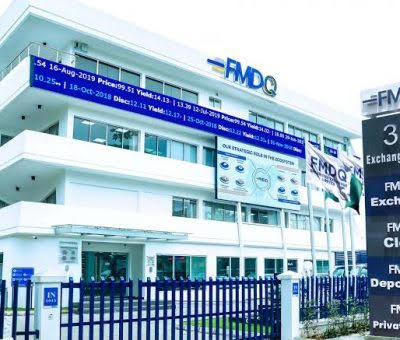
The Senior Vice President of Government Affairs at FMDQ Group, Emmanuel Etaderhi, has urged regulators and market stakeholders to leverage popular culture, including musicians and footballers, to increase youth engagement with the recently enacted Investment Securities Act 2025.
Etaderhi made this call at the annual conference of the Capital Market Correspondents Association of Nigeria held under the theme, ‘Regulatory Reforms: ISA 2025 and Investment Climate’ in Lagos.
The ISA 2025 has recognised virtual assets like cryptocurrencies and others, which hold strong appeal for young Nigerians. According to the Chainalysis report, Sub-Saharan Africa is the third-fastest growing crypto market globally, behind only Asia-Pacific and Latin America. The region received $205bn in on-chain value during the review period, a 52 per cent increase year-on-year. This jump was said to have been driven mostly by young Nigerians seeking to hedge against inflation and safeguard value.
The SVP of FMDQ speaking at the conference said, “If you come to FMDQ these days, you will be surprised. I think we are more than 70 per cent youth. The young people, those people who are doing crypto and have the knowledge about digital currencies. Those people who have knowledge about the new products that have been introduced, the greater population in our offices, the smart tech guys, we are essentially a tech company.
“So it’s not just a document for today. It’s a document for the future. It’s a document that guarantees Nigeria’s development towards really becoming that beacon of hope, beacon of hope for Africa, the light of Africa. I insist, go back to the youths. Why? Because, as we all observed, this document gives life to their dreams and aspirations. But one aspect that is very vital, in all the gatherings, in all the engagements, in all the conferences and awareness sessions, which forum has called the youths together to explain this document to them in a language they understand?”
Highlighting the way to bridge that gap, Etaderhi added, “The reason they can swiftly change to the fintech is that these things are available to them digitally. They are available to them easily at the tip of their fingers. So your education programme, your awareness creation programme, your capacity building programme must be anchored on those digitalised sources.
“The youths believe in skits a lot. They believe a lot in things that have to do with followers, likes, and podcasts. If you want to teach them, you use their methodology to teach them so that they can understand and evolve their own ways of learning. You can’t use the old methods of learning to engage and attract youths; they don’t have the time to be reading one long article or one long essay. You need to put it into digitalised formats so that you can attract them.
“You need to get endorsements from the big-time artists. Recognise individuals in the artistic space. Nigeria has colonised this world with music. In the deep heart of Morocco, Burna Boy is well-known. In Ireland, Davido is well-known. Everywhere, you need to bring these icons. Use them as a means to convey messages to the youths because the youths will always follow them. Major artists, major footballers. Football is something that’s crazily affecting all youths.
Use the means of these icons to attract attention to the capital markets. Bring them as your idols and ambassadors. Teach them first and enable them to spread the message to these youths because to attract somebody, you must look at what attracts the person’s attention.” Speaking on the importance of reaching younger investors, Etaderhi said the law is “not just for today; it is for the future” and provides opportunities in digital currencies, sustainable finance, and innovative instruments like Sukuk. He emphasised that to capture the attention of Nigeria’s youth, financial education and awareness programs must be delivered in formats they understand, including skits, podcasts, social media, and endorsements from cultural icons.
Highlighting FMDQ’s involvement in shaping ISA 2025, Etaderhi noted that the organisation participated in multiple committees, consultations, and engagements with legislators and market players. “Two of our young professionals were recognised for their contributions, and this demonstrates the importance of including youth perspectives in developing forward-looking legislation,” he said.
Etaderhi stressed that ISA 2025 has the potential to transform Nigeria’s capital markets by fostering innovation, increasing transparency, and aligning investment opportunities with the aspirations of young Nigerians. “If we engage the youth properly, using the channels they follow and admire, we can ensure that ISA 2025 is understood, embraced, and fully implemented,” he said.
On increasing awareness for Sukuks, a Sharia-compliant financial instrument that has funded infrastructure projects such as road development across Nigeria, Etaderhi said the ISA 2025 provides for it, and stakeholders could play a lot more in it.
“It (ISA 2025) speaks to digital currencies. It speaks to the description of SDGs in terms of composite and non-composite. It speaks to things like non-interest financial instruments. We are travelling from Asaba to Enugu. On the road, you see, this road was developed by Sukuk. Sukuk is an instrument that we are not giving real push to. In spite of the fact that faith-wise, more than 50 per cent of us believe in that kind of instrument,” he said.
Two prominent civic organisations have sharply condemned what they describe as an orchestrated, politically motivated campaign to force the Executive Chairman of the Federal Inland Revenue Service (FIRS), Dr. Zacchaeus Adedeji, to step aside.
The Campaign for Democracy (CD) and the Southwest Unity Forum, in separate statements issued yesterday, accused unnamed power brokers of fueling a smear operation aimed at derailing ongoing tax reforms and undermining Nigeria’s economic stability.
In a statement signed by its National Secretary, Comrade Olufemi Lawson, the Campaign for Democracy dismissed the demands for Adedeji’s removal as “baseless, malicious and politically sponsored.”
The group said the coalition calling for the FIRS chairman to step aside was “faceless” and unrepresentative of any credible national constituency, insisting that its claims were “fraudulent, deceptive and orchestrated by economic saboteurs violently opposed” to the agency’s reforms.
CD argued that Adedeji’s tenure has brought professionalism, modernisation and transparency to Nigeria’s tax administration, earning broad public support. The organisation warned that those attacking the FIRS chief are individuals threatened by rising efficiency and integrity in revenue collection.
It urged Nigerians to reject what it called a “reckless campaign of calumny” and pledged continued vigilance over all public office holders to ensure accountability and good governance.
Echoing the CD’s concerns, the Southwest Unity Forum issued an equally forceful statement warning against what it described as a “coordinated political witch-hunt” targeting the FIRS chairman.
Signed by Hon. (Dr.) Matthew Oyedokun, the Forum’s statement said the calls for Adedeji’s removal were “unfounded” and driven by persons threatened by reforms that are blocking leakages, reducing wastage and expanding the non-oil tax base.
The Forum described the allegations circulating in the media as a “classic smear tactic devoid of facts and engineered to intimidate a performing public servant.”
It noted that some groups that previously accused Adedeji of wrongdoing later retracted their claims and issued public apologies, demonstrating what it said was a pattern of fabricated scandals designed to erode public trust in reform-minded leaders.
According to the Forum, the push to oust the FIRS chairman at a time when reforms are gaining momentum amounts to “sabotage, pure and simple.”
Such destabilisation, it argued, threatens investor confidence and signals that Nigeria punishes performance while rewarding conspiracy.
Youth groups and civic organisations, it added, have similarly dismissed the attacks as “futile blackmail” orchestrated by “faceless opportunists.”
Both organisations warned that efforts to undermine the FIRS leadership risk dragging Nigeria backward at a critical moment for economic repositioning.
They urged the Federal Government to remain resolute, insisting that accountability must be based on verifiable evidence rather than “fabricated petitions, sponsored protests or media hysteria.”
Reaffirming support for Adedeji, the Southwest Unity Forum praised him as a “courageous reformist” working for national interest rather than for political godfathers.
CD similarly emphasised that Nigeria’s economic transformation must not be derailed by those who profit from systemic decay.
Despite the escalating controversy, both groups said their commitment to monitoring public institutions remains firm, stressing that while reformers must be protected from politically driven attacks, transparency and good governance remain paramount.
By Winifred Bosa
By Winifred Bosa

In alignment with the Commission’s commitment to deepening market accessibility, the Securities and Exchange Commission (SEC) is set to unveil two innovative products: a USSD Service and ISA Audio, designed to democratize information dissemination and enhance investor engagement.
According to the Commission, the unveiling will take place at the forthcoming Capital Market Committee Meeting scheduled for December 8 at the Federal Palace Hotel, Victoria Island, Lagos, while the regular inteeeface with journalists is expected to take place on December 9, 2025.
The SEC disclosed that the forthcoming CMC will interrogate critical themes germane to the sustainable development of Nigeria’s capital market. Central to these deliberations include discussion on global macroeconomic dynamics and their transmission effects on domestic financial markets, as well as the importance of cross-border financial integration within the African context.
“Equally salient are discourses on unlocking pension fund investments, enhancing market liquidity, and stimulating innovation through targeted regulatory reforms.
“A significant component of the programme will be devoted to evaluating the trajectory of the Capital Market Master Plan (CMMP). This will encompass a comprehensive review of key achievements and the formal sunset of the 2025 CMMP, alongside the articulation of a strategic framework for the 2030 CMMP Plan” the Commission stated.
Furthermore, the agenda incorporates an analytical session on Nigeria’s recent tax reform legislation and its implications for capital market efficiency and investor confidence.
The SEC said, Collectively, these discourses and initiatives underscore the strategic resolve to reposition the Nigerian capital market as a catalyst for inclusive and sustainable economic growth, consistent with national development objectives and global best practices.
The CMC is an industry-wide body comprising the SEC, capital market operators, trade groups, and other stakeholders.
It serves as a pivotal platform for dialogue, facilitates the exchange of ideas, addresses key issues impacting market growth and organisation, and collaborates on shaping the market’s future.
The committee was established primarily as a means for stakeholders to exchange ideas and provide feedback to the SEC, aiding in the continuous improvement of market operations and regulatory frameworks.
The meeting is expected to draw CEOs from all registered capital market firms, including brokers/dealers, investment advisers, custodians, fund/portfolio managers, and more.

The Securities and Exchange Commission (SEC) has announced a series of wide-ranging reforms aimed at strengthening market efficiency, deepening investor confidence, and accelerating the digital transformation of Nigeria’s capital market.
SEC Director-General, Dr. Emomotimi Agama, unveiled the initiatives during the second Capital Market Committee (CMC) meeting for 2025, where he also confirmed Nigeria’s move toward a T+1, and eventually T+0 settlement cycle.
In his address, Agama noted that the transition from T+3 to T+2 settlement for equities, implemented on November 28, marked a major milestone for the Nigerian capital market and aligned it more closely with global best practice.
He explained that shorter settlement cycles will enhance liquidity, reduce counterparty risk, and accelerate capital reinvestment.
The reform now applies across the Nigerian Exchange, NASD OTC Securities Exchange, and Lagos Commodities and Futures Exchange.
The SEC DG outlined broader market developments since the last CMC meeting in May, including the upgrade of Nigeria’s sovereign credit rating and the country’s removal from the FATF grey list. He said these achievements have boosted investor confidence and improved prospects for capital inflows. Inflation has also moderated, with the headline rate easing to 16.05 per cent year-on-year in October, the lowest level since March 2025.
Agama reported strong capital-raising activities between April and October, with significant transactions approved across debt, equity, and commercial paper markets.
Notable programmes include the N500bn Climate Funding SPV and the N200bn Elektron Finance bond, reflecting growing investor interest in infrastructure and sustainable finance.
The commercial paper market remained active, with over N753bn issued across sectors such as manufacturing, energy, and agriculture.
He said these figures demonstrate sustained confidence in the market’s regulatory framework.
Despite these positives, the market faced headwinds in November when the Nigerian Exchange recorded its steepest monthly decline on record. Market capitalization fell by N6.54trn, while the All-Share Index dropped nearly 7 per cent. The downturn was driven by profit-taking ahead of the planned 30 per cent Capital Gains Tax, weakened sentiment in banking stocks, and broader policy and global uncertainties.
However, Agama noted that the market has since shown resilience, with modest recovery following government reassurances on fiscal and tax policy, and remains significantly positive year-to-date.
The SEC is intensifying its market development and financial inclusion efforts through education-based initiatives, including the integration of capital market studies into the national secondary school curriculum in collaboration with the Nigerian Educational Research and Development Council.
At the tertiary level, the Commission partnered with Nnamdi Azikiwe University for a conference focused on leveraging capital market opportunities for SME growth.
Regionally, the SEC continues to reinforce Nigeria’s leadership in non-interest finance.
The Commission recently engaged a Bank of Ghana delegation on regulatory frameworks for non-interest capital markets, highlighting Nigeria’s N1.4trn sovereign Sukuk issuances and the growth of Islamic mutual funds. Planning is also underway for a Municipal Bond and Sukuk Summit scheduled for the first quarter of 2026.
Agama emphasized ongoing efforts to deepen the commodities and derivatives ecosystem.
The SEC is collaborating with the Standards Organisation of Nigeria to update commodity standards, working with insurance brokers to enhance risk mitigation, and partnering with the Ministry of Solid Minerals to unlock funding for mining companies. It is also engaging the Central Bank of Nigeria to secure liquidity status for warehouse receipts while strengthening oversight of commodity exchanges through inspections and financial reviews.
The Commission is advancing new rules under the Investments and Securities Act (ISA) 2025 to support commodity exchanges, collateral managers, warehouse operators, and warehouse receipt issuers. Study tours of exchanges and clearing agencies are informing updated regulatory frameworks, while work continues on harmonizing rules to align with ISA mandates. Engagements with commodity exchanges such as Gezawa and NCX have also helped revive their operations.
In the derivatives market, the SEC is collaborating with stakeholders to deploy a real-time surveillance system to reinforce market integrity. Updated rules on central counterparties, derivatives trading, online forex, and NG Clearing operations have been submitted to the Rules Committee. A draft systemic risk management rule is also being developed to require stronger risk governance frameworks across regulated entities.
Agama highlighted the Commission’s technology-driven regulatory reforms, including automation through the Digital Transformation Portal, which now allows capital market operators to submit applications, upload documents, and track approvals online. A commercial paper issuance module has been launched, with automation of quarterly and annual returns underway. The SEC is upgrading IT infrastructure and strengthening cybersecurity to support these reforms.
He also presented findings from the Technology Adoption Survey conducted in May 2025, which revealed that while cloud computing and cybersecurity tools are gaining traction, adoption of advanced technologies such as artificial intelligence and big data remains below 10 percent. Yet more than 70 percent of firms plan to adopt AI, blockchain, and regulatory technology within three years. Challenges include high implementation costs, skill shortages, and legacy system integration.
Agama stressed that innovation must go hand-in-hand with ethical and responsible deployment. He reminded operators that safeguarding investor data, preventing market abuse, and maintaining operational resilience are essential to building trust—the foundation of any capital market.
He also announced that the SEC will implement a Harmonized Corporate Governance Reporting Template for public companies to streamline disclosures, eliminate duplication, and reduce compliance burdens. The template will unify reporting across SEC regulations, the Nigerian Code of Corporate Governance 2018, and the Business Facilitation Act 2022.
Looking ahead, the renewal of registration for capital market operators will take place from January 1 to 31, 2026, while electronic receipt and processing of registration applications will commence in the first quarter of 2026.
Agama concluded by reaffirming the SEC’s commitment to building a resilient, transparent, and innovation-driven capital market that can serve as a catalyst for sustainable economic growth. He said the Commission remains guided by the principle that “a strong capital market is not built in a day; it is shaped by vision, collaboration, and resilience.”