

CBN Advert
Airtel Nigeria To Lead Telecoms Growth With Quality Of Service Advancements

By Winifred Bosa
 Airtel Nigeria has unveiled a robust update on a range of network, infrastructure and technology advancements that position the company at the forefront of quality of service leadership in Nigeria’s telecommunications industry.
Announced at its first media roundtable of 2026, the updates reflect sustained investments made over the past 12 to 24 months and signal an accelerated push to stay ahead of surging data demand in a rapidly digitising economy.
Speaking to senior editors and industry correspondents, Airtel Nigeria Chief Executive Officer, Dinesh Balsingh, said the company’s strategy is anchored on deliberate scale, depth and resilience.
“Over the last two years, we have invested with discipline and clarity to strengthen our network nationwide. Those investments are now translating into measurable improvements in performance, customer experience and reach, including in underserved and hard to reach communities,” he said. “In 2026, we are accelerating these upgrades because Nigeria’s data appetite is growing, and leadership in this industry will belong to those who plan ahead.”
At the core of Airtel Nigeria’s quality of service drive is the rapid expansion of its network footprint. Since December 2023, the company has increased the number of network sites by 15.5%, adding 2,242 new sites and bringing its total to nearly 16,711 nationwide. Further deployments are planned in 2026 to strengthen coverage, capacity and resilience across urban and rural locations.
Network capacity upgrades have also reached significant scale. In 2025, Airtel completed capacity enhancements on 30% of its sites, covering over 5032 sites nationwide. Today, 99% of Airtel Nigeria’s sites deliver high-speed 4G mobile broadband, establishing the operator as a full nationwide 4G network. This year, capacity upgrades are being extended to more sites to sustain performance as data usage continues to rise.
According to Chief Technology Officer, Harmanpreet Singh Dhillon, spectrum depth and optimisation remain critical to network quality. “We have increased our 4G spectrum by 10MHz and we are actively optimising our holdings. These actions allow us to support higher data throughput, better speeds and more consistent service, especially in high-traffic areas,” he said.
Airtel Nigeria is also accelerating its 5G rollout. Over the last three months, the company has more than doubled the number of active 5G sites. The accelerated 5G upgrade happening now will connect the top 20 Nigerian cities to high-speed 5G networks, with a significant part of Airtel’s network in these cities becoming 5G-enabled in the coming year.
Beyond terrestrial infrastructure, Airtel is extending connectivity through space-based solutions. The company has established and signed partnerships with satellite providers OneWeb and Starlink, enabling enterprise-grade connectivity for businesses in remote locations, hard to reach areas and operational outposts. Recently, Airtel announced Nigeria’s first Direct-to-Cell partnership with Starlink, a breakthrough that will allow customers to remain connected while travelling through deep remote areas and enable small rural communities to access Airtel’s digital and fintech services.
The backbone supporting these services continues to expand. Airtel Nigeria has built an extensive fibre footprint across almost all states, developed through years of sustained deployment. Following the announcement to double capital expenditure last year, the company committed to expanding its fibre network by 25%, and intensive rollout activity is ongoing across cities and states. Airtel has also confirmed plans to extend its fibre footprint even further, both within major cities and between states.
A pivotal national milestone is also on the horizon. Nigeria currently relies on a single internet submarine cable landing and breakout point in Lagos. Airtel Nigeria has announced that it will launch a second internet breakout from the South of Nigeria, leveraging the 2Africa submarine cable. In partnership with 2Africa, Airtel will shortly begin carrying internet breakout traffic from Kwa Ibo in Akwa Ibom State.
“This will create a faster and alternative path for large parts of the North and South, improve resilience for the entire ecosystem. Airtel is proud to take the lead in making this happen,” Balsingh said.
Underpinning these advances is a robust IT and cloud backbone. Airtel Nigeria operates an enterprise-grade private cloud with thousands of virtual machines, managing massive storage and compute power across locations. The infrastructure includes large GPU clusters, supporting AI-driven applications such as fraud detection, intelligent network self-healing and advanced customer analytics. The company recently announced the upcoming launch of its hyperscaler-ready 38 megawatt data centre in Eko Atlantic. This is designed for Nigeria’s next phase of digital growth, powered by AI.
From a customer access perspective, Airtel Nigeria maintains one of the largest retail footprints in the country. Its products and services are available in over 200,000 outlets nationwide, supported by more than 4,000 exclusive shops across all local government areas and 250 flagship stores.
Balsing added that, “Quality of service today is about resilience, redundancy and intelligence, and that is what Airtel is delivering. From fibre to cloud to satellite-enabled connectivity, we are building a platform that allows Nigerian businesses to scale with confidence, regardless of location.”
He reaffirmed Airtel Nigeria’s long-term commitment to the country. “Our focus is consistent investment, disciplined execution and deep confidence in Nigeria’s future,” he said.
Aside from Singh Dhillon, other members of the Airtel Nigeria leadership on hand with subject matter expertise at the roundtable included Director, Airtel Business, Ogo Ofomata; Director, Marketing, Ismail Adeshina; Director, Information Technology, Kemi Ariyo; and Director, Corporate Communications and CSR, Femi Adeniran.
Amavi Sol Releases New Afro-Soul Single “Íhúgbá”

Amavi Sol presents “Íhúgbá,” a new Afro-soul single rooted in love, honesty, and emotional clarity. Calm and reflective in tone, the song explores love not as spectacle, but as something real, grounding, and life-affirming.
Íhúgbá draws from the Igbo idea of pleasant turns and bright possibilities, and is inspired by the quiet beauty of finding a companion who feels like home. With warmth at its core and passion in its delivery, the song invites listeners to sit with feeling and bask in it.
Blending soulful expression with gentle Afro-influenced rhythms, Íhúgbá creates a sound that feels intimate, human, and timeless. It is a record suited for reflective moments, quiet nights, and joyful celebrations — spaces where emotion is allowed to breathe and move freely.
“Afro-soul and Afrobeats continue to show the world a softer, more human side of Nigeria — one rooted in depth and emotional honesty,” says Creative Director of the Amavi Sol project, Tony Usidamen. “Íhúgbá is a contribution to that story — music that carries warmth and culture, and reflects the beauty of emotional expression within contemporary Nigerian sound.”
Íhúgbá is available now on all major streaming platforms.
Listen here:
Amavi Sol is an emerging Afro-soul artist creating emotionally grounded music that explores the full human experience — love, joy, pain, loss, connection, and the quiet strength it takes to keep going. Rooted in honesty rather than spectacle, his sound blends soulful expression with gentle Afro-influenced rhythms, creating records that feel intimate and expansive.
A poet at his core, Amavi Sol’s work centers emotional truth and lived experience through reflective songwriting, carried by a warm sonic atmosphere.
 He represents a new wave of African artistry focused not on excess, but on feeling — music meant to be lived with, both in stillness and in celebration.
IWG Expands Footprint In Nigeria With Three New Workspaces

By Winifred Bosa
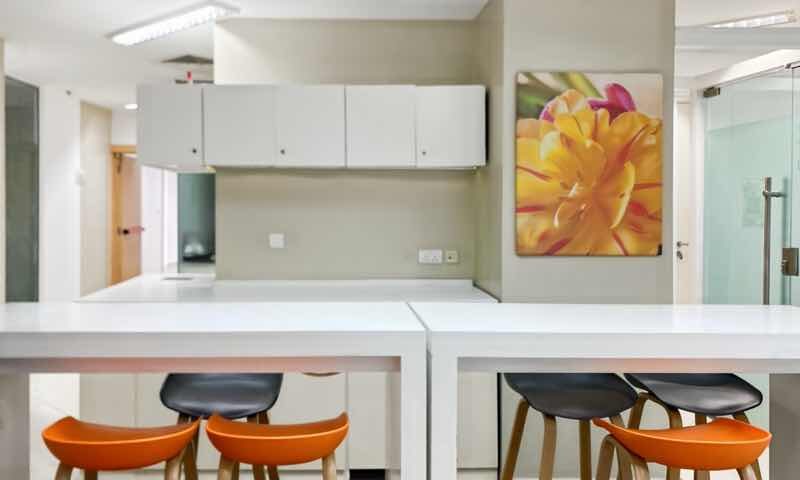
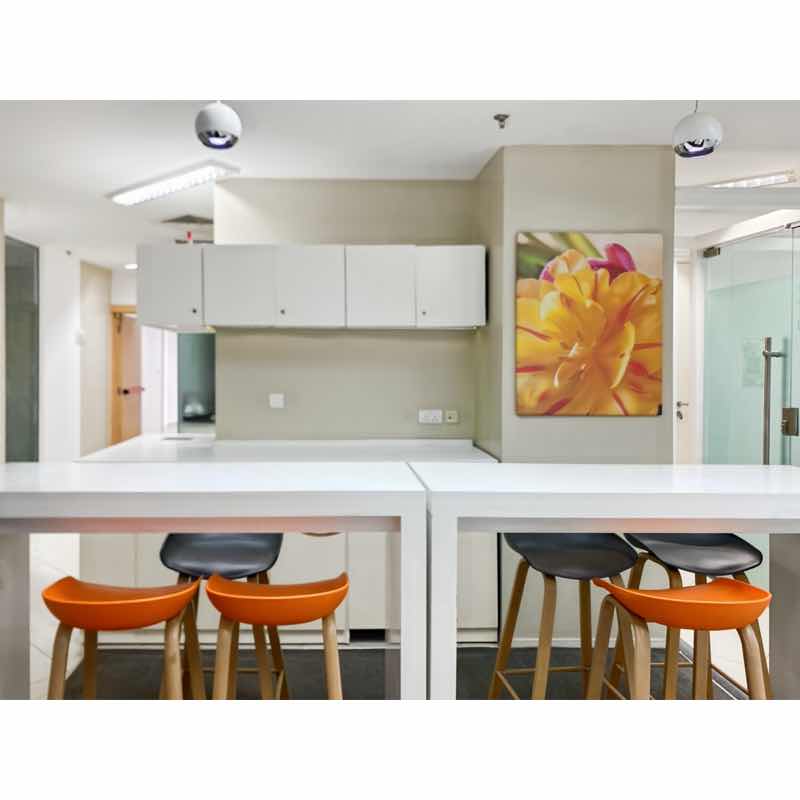
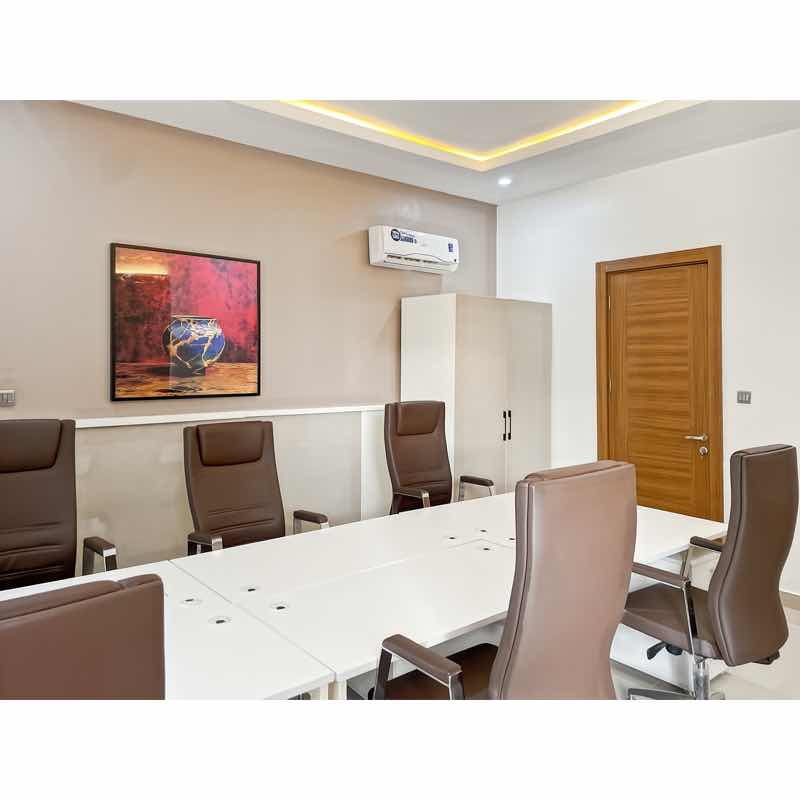
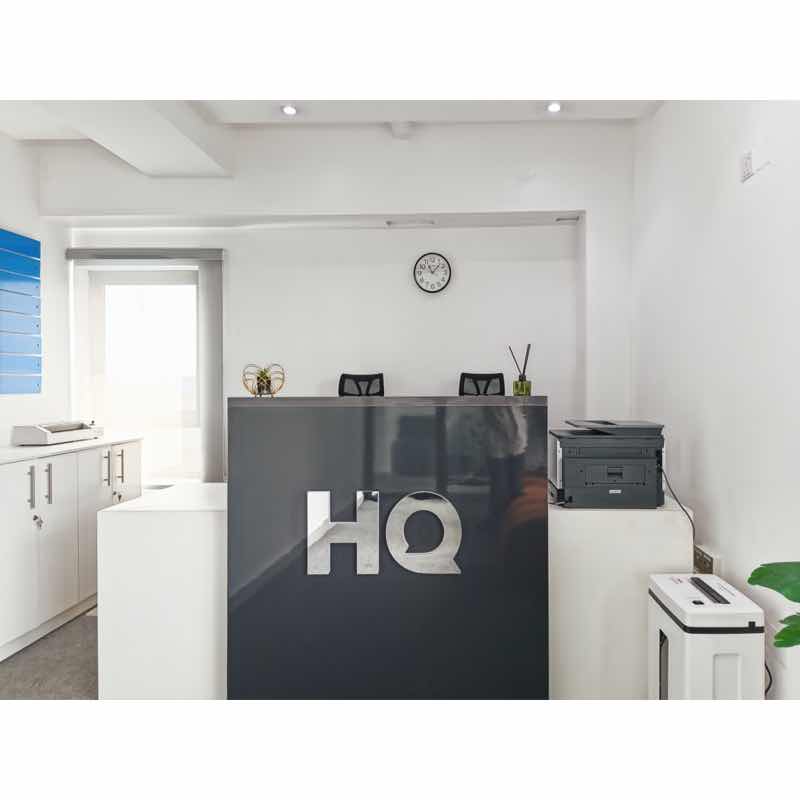
International Workplace Group, the world’s largest platform for work with brands including Spaces, HQ  and Regus, is opening three state-of-the-art flexible workspaces in Nigeria in February and April.
With the long-term shift to more flexible ways of working, IWG is expanding its network to keep pace with rising demand across the country.
The addition of International Workplace Group’s latest locations in Nigeria come on the heels of the business posting its highest-ever revenue, cashflow and earnings growth in its history and achieving rapid network growth, with more new locations signed and opened in the first half of 2025 than in the entire first decade of its operations.
 IWG’s network now comprises more than one million rooms in 121 countries.
The new centres opening in February and April 2026 include:
Regus Logitech Integrated Ltd, Abuja, Jabi. 908.00 SQM (Opening February 01, 2026)
Regus Lubrik Construction Company Limited, Port Harcourt, PH Tower.
 1394.00 SQM (Opening February 28, 2026)
HQ Alternative Bank Limited, Kano, Zoo Road. 390.00 SQM (Opening April 01, 2026)
The building owners decided to invest in the International Workplace Group platform to maximise the return on their real estate space by capitalising on the rapidly expanding demand for hybrid working.
Research by leading academics has found that greater flexibility over how and where employees work offers a multitude of benefits for workers, including enhanced work-life balance, financial savings and health benefits.
 Employers also reap the rewards of hybrid models through increased firm productivity, cost savings and a more efficient, engaged workforce.
In fact, recent research by IWG and workplace consultancy Arup found that hybrid working can boost productivity by 11%.
 Facilitated by flexible workspaces, hybrid working could add up to $566 billion in GVA to the US economy annually by 2045 – the equivalent GVA of Austin, Texas.
With explosive market growth as companies of all sizes adopt more flexible and decentralised models for the long-term, it is predicted that 30% of all commercial real estate will be flexible workspace by 2030.
With International Workplace Group, partners are able to capitalise on this fast-growing sector while being supported by International Workplace Group’s unparalleled experience.
Hybrid working offers companies a significantly lower cost base with an average saving of $11,000 per employee.
International Workplace Group is the leading global platform for work – featuring thousands of locations in more than 120 countries, with members able to access all of the locations and business services via the IWG app.
As the ongoing shift towards more flexible, decentralised and hybrid models of working accelerates, the potential for further growth is exponential, with an estimated 1.2 billion white-collar workers globally and a total addressable market of more than $2 trillion.
In 2024, International Workplace Group welcomed 899 new partner locations and counts 83 per cent of Fortune 500 companies among its customer base.
Mark Dixon, CEO & Founder of International Workplace Group PLC, stated: “These newest facilities represent a vital expansion of our operational base within Abuja, Port Harcourt, and Kano. Given its status as a dynamic commercial hub, Nigeria provides an excellent platform to advance our development goals. We are delighted to be partnering to grow our brand through a management agreement model, delivering innovative workspace environments within our partners’ premises.
“Our expansion across Nigeria comes at a time when businesses are increasingly accelerating their performance and productivity through platform and hybrid working models, which enables companies to scale operations with remarkable cost efficiencies and offers seamless access to a global portfolio of sites.”
Ogun State On Track For 10,000 Homes, Affordable Housing And Urban Renewal

Ogun State has delivered over 5,000 housing units across its three senatorial districts since 2019, with additional projects at advanced stages of construction.
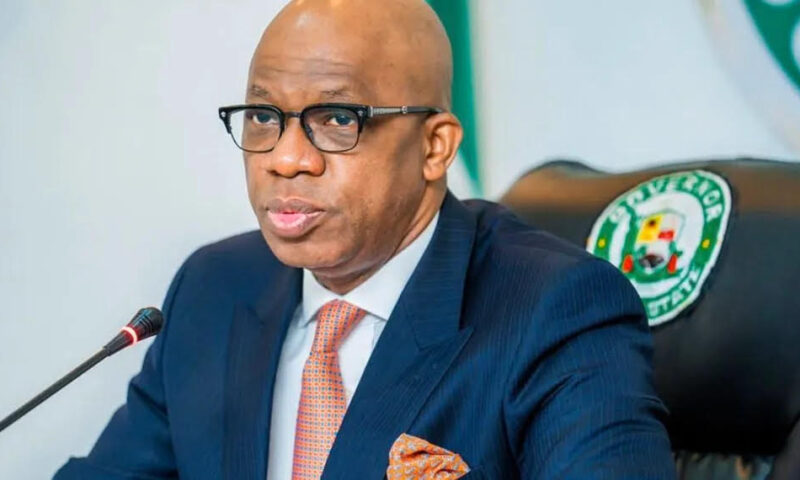
Governor Dapo Abiodun has described this housing drive as a central part of his ISEYA agenda, under which social well-being and welfare are key pillars of governance. “We are committed to ensuring that every citizen has access to safe and affordable housing. It is not just about numbers; it is about lives transformed,” the Governor has remarked.
Housing projects have been spread across Ogun Central, Ogun East, and Ogun West, reflecting an attempt to ensure geographic balance.
 In Ogun Central, completed and ongoing developments include Kobape Estate (Phases 1, 2, and 3), Prince Court Estate, President Muhammadu Buhari Estate, King’s Court Estate, and a regeneration programme at the Old Government Reservation Area (GRA) in Abeokuta.
 “These estates represent more than concrete and bricks; they represent opportunity, stability, and a sense of home,” Governor Abiodun said, noting that several thousand units are at varying stages of completion. Ogun East has seen housing delivery at the Gateway Aviation Village in Iperu-Remo and Prince Court Estate in Sagamu, while Ogun West has recorded completed units at the Ilaro Housing Scheme. According to the Governor, all these initiatives are progress toward the administration’s target of delivering 10,000 housing units by 2027.
Affordability has been central to the programme. Two-bedroom apartments at Kobape and Kempta were initially offered to civil servants at prices below ₦5 million, with slightly higher pricing for members of the general public.
“Our focus is not speculation; it is access. We want people to afford homes without being priced out of their own communities,” Governor Abiodun emphasised. Current market valuations show that similar properties now cost significantly more, highlighting the administration’s foresight in prioritising citizen access over market trends.
Beyond new construction, Ogun State’s housing initiative has included urban regeneration. Abeokuta’s Old GRA has benefited from infrastructure upgrades covering roads, drainage, street lighting, and residential rehabilitation.
 “Reviving our older communities is as important as building new estates. Every citizen deserves dignity and comfort in their environment,” the Governor said, noting that community leaders have welcomed the transformation of areas that had previously suffered from neglect.
Housing delivery has also created economic ripple effects. Construction activities across multiple sites have generated jobs for artisans, engineers, suppliers, and transport operators. Governor Abiodun noted that increased homeownership strengthens internally generated revenue through land documentation, planning approvals, and service charges, while vibrant residential communities stimulate commerce and transport services in new estates.
 Developments such as the Gateway Aviation Village have been strategically located near emerging economic hubs, aligning residential growth with industrial, logistics, and agricultural opportunities.
Nigeria faces a housing deficit estimated at more than 20 million units.
 In states neighbouring Lagos, demand is heightened by migration patterns tied to employment opportunities in the commercial capital.
“Our housing programme offers practical solutions to these challenges,” Governor Abiodun said. “We are giving our people homes close to work, reducing commuting burdens, and creating communities that thrive economically and socially.”
As construction continues across multiple sites, the Ogun State Government remains focused on meeting its 2027 housing target while expanding access across income categories and senatorial districts.
 The data underscores that housing delivery has become a measurable component of the state’s social welfare strategy, combining new construction, urban renewal, and pricing controls into a cohesive policy framework.
 “This is governance in action,” the Governor concluded. “It is about delivering on our promises, providing dignity, and ensuring that our people live not just in houses, but in homes where they can thrive.”