CBN Advert
BOI, MAN, NECA Leaders To Chart Solutions For Low Productivity At WES 2025

…As nominations portal closes for WES 2025 Awards For Outstanding Economic Impacts

By Winifred Bosa


All is set for the annual WorldStage Economic Summit 2025 on Friday November 21, 2025 at The Event Centre, Nigerian Exchange Limited, 2/4 Customs Street, Lagos by 10AM, with top experts from the public, private and academia set to address the theme: Tackling the Issue of Low Productivity in Nigeria.

According to a statement by the organisers, World Stage Limited, a research and technology driven Africa focused firm, among the top chief executives that have confirmed participation in the summit include Dr. Olasupo Olusi, Managing Director/CEO, Bank of Industry (BoI); Mr Segun Ajayi-Kadir, Director-General, Manufacturers Association of Nigeria (MAN); and Mr. Adewale Smatt-Oyerinde, Director General, Nigeria Employers’ Consultative Association (NECA).

The statement also said that Dr Abidemi Adegboye, an academia from the University of Lagos, Nigeria will deliver a researched paper on why Nigeria’s economy has been trapped in low productivity over the years.

The statement confirmed that the online nominations by stakeholders including the media for the WES 2025 Awards For Outstanding Economic Impacts has closed.

It said winners from different sectors of the economy have been notified and will be presented with Certificates For Outstanding Economic Impacts during the summit.

WES is conceived to address economic challenges through diagnoses and application of practicable solutions with public and private sector engagement in a research and innovation driven platform to inspire new thinking in business initiative, policy formulation/implementation, economic reform and development.

Top corporate institutions that are supporting the WES 2025 include Central Bank of Nigeria (CBN), Nigerian Communications Commission (NCC), Nigerian Exchange Group Plc (NGX), NLNG, Zenith Bank, Access Bank, Polaris Bank, Fidelity Bank, Sterling Bank, Shara Group and Ecobank.

Other critical stakeholders for economic productivity expected to take the front seats at the summit include federal, state governments and private bodies responsible for food production, technology transfer, job creation, energy supply, blue economy, banking  and export promotion.

The statement said, the summit will specifically attract those in the manufacturing, oil and gas, housing, agriculture, and water resources, banking, insurance, maritime, ICT, aviation, mining, hospitality & tourism, health care, education, transportation, local and foreign investors, and the media.

Mr Segun Adeleye, President/CEO, World Stage Limited said one of the biggest challenges facing Nigeria’s economy is low productivity.

“Even-though many are working, almost half of Nigerians are estimated to be poor, living below the national poverty line with multidimensional poverty at 63% and income poverty at 40%, just because the right jobs are not available,” he said.

“The question being asked by many is that if Nigeria’s economy is transforming, does the transformation deliver higher productivity jobs to raise living standards?”

He explained that WES 2025 will provide a template to discuss evidence-based policies to generate jobs that can lift people out of poverty; legislative intervention to curb annual economic loss through multiple public holidays; ideas on how to boost earnings in activities that are currently low productivity and small scale activities such as in farm and non-farm household enterprises; a stable macro environment, requiring a continuation of fiscal and exchange rate reforms that will inspire better integrating firms into global value chains and attracting foreign direct investment; further opening of the economy to international trade by removing trade restrictions and improving trade facilitation, as well as ensuring skills are aligned with the economy’s needs; design and implement national skills programs aimed at upskilling young Nigerians, to ensure many more embrace digital skills and capabilities; upgrading infrastructure as key ingredients of an effective policy mix; aggressive integration of mineral resources into national income generation stream to benefit from the opportunities presented by AfCFTA; financing structural transformation with accelerated domestic resource mobilization through reforming tax administration.

WES has always been a hub of opportunity, an unparalleled platform for networking, learning, and adapting. It is an invaluable experience that brings together public, industry leaders and like-minded professionals.

Corporate Responsibility and Sustainability Week : FirstBank Unveils Global Kindness Initiative 

By Winifred Bosa
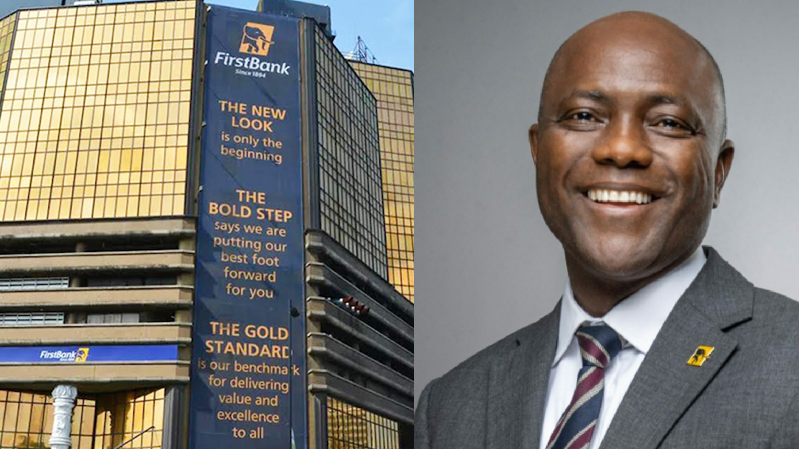
MD/CEO Of First Bank Olusegun Alebiosu
FirstBank, the premier bank in West Africa and a leading financial inclusion service provider, is proud to announce the commencement of its 2025 Corporate Responsibility and Sustainability (CR&S) Week, scheduled to hold from 27 October  – 1 November 2025.

Now in its ninth year, the annual event is a reflection of the Bank’s commitment to community empowerment, environmental stewardship, and the advancement of the United Nations Sustainable Development Goals (SDGs).

Through the ‘Start Performing Acts of Random Kindness’ (SPARK) initiative, FirstBank continues to build on its legacy of sowing seeds of kindness, with a focus on uplifting communities and reducing environmental impact. During CR&S Week, the Bank mobilises employees across the FirstBank Group, including FirstBank Nigeria, FirstBank UK, FirstBank Gambia, FirstBank Sierra Leone, FirstBank DRC, FirstBank Guinea, FirstBank Ghana, FBNBank Senegal, First Pension, and First Nominees, to dedicate their time and resources to meaningful causes aligned with the Bank’s sustainability strategy.

Commenting on the week-long event, Acting Group Head, Marketing & Corporate Communications at FirstBank, Olayinka Ijabiyi, said, “CR&S Week is a call to action. It is about showing up for humanity, being kind to one another, and proving that even the smallest act can ripple into lasting change. FirstBank believes that kindness is a currency that never devalues, and that is why every year since 2017, staff have gone the extra mile to give back to the communities through its SPARK initiative, while also encouraging people to perform acts of random kindness.”

The Bank plans to plant at least 20,000 trees within the week in partnership with the Nigeria Conservation Foundation (NCF), in the final phase of its support for the Nigeria’s 2060 decarbonisation agenda. This effort builds on the Bank’s pledge to plant 50,000 trees by 2025, with 31,000 trees successfully planted over the past two years.

Additionally, in line with FirstBank’s commitment to achieving the United Nations Sustainable Development Goal 5 (SDG) of women empowerment, the Bank will collaborate with Borno and Katsina States to raise and provide medical interventions (including surgeries and post-care kits) for women living with Vesicovaginal Fistula (VVF).

Throughout the week, FirstBank staff will be inspired to share messages of kindness, fostering a culture of compassion, civility, and empathy across the Bank. The programme will feature themed webinars centered on the SPARK initiative, as well as school engagements designed to instill the values of generosity and social responsibility in younger generations.

The week will culminate in visits to orphanage homes, internally displaced persons (IDP) camps, and charitable organisations across Nigeria, sub-Saharan Africa, and the UK, demonstrating kindness and empowering those at the bottom of the pyramid.

These initiatives epitomise FirstBank’s care for the environment and humanity, aligning with the Bank’s sustainability strategic pillars and support for the Green Recovery Nigeria

Since the first edition in 2017, FirstBank’s CR&S Week has spotlighted the Bank’s corporate citizenship interventions driving positive social impact, sustainability, and community engagement. Over the years, it has evolved into a platform that mobilises stakeholders and non-customers alike across its global network to champion causes that uplift lives, protect the environment, and promote inclusive development.  FirstBank is encouraging and inspiring individuals to go beyond their everyday routines and perform acts of random kindness.

Alpha Morgan Bank Opens New Branch In Osogbo

By Winifred Bosa

Alpha Morgan Bank opened its newest branch in Osogbo, Osun State, strengthening its commitment to bringing satisfying banking closer to customers across Nigeria.

The new branch, located at 165 Station Road, Osogbo, was commissioned by His Excellency, Prince Kola Adewusi, Deputy Governor of Osun State, in a ceremony that drew government officials, business leaders, and members of the Bank’s management team.

Prince Adewusi commended Alpha Morgan Bank for expanding into Osun, describing it as a move that will boost economic activities and improve access to quality financial services within the state.

Speaking at the launch, Mr. Ade Buraimo, MD/CEO Alpha Morgan Bank expressed gratitude to the government and people of Osun for their warm reception, reaffirming the Bank’s commitment to providing seamless, customer-focused, and satisfying banking experiences to everyone who Banks with them.

The new Osogbo branch features a modern banking hall and personalized financial services, offering customers the convenience, quality and satisfying banking experience Alpha Morgan Bank is known for.

Seamless Cross-Border Payments : FirstBank Integrates PAPSS Into LIT App

By Winifred Bosa

MD/CEO Of First Bank Olusegun Alebiosu


FirstBank, the premier bank in West Africa and a leading financial inclusion service provider, has announced the successful integration of the Pan-African Payment and Settlement System (PAPSS) into its flagship digital banking platform, the LIT app, enabling customers to make instant, secure, and local currency-based cross-border payments across Africa.

According to a press release by the bank, PAPSS, developed by the African Export-Import Bank (Afreximbank) in collaboration with the African Union and the AfCFTA Secretariat, enables instant, low-cost payments in local currencies between African countries.

Speaking on the integration, the Group Executive, e-Business and Retail Products at FirstBank, Chuma Ezirim, said, “The integration of PAPSS into the LIT app is a testament to FirstBank’s commitment to delivering innovative, customer-centric solutions that simplify and enhance financial transactions. This milestone aligns with the Bank’s strategic goal of deepening digital capabilities and expanding access to seamless cross-border payment services across Africa.”

Commenting on this collaboration, Mike Ogbalu, CEO of PAPSS said, “Every time an individual, an SME or a Company sends money instantly within Africa in their own currency, we are not just moving funds, we are connecting ambitions, supporting livelihoods, and bridging dreams across borders. This collaboration with FirstBank and their LIT app brings us a step closer to making African borders invisible to movement of money, so that the continent’s entrepreneurs and families can focus on what matters most: building their future, not battling payment barriers.”

The LIT App, FirstBank’s innovative digital banking platform, offers a wide range of features including virtual cards, scheduled payments, and multiple transfers in one go, designed to meet the dynamic needs of customers. The addition of PAPSS expands its capabilities to support cross-border commerce, especially for individuals and SMEs engaged in pan-African business.

With PAPSS now live on the LIT App, FirstBank is breaking down barriers to payments, trade and financial inclusion across Africa. Customers can now send funds conveniently to other countries in Naira, without needing US dollar, GBP or Euro conversions. This landmark integration enables real-time cross-border payments in local African currencies, reduces transaction costs, and improves settlement efficiency. It also expands access to digital banking services, promotes financial inclusion, supports SMEs and fosters growth under the African Continental Free Trade Area (AfCFTA).

This integration of PAPSS to the LIT app reinforces FirstBank’s leadership in digital banking innovation and supports the African Continental Free Trade Area (AfCFTA) agenda by simplifying intra-African transactions.

Media Key To Combating Health Misinformation, Experts Declare At HEWAN, NIMR , Roche Workshop

By Winifred Bosa

In an era where misinformation on health issues spreads rapidly and widely, health experts have raised concern over the growing infodemic—the overwhelming wave of misleading or false health information that often confuses and endangers the public.

Recognizing the media’s pivotal role in bridging this information gap, journalists and media professionals have been identified as key catalysts in promoting factual, insightful, and balanced health reporting to help Nigerians make informed decisions about their well-being.

This formed the central focus of discussions at a two-day capacity-building workshop organized by the Health Writers Association of Nigeria (HEWAN) in collaboration with the Nigerian Institute of Medical Research (NIMR) and Roche.

The workshop , themed : “Elevating Science and Health Journalism”, brought together journalists, health experts, and communication professionals to explore strategies for strengthening health and science journalism in Nigeria.

In his opening remarks, Professor John Obafunwa, the Director-General of Nigerian Institute of Medical Research (NIMR), represented by the Director of Research NIMR, Professor Oliver Ezechi,   emphasized the need for collective commitment to improving the quality, integrity, and public value of health journalism in Nigeria.

 Obafunwa described the gathering as a reflection of shared dedication to strengthening the profession.

He noted that the values of integrity and accuracy in health reporting have been central to his career and should continue to guide media professionals in the years ahead.

“Today’s convergence comes at a watershed moment for health journalism in Nigeria,” he said.

“We live in an era of rapid scientific advancement and expanding health knowledge, yet we continue to face persistent challenges — from infectious diseases that demand future surveillance to the growing burden of non-communicable conditions requiring sustained lifestyle, policy, and clinical responses.”

The NIMR chief stressed the importance of ensuring that Nigerians have continued access to trustworthy health and scientific insights capable of informing personal decisions, guiding policy development, and strengthening the nation’s health systems.

According to him, journalists play a vital role in building public trust, reducing misinformation, and making complex scientific issues understandable to the public.

“Through enforcing trust, reducing uncertainty where possible, and explaining complexities in accessible terms, we can empower citizens to make informed choices that improve their lives and communities,” he said.

“Leadership in health is not the sole responsibility of any single organization or individual,” Obafunwa added. “It is a collaborative venture anchored on shared vision, mutual trust, and sustained cooperation. Our strength lies in enduring partnerships among media houses, research institutions, health agencies, professional associations, and civil society organizations.”

Delivering the keynote lecture at the workshop on the topic, “Why Health and Science Journalism Matters More Than Ever In Nigeria ” , Professor Oliver Ezechi underscored the critical role of the media as a public health tool, stressing that access to accurate information can save lives.

“Access to accurate information saves lives,” he said. “When journalists provide clear and verified reports, they enable people to make informed choices about vaccines, medications, and preventive practices. Investigative health journalism also exposes gaps in service delivery, driving accountability and prompting corrective actions.”

Ezechi observed that the growing challenges of infodemics, climate-related health threats, and complex scientific innovations make it imperative for journalists to stay informed and responsible in their reporting.

“In moments of crisis—whether during outbreaks, heat waves, or mental health emergencies—journalists play a vital role in translating complex data into practical, timely information that communities can act upon,” he stated. “Accurate health reporting informs decisions, protects vulnerable populations, and advances national progress.”


Urging media professionals to renew their commitment to accuracy, context, and public service, he emphasized that credible journalism remains essential to safeguarding public health and strengthening Nigeria’s development agenda.

In her welcome address at the occasion, President of the Health Writers Association of Nigeria (HEWAN), Mrs. Vivian Ihechu, called on journalists to deepen their commitment to accurate and impactful health reporting, stressing that quality journalism plays a vital role in saving lives and shaping better public health outcomes.

She made the call during a workshop organized by HEWAN in collaboration with the Nigerian Institute of Medical Research (NIMR) and Roche, held in commemoration of the 2025 Breast Cancer Awareness Month. The theme of the event was “Elevating Science and Health Journalism.”

Ihechu said the workshop was designed to build the capacity of health journalists in Nigeria to effectively translate scientific data into information the public can understand and act upon.

“Journalism is not just about reporting facts; it’s about saving lives,” she stated. “In a country grappling with complex public health challenges, your expertise in translating scientific data into actionable public information is invaluable.”

She noted that the training, supported by NIMR and Roche, would equip journalists with advanced tools to cover issues such as disease outbreaks, policy changes, and medical innovations with accuracy and depth.

Ihechu emphasized that the event also aligns with the global fight against breast cancer, highlighting the need for early detection, equitable access to screening and treatment, and the dispelling of harmful myths that hinder timely intervention.

“October serves as a critical reminder that breast cancer remains a devastating threat to our mothers, sisters, and daughters,” she said. “As journalists, we must go beyond the statistics to tell the stories that inspire action and save lives.”

She expressed appreciation to NIMR and Roche for their unwavering support and partnership, noting that their collaboration demonstrates a shared commitment to improving public health through informed reporting.

Roche Collaborates With Health Writers To Boost Breast Cancer Awareness

By Winifred Bosa
Roche Nigeria has partnered with Health Writers’ Association of Nigeria ( HEWAN ) to boost breast cancer education and media reporting in recognition of Breast Cancer Awareness Month .
To commemorate this , a strategic capacity-building workshop for health journalists was held at the Cancer Centre, Nigerian Institute for Medical Research (NIMR) in Lagos .
The workshop was designed to equip journalists with the necessary tools to accurately inform the Nigerian public about the realities of breast cancer and the available care initiatives.
Key sessions at the workshop included:
1. An expert overview of breast cancer, presented by Dr. Samuel Otene, a Consultant Radiation and Clinical Oncologist and State Chairman, Nigerian Cancer Society, Benue Chapter.
2. A presentation on the Presidential Directive for Mandatory Health Insurance and its implications for transforming healthcare in Nigeria by Dr Amade-Agada, GM Standards & Quality Assurance, National Health Insurance Authority (NHIA)
3. . A detailed briefing on the Africa Breast Cancer Ambition (ABCA), an ongoing mission by Roche and its partners to improve breast cancer care outcomes.
Pharm. Gilbert Ogbewele, Marketing and Business Support Lead representing the General Manager Dr. Ladi Hameed, addressed the journalists highlighting their essential role. “Roche is proud to partner with HEWAN, a truly critical stakeholder entrusted with preserving public interest. Your role in educating the Nigerian public about the scourge of breast cancer is invaluable,” Ogbewele stated.
 “Crucially, you offer hope by arming our citizens with information about the available policies and breast cancer care initiatives that are functional in Nigeria today.”
The workshop aims to leverage the media’s reach to drive increased awareness, encourage early detection, and support the strengthening of Nigeria’s healthcare system for improved cancer care and survival. Mr. Ogbewele also noted that journalists are critical in supporting the government’s drive toward universal health coverage.
This initiative is part of Roche’s bold Africa Breast Cancer Ambition (ABCA), a mission dedicated to rewriting the story of breast cancer in Nigeria. Roche invited the media to join the quest to make a real difference in the essential fight against breast cancer.
Omi Eko Project: Lagos, AFD Promise All-Inclusive Implementation Strategy

By Winifred Bosa
Lagos State Government and Agence Française de Développement (AFD) have assured Lagosians and other satellite communities in the State of the inclusive implementation of the Omi Eko project, which was recently launched by the Lagos State Governor, Mr. Babajide Sanwo-Olu, in Lagos.
The assurances were made during the courtesy visit of the Lagos State and AFD officials to the palace of HRH OBA Afeez Oriyomi Adaran Shittu, (ADEYEMI 1) Agbojojoye of Ibasa, Ijegun, Egba, Oguntedo & Satellite Town in Oriade LCDA, Lagos over the weekend.
Lagos State Government, in collaboration with the AFD, European Union (EU), and European Investment Bank (EIB), had launched the €410 million Omi Eko Project to transform Lagos’ inland waterways into a world-class transportation system.
According to Lagos State, the project is aimed at providing cleaner, faster, and safer water transport, reducing congestion, and promoting sustainable mobility.
Speaking after briefing the Oba on the State’s preparedness to transform the waterways transportation, the Commissioner for Transportation, Lagos State, Mr. Oluwaseun Osiyemi, said, “The whole essence of this project is to develop the waterways. And also in doing that, communities will benefit because we would have jetties, we would have electric ferries that would come. And also, there will be upgrades in those jetties as regards the kind of jetties that will be. It’s also an opportunity for us to move from fossil to clean energy, which this project will also provide.”
Furthermore, he stated that “One of the major things that we should always remember is that this project also speaks a lot to inclusivity, which means that the communities that would be benefiting. They would be part and parcel of the project, because without them, we would not be able to run it well.
“Therefore, there will be a lot of stakeholders’ engagements, there will be a lot of training that even the communities would have to go through in understanding how to manage the assets that will be handed over to them,” he added.
An elated Osiyemi reassured the communities that the project will not take away their source of livelihood but enhance it and even provide jobs for them.
“So, it’s a project that is not going to take away their jobs from them. It’s going to add more to what it is that they have. And above all things, it’s going to open up even the communities and increase the businesses around here,” adding that “The moment there’s efficient transportation, what you see is a lot of business opportunities open up.
We believe that this would also translate to increasing their own business, and in all, communities will be the biggest beneficiaries”.
According to Sandra Kassab, Director of the Africa Department, AFD, who spoke on the importance of the project, she said, “We launched an important project together with the Lagos State Government and Lagos Waterways Authority (LASWA).
 This project is Omi Eko. It’s dedicated to providing new solutions, a transport solution through the Waterway corridor for the Lagosians.”
Speaking about the visit, she said, Lagos and AFD officials were here to further brief community leaders and youth organizations on the project that would begin soon.
“We wanted to have the opportunity to visit the community, which will benefit from this important project from next year, to listen to the expectations, needs, and perhaps, some concerns they may have regarding the project.”
The Director of the Africa Department at AFD, who spoke on the project financing, said, “AFD’s support will be provided in the form of a sovereign loan of up to EUR 130 million to the Federal Republic of Nigeria, which will be on-lent to Lagos State. EIB will co-finance the project with a EUR 170 million credit facility. In line with the Global Gateway initiative, the EU is completing the financial package with a EUR 60 million grant to finance the electrical charging infrastructure to power e-vessels.”
Kassab said that the key highlights of the project are development of 15 priority ferry routes, spanning 140 kilometers, deployment of 75 hybrid-electric ferries to reduce emissions and promote clean mobility, construction of 25 modern ferry terminals and jetties with electric charging facilities, expected to create thousands of jobs and stimulate economic growth and reduction of CO2 emissions by 41,000 tons annually and improved air quality.
On the outcomes of the project when completed, Kassab disclosed that “100,000 public transport users per day on the priority IWT routes at the opening of the service will be achieved; 3 hours of travel time saving on main Omi Eko routes at peak hour; 41,000 tons of CO² emissions reduced every year.; 35% of e-vessels’ power consumption will be generated by solar energy; 0 boat accidents on the Omi Eko routes; an upgraded policy and regulatory framework through the implementation of a Vessel Industry Transition Program (VITP) for the paratransit industry; and thousands of indirect employments generated by the new ferry network”.
Speaking on behalf of the Youth, the Chairman of Ibasa, Ijegun, Egba, Oguntedo & Satellite Town, Comrade Karim Adewale Idowu, thanked Lagos State government and AFD, and other partners for finding their communities worthy to install some state-of-the-art jetties and develop the water transportation.
He called on the government to ensure that the development that is coming into their community is mutually beneficial, not one that will take away their sources of livelihood.
“We believe that the community in the riverine areas, particularly, is supposed to enjoy the benefits of the blue economy. And today, we are glad the Ibasa-Ijegun community will be enjoying the benefit of the blue economy as a result of the project.”
“The Omi Eko Project will introduce 15 structured ferry routes, spanning 140 kilometers and linking 25 upgraded and expanded ferry terminals across the city. As part of the initiative, 75 state-of-the-art electric vessels—each capable of carrying up to 440 passengers—will be procured.
 These vessels will significantly cut greenhouse gas emissions while drastically reducing air and water pollution,” she said.
A flagship component of Governor Babajide Sanwo-Olu’s THEMES+ Agenda, Omi Eko aims to increase the share of water transport from 1% to 5% of daily mobility in Lagos, while saving commuters up to two hours per day on major routes. The resulting reduction in road congestion will enhance mobility, productivity, and overall quality of life—unlocking new social and economic opportunities across the State.
As implementation progresses, residents will soon witness construction and rehabilitation works across the city—laying the foundation for a cleaner, safer, and more efficient transport system. Omi Eko will not only reshape Lagos but also position the city as a model of sustainable water transport for West Africa and beyond.
Clinical Trial : NAFDAC , NNMDA Chart Path For Safe, Effective Nigerian Herbal Medicines

By Winifred Bosa
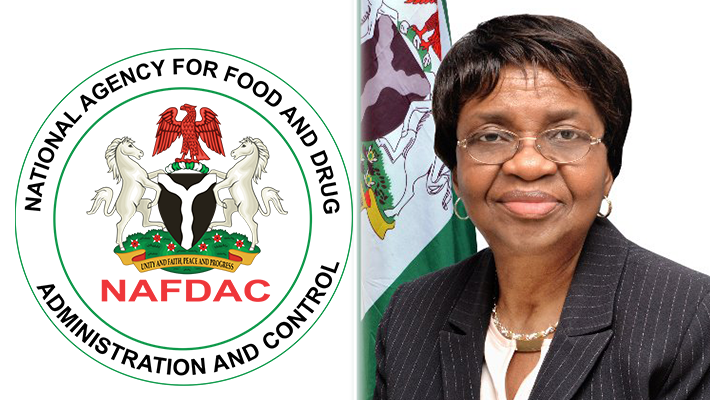
The National Agency for Food and Drug Administration and Control (NAFDAC) is collaborating with the Nigeria Natural Medicine Development Agency (NNMDA) to develop scientifically proven, safe and effective herbal medicines that meet global standards through clinical trials.
According to a press release by Sayo Akintola , Resident Media Consultant, NAFDAC , the Director General of NAFDAC, Prof. Mojisola Adeyeye, who dropped the hint, disclosed that Nigerian herbal medicine practitioners have the capacity to formulate safe and effective indigenous natural remedies that meet international standards.
NAFDAC has two types of approval for herbal medicines. The first type is a listing (L) approval, and it is granted after the product has been evaluated in our laboratory for toxicology safety tests with satisfactory results. Products in this approval category are listed for a period of two years, with a NAFDAC number bearing the letter L at the end.
The second approval type requires that clinical trials be conducted on the product to prove the efficacy of such a product. If this is done (in a well-designed protocol) with proven efficacy, a full approval with five-year validity is given.
The Director General identified cost as a major obstacle preventing herbal medicine practitioners from subjecting their products to clinical trials.
‘If you have an herbal medicine that you cannot prove scientifically the extent to which it works without causing harm to the user by providing some data on the efficacy, then it cannot be fully registered by NAFDAC.
Prof Adeyeye disclosed that NAFDAC has listed thousands of herbal medicines, with only a few products that have gone through clinical trial outcomes, But we cannot give 5-year approval without passing the efficacy test through a clinical trial.
We know that herbal medicine works. It is how to ascertain through clinical trial the level it can be used below which patients will be safe, and above which there could be damage to the liver, the kidney, and other internal organs, she explained, emphasising that the fact that its natural doesnt mean that its all safe. Thats where NAFDAC regulation and control come in.
The DG recalled that NAFDAC launched the Herbal Medicine Products Committee just before the COVID-19 Pandemic, which brought the practitioners, the Ministry of Health, NAFDAC and researchers together. This collaborative effort is very important because the practitioners know what their forefathers have been using, while the researchers know the science.
According to her, the Agency is looking for funding to assist the practitioners in the conduct of clinical trials, which is highly capital-intensive.
She pointed out that the Agency is working assiduously with the    NNMDA to ensure that clinical trial is conducted for the medicines that have met the regulatory requirements for listing.
She said that NAFDAC is working together with the NNMDA to use some selected listed herbal medicines to conduct clinical trials, so that we will prove beyond doubt that the medicine works well and those can now be registered fully.
Such medicines can be placed in a national formulary for herbal medicines, even if there are few.
She stated that NAFDAC has been educating the herbal medicine practitioners who intend to register products through stakeholders meetings.
The Agency even published a simple floor plan on the website as a guide for the practitioners.
She averred that it does not necessarily have to be a big place to use for production. She, however, maintained that the factory must be well-ordered to allow a good workflow so that there will not be contamination.
We are working with our practitioners. We are approving herbal medicines daily in NAFDAC, but we are working towards a phase where we will have a national formulary for those that have had clinical trials and have been proven to be very effective, she said.
The Director-General disclosed that before her appointment at NAFDAC, she was a professor in the United States. While at the university, she led a project that developed an anti-sickling polyherbal medicine.
This medicine, which NAFDAC had listed many years before her tenure, was tested in laboratory settings by incubating it with blood samples from children with sickle cell disease to prove its anti-sickling effect.
 Two research papers were published, confirming both the anti-sickling and anti-infective properties of the medicine.
We conducted a clinical trial approved by the Ethics Committee of Bowen University and the Institutional Review Board of my University in the U.S on the polyherbal in July before my assumption of office in NAFDAC in November 2017.
 She added that the trial showed that the product was efficacious but needed more data and funding for completion.
We are determined to assist our practitioners in the area of clinical trials and together with NNMDA we shall mobilise resources to get some herbal medicines fully registered after going through due process, she said.
Waves Of Innovation: How First Bank Turned Lagos Into Africa’s Electric Playground

The Lagos Lagoon glistened in shades of blue and gold as electric powerboats sliced through the water, cheered on by an ecstatic crowd that lined Victoria Island’s waterfront from Saturday, 3 October to Sunday, 5 October. For two unforgettable days, Lagos became Africa’s capital of clean energy, glamour, and innovation, all powered by First Bank of Nigeria, the sponsor of the continent’s first-ever E1 Lagos Grand Prix.

From the rhythmic sounds of Afrobeats echoing across the Marina to the sight of sleek, futuristic boats gliding silently on water, the E1 Lagos GP was more than a race, it was a celebration of Lagos’ vibrant spirit and Nigeria’s march towards sustainability.

President Bola Ahmed Tinubu, in a goodwill message, hailed the event as a bold statement of intent by Nigeria and Lagos, praising Governor Babajide Sanwo-Olu, First Bank, and other partners for delivering a world-class spectacle.

“The E1 Powerboat series combines world-class entertainment with clean energy innovation. This championship is not just a thrilling spectacle on water but a commitment to a greener and more sustainable future,” the president had said at the opening ceremony of the great event on Friday, 3 October.


He described Lagos as “a gateway to innovation, technology, and global sporting excellence,” affirming the nation’s readiness to lead Africa’s transition to clean energy.
Governor Babajide Sanwo-Olu, who led the regatta that opened the event, described the championship as a proud moment for Lagos and a reflection of its global potential.
“E1 Lagos GP is more than a race; it is a celebration of Lagos’ dynamism, the Spirit of Lagos,” the governor said, adding that “It shows our capacity to host world-class events and underscores our commitment to sustainability.”

Crowds thronged the Lagos Lagoon and fan zones, having fun, snapping selfies, and soaking in the festive atmosphere.

International sports icons, investors, and fans came from across the world, including former Chelsea and Ivory Coast football legend Didier Drogba, co-owner of Team Drogba Global Africa, who added a touch of celebrity magic to the weekend.

For First Bank of Nigeria, the event was not just about sports, it was about making history. Acting Group Head of Marketing and Corporate Communications, Olayinka Ijabiyi, said sponsoring the E1 Lagos GP reflected the bank’s heritage of innovation and renewal.

“Innovation, sustainability, excitement, speed, we are a heritage bank that has been around for 131 years, and for every one of those years, we have constantly renewed ourselves,” Ijabiyi said, saying that “When this opportunity came, who else could bring the first E1 GP to Nigeria but First Bank? We are proud to have presented Lagos and Nigeria to the world.”

At the First Bank Pavilion, visitors enjoyed interactive experiences, lifestyle engagements, and product showcases, while music, fashion, and food added a distinctly Lagos flavour. Families and young professionals mingled with entrepreneurs, all celebrating a fusion of technology, culture, and sustainability, hallmarks of the bank’s brand identity.

“This race is a net-zero emitter,” Ijabiyi added. “We are strong on sustaining the environment and supporting a cleaner, greener future. It’s innovation meeting responsibility.”

The E1 partnership also connects with the bank’s #FirstBankDecemberIssaVybe series, an annual celebration of entertainment and lifestyle that lights up Nigeria’s festive season. “December is the Vybe,” Ijabiyi teased. “This is just a taste of what’s to come-fun, fashion, food, and amazing experiences.”

The finale on Sunday was nothing short of electrifying as Team Brazil claimed victory, with pilots Timmy Hansen and Leva Millere-Hagin steering their electric boat to glory, beating Team Blue Rising and Team Drogba to the podium.

As the sun set over the Lagoon, the waterfront transformed into a sea of lights and cheers, a moment that captured the heart of Lagos: energetic, ambitious, and always ready to lead.

With its sponsorship of the E1 Lagos Grand Prix, First Bank once again proved that it is more than a financial institution, it is a lifestyle brand championing innovation, sustainability, and national pride.

In the words of Latoya Johnson, a Lagosian who attended the event: “I grew up knowing First Bank as the reliable one. Seeing them behind something this big makes me proud. They’re not just banking our money, they’re banking our future.”

From clean energy to cultural celebration, from racing boats to smiling faces, the E1 Lagos GP was a powerful reminder that when innovation meets tradition, the result is pure magic.

By Kazeem Ugbodaga

Sanya By Oyin Olugbile Clinches NLNG 2025 The Nigeria Prize For Literature

…New Prize category on Creative Arts introduced

By Winifred Bosa

Sanya by Oyin Olugbile has emerged winner of the 2025 edition of The Nigeria Prize for Literature, clinching one of Africa’s most prestigious literary honour valued at $100,000.

The announcement was made on Friday, 10th October 2025 at the Nigeria LNG Limited (NLNG) Grand Award Night in Lagos by the Chairman of the Advisory Board for the Prize, Professor Akachi Adimora-Ezeigbo, who revealed the winner out of 252 novels submitted for the NLNG-sponsored Prize.

According to Professor Akachi Adimora-Ezeigbo, Olugbile’s mythology retelling approach was distinct and daring for casting Sango as a female and for the projection of Yoruba mythology through a story that captivates and meanders into a fantastical world. She stated that Olugbile achieved this through lucid and straightforward language, making for easy reading.

“We were impressed by the quality of the shortlisted books written by three writers with diverse backgrounds and experiences. The books, Sanya by Oyin Olugbile; The Road to the Country by Chigozie Obioma, both published by Masobe Books; and This Motherless Land by Nikki May, published by Narrative Landscape, indicate an improvement in the quality of local publishing.

“After much careful assessments and deliberations, we concluded that very little separates the novels and each is a potential winner of the award. However, Oyin Olugbile’s Sanya slightly takes the edge and is therefore our pick as the winner of the 2025 The Nigeria Prize for Literature,” she stated.

She further announced Okwudiri Anasiudu as the winning entry for The Nigeria Prize for Literary Criticism. Anasiudu won for his submissions titled Afropolitan Identity and Afrodiasporic Otherness in Selected African Novels; Allegorical Conjectures in Helon Habila’s Measuring Time; and Mimetic designs in Helon Habila’s Oil on Water. The Nigeria Prize for Literary Criticism comes with a $10,000 prize money.

In his opening remarks, Managing Director and Chief Executive Officer of NLNG, Philip Mshelbila, highlighted the enduring influence of literature, describing The Nigeria Prize for Literature as “a reminder of the power of words to shape identity and deepen understanding. Winning the Prize is recognition of scaling the highest heights of literature. All the shortlisted books this evening are works of the highest calibre,” he said.

He also revealed that The Nigeria Prize for Science will be renamed “The Nigeria Prize for Science and Innovation.” He said the new name reflects NLNG’s belief that progress depends as much on creativity and fresh thinking as on technology and infrastructure.

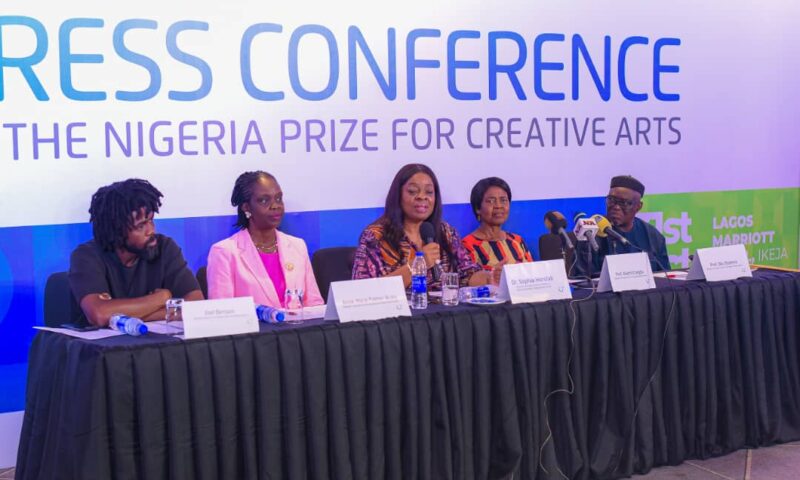
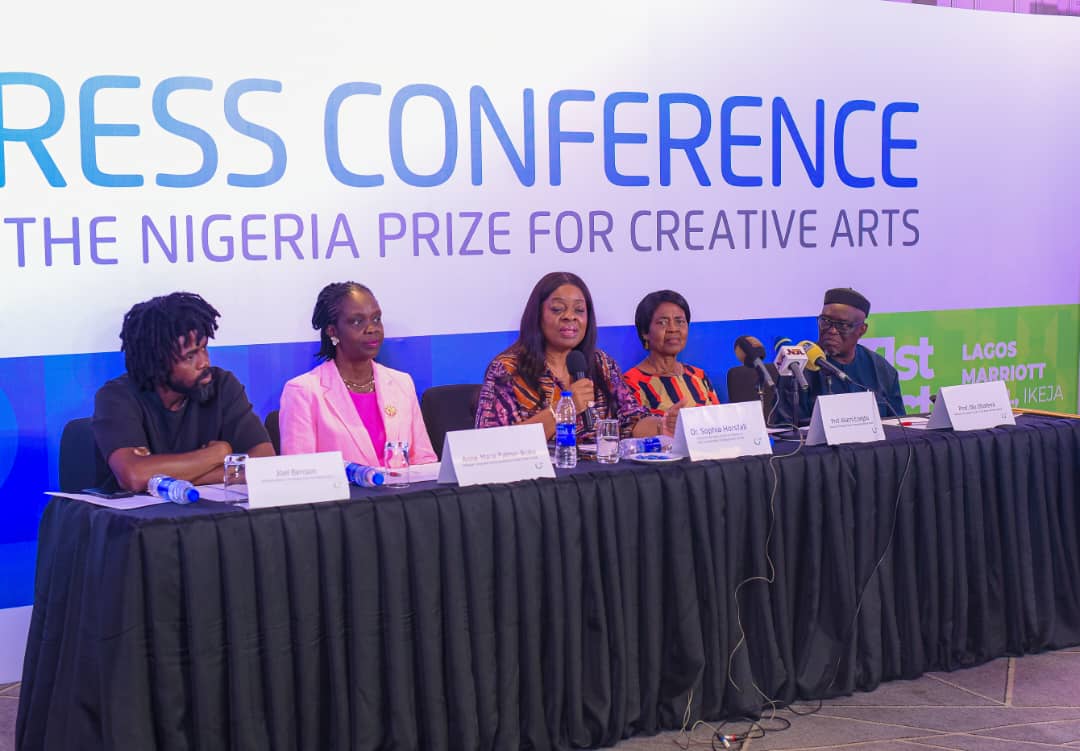
In another revelation, Mshelbila announced that NLNG would be resting The Nigeria Prize for Literary Criticism and introducing a new Prize category “The Nigeria Prize for Creative Arts,” with focus on Documentary Film. He stressed that the new Prize would inspire a new generation of storytellers to inform, challenge, and connect Nigerians more deeply to who they are as a nation and who they can become.

On energy, he stated that, according to the International Energy Agency, Africa requires over $200 billion annually in energy investments to achieve its climate and development goals. He added that Nigeria has the capacity and responsibility to lead this effort. He added that every kilometre of pipeline, every processing plant, and every household gas cylinder represents opportunities.

He stated further that NLNG takes pride in what it produces and enables, adding that “Train 7, now over 80% complete, is a $10 billion demonstration of what happens when policy, planning, investment and execution align. It is proof that investment yields results. A clear example of Nigerian content development at work. And it is a signal that Nigeria can remain competitive in the global LNG market if we stay focused, coordinated and ambitious.”

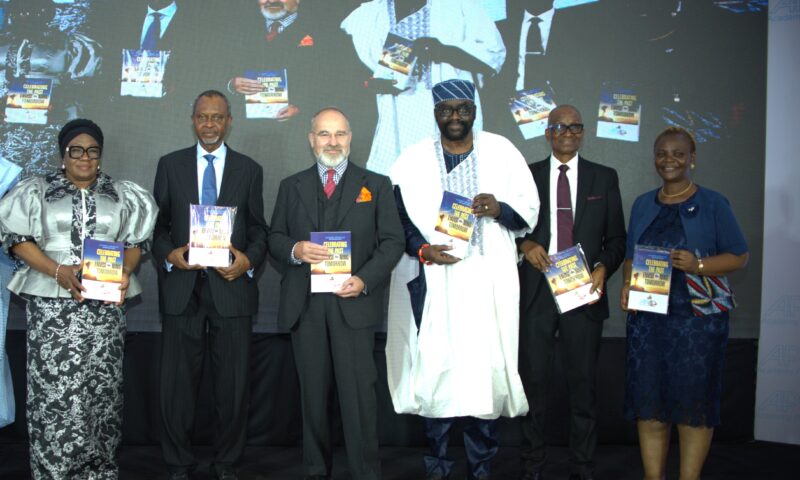
During his speech, Mshelbila unveiled a new book “Voices of Our Leaders,” a commemorative book on NLNG’s history and progress over three decades. He noted that the book captures the voices of some of those who have guided NLNG’s journey from dream to reality.

The Honourable Minister of Education, Dr Tunji Alausa, in his keynote speech, remarked that while there was much to celebrate, it was equally important to pause and reflect. He noted that The Nigeria Prize for Science, with its theme “Innovations in ICT, Artificial Intelligence (AI), and Digital Technologies for Development,” had not produced a winning work in 2025. He said it was a reminder that without innovation, Nigeria cannot hope to compete in a digital future.

He emphasised that Nigeria must deepen its investment in science, particularly in artificial intelligence and digital technologies, which he described as key to addressing many of the country’s developmental challenges. Concluding his remarks, he called on Nigerians to rededicate themselves to the broader national vision of nurturing both science and art, strengthening education, investing in digital technologies, and powering the engines of sustainable energy.

In September 2025, the Advisory Board of the Nigeria Prize for Science announced a no-winner verdict for the Prize.

Through The Nigeria Prizes, NLNG continues to reaffirm its enduring commitment to inspiring a sustainable future.