


CBN Advert
MAN Calls on CBN for downward review of the interest rate to boost the sector

MAN urges CBN to cut interest rates to boost production - Latest News In  Nigeria, Nigeria News Today, Your Online Nigerian Newspaper

By  Fidelia Okafor 

The Manufacturers Association of Nigeria (MAN) has welcomed the decision of the Monetary Policy Committee (MPC) of the Central Bank of Nigeria (CBN) to maintain the benchmark interest rate at 27% and adjust the standing facilities corridor.

However, the association urged the CBN to consider a downward review of the interest rate to reduce the high borrowing costs and incentivize long-term investments in the manufacturing sector.

In its position paper on the MPC meeting, MAN noted that despite the CBN’s efforts to stabilise the economy and ease inflationary pressures, the high lending rates of 30-37% remain a significant challenge to manufacturers.

The association emphasised that persistent high lending rates will limit access to affordable credit for manufacturers, especially small and medium-sized enterprises.

MAN also called on the government to strengthen fiscal discipline, invest in infrastructure, and implement complementary fiscal measures that support industrial development and promote structural reforms.

The association urged the government to resolve the lingering insecurity issues in the country, particularly in agricultural and industrial zones, to stabilise food supply and raw material inputs.

MAN made several recommendations, including a downward review of interest rates, additional policy instruments to facilitate credit flow to the real sector, and collaboration between the government and the CBN to stabilise the naira and manage external risks.

The association reiterated its commitment to working with the CBN and the government to promote economic growth and development, and urged the authorities to seize the opportunity to promote credit-led growth, especially in productive sectors, while managing risks through fiscal discipline and structural reforms.

SanlamAllianz Nigeria wins NiRA Insurance Website Of The Year

SanlamAllianz Nigeria’s website/portal, www.sanlamallianz.com.ng, has been adjudged winner of the NiRA .NG Awards 2025.

Nigeria Internet Registration Association (NiRA), is the registry for .ng Internet Domain Names and maintains the database of names registered in the .ng country code Top Level Domain. NiRA is a Not-for-Profit, Non-Governmental Self-Regulatory body established by the order of the President of Federal Republic of Nigeria to the Internet Community to manage Nigeria’s Country Code Top Level Domain.

A statement by Bankole Banjo, Marketing and Corporate Communications Manager, said .ng Awards celebrate the achievements and innovation of Nigerian internet initiatives and aims to showcase Nigerian businesses, individuals, charities, public and private sector organisations that help to make the Internet a more secure, open, accessible, and rewarding experience for all.

According to the .ng awards website, the criteria for the awards include: Local Content, User Experience, Functionality, Website Relevance and Website Dynamism.

Commenting on the awards, Chris Ekwonwa, Group Head, Strategy, Marketing and Customer Relations, SanlamAllianz Nigeria, said “this award is another testament to the overall quality of our website. Last year, we were finalists at this same award as Sanlam Nigeria, now as SanlamAllianz Nigeria, following our JV with Allianz, we finally brought this home. This reinforces our rebrand theme of two giants coming together; two forces joining forces. Indeed with this award, we unequivocally reaffirm our enhanced technical and innovation capabilities to deliver a delightful experience to our customers and prospects who interact with us across all our touch points.”

In a further testament to the increased strength of the company’s digital exertions, days earlier, Netcore/Infytel, a leading marketing services firm with strength across automated email marketing, adjudged SanlamAllianz as the most innovative user of its platform. “When it comes to digital adoption, we are clearly one of the leading lights in our industry ,” said Bankole Banjo, Marketing and Corporate Communications Manager at SanlamAllianz Nigeria.

“From our easy-to-use customer app called SanlamAllianz Connect, to the agents’ app which allows for seamless paperless sales by our over 5000-man field force, we have shown the industry that innovation is not just a core value for us, but a way of life”, he added.

Recall that Sanlam, Africa’s biggest non-banking financial services firm and Allianz, easily the world’s most recogniseable insurance brand executed a JV across 28 countries on the continent to form SanlamAllianz.

The merger has seen the giants become the clear leader in their industry in Africa with strong commitments to be top two in every market in which they operate. Consummated in Nigeria as SanlamAllianz Nigeria in June 2025, the brand immediately embarked on a rebrand campaign which saw it dominate headlines to the delight of industry watchers.

Fidelity Bank Boosts Gymnastics Development With Gymfest Championship 2.0 Sponsorship


Amaka Obiefuna

Leading financial institution, Fidelity Bank Plc, has reiterated its commitment to youth empowerment by serving as the headline sponsor of Gymfest Championship 2.0.


The competition, which held in Lagos over the weekend, drew remarkable participation from children aged 3 to 12years who competed across levels 1 through 7., Gymfest 2.0 brought together gymnasts, parents, clubs, schools, and sponsors, all united by a shared vision to nurture young gymnastic talent across the country.


Speaking at the event, Divisional Head, Brand and Communications, Fidelity Bank Plc, Dr Meksley Nwagboh, explained that the support for gymnastics is part of the bank’s broader vision to invest in platforms that empower young Nigerians to unlock their full potential and pursue greatness with intention.


“At Fidelity Bank, we believe sports are a powerful tool for transformation. They instill discipline, sharpen focus, and foster teamwork; qualities that shape character and build strong communities. These same values drive innovation, leadership, and national development.


“As headline sponsor of Gymfest, we are proud to support an initiative that promotes physical excellence, strengthens community bonds, and inspires national pride. Gymfest is more than a competition; it motivates children to set ambitious goals and pursue them with dedication and effort,” he said.


Also speaking at the event, Founder, Tee Tumblers Gymnastics Club and Co-founder, Gymfest Championship, Yoyin Akpose, outlined the long-term vision of the initiative as one that seeks to build a thriving community of children, parents, schools, clubs, and sponsors united by a shared passion for gymnastics.


Akpose stated that, “Our aim is to make gymnastics accessible to every child with a dream, creating fully equipped centers that provide training opportunities for all levels, from Surulere to Ikorodu, Ikeja, Apapa, and beyond.”


“GYMFEST is changing the narrative by offering a structured platform for talent development, international exposure, and professional training,” Akpose added.


One of the event’s highlights was the impressive performance of Oluwatoni Pitan, who emerged as the winner and overall best gymnast in the Level 2 Vault category.


Expressing her excitement, she said,“I feel very excited because I didn’t even expect this at all. This is my first Level 2 competition, and it took me three weeks of preparation. I encourage other female gymnasts to work hard and be consistent, you never know when your opportunity will come.”


Oluwatoni also expressed her gratitude to Fidelity Bank, the organisers, and her parents for the opportunity to showcase her talents and pursue her dreams as a young athlete.


Through strategic partnerships for initiatives like GYMFEST, Fidelity Bank continues to demonstrate its dedication to empowering the next generation, driving positive change, and fostering excellence through sports development in Nigeria.


Ranked among the best banks in Nigeria, Fidelity Bank Plc is a full-fledged Commercial Deposit Money Bank serving over 9.1 million customers through digital banking channels, its 255 business offices in Nigeria and United Kingdom subsidiary, FidBank UK Limited.


The Bank is a recipient of multiple local and international Awards, including the 2024 Excellence in Digital Transformation & MSME Banking Award by BusinessDay Banks and Financial Institutions (BAFI) Awards; the 2024 Most Innovative Mobile Banking Application award for its Fidelity Mobile App by Global Business Outlook, and the 2024 Most Innovative Investment Banking Service Provider award by Global Brands Magazine. Additionally, the Bank was recognized as the Best Bank for SMEs in Nigeria by the Euromoney Awards for Excellence and as the Export Financing Bank of the Year by the BusinessDay Banks and Financial Institutions (BAFI) Awards.

MAN Calls Govt’s Intervention On NAFDAC Ban Of Sale Of Alcoholic Beverages In Sachets, Small PET Bottles  

By Fidelia Okafor

The Manufacturers Association of Nigeria (MAN) has expressed concerns over the recent directive issued by the National Agency for Food and Drug Administration and Control (NAFDAC) to outrightly ban the production and sale of alcoholic beverages packaged in sachets and small PET bottles as it is a setback to prior stakeholder agreement and a threat to local industry.

In a statement issued by Director-General, Segun Ajayi-Kadir, MAN criticised the ban scheduled to take effect on December 31, 2025, saying it contradicts a jointly validated National Alcohol Policy endorsed in October by all key stakeholders, including NAFDAC and the Federal Ministry of Health.

The association argued that the Senate’s resolution, passed on November 6, 2025, overlooked this consensus and failed to consult affected industry players.

Ajayi-Kadir said the earlier Ministry of Health directive granting a one-year extension for the phase-out of sachet alcohol should have guided the Senate’s decision.

“A stakeholders’ consultation, as previously done by the House of Representatives, ought to have preceded any ban,” he stated, warning that the move risks derailing progress made through the policy’s multi-sectoral framework focused on enforcement, monitoring, and consumer education rather than prohibition.

Ajayi-Kadir dismissed claims that sachet alcohol fuels underage drinking, citing independent government research that found no empirical link.

He noted that manufacturers have collectively invested over ₦1 billion in responsible drinking campaigns across media platforms.

Beyond policy concerns, Ajayi-Kadir warned of severe economic fallout should the ban proceed, projecting losses of over ₦1.9 trillion in investments, massive layoffs affecting more than 500,000 direct and 5 million indirect workers, and the potential collapse of indigenous beverage producers.

“This policy shift could destabilise a sector that is only beginning to recover,” he cautioned.

He also argued that sachet packaging provides affordable, regulated options for adult consumers, helping curb excessive drinking while limiting illicit trade. “A ban would drive demand underground, empower smugglers of unsafe foreign products, and deprive government of much-needed revenue,” he added.

MAN has therefore urged the Senate to withdraw its resolution and for NAFDAC to suspend enforcement of the ban, emphasising that regulation not prohibition remains the most sustainable path forward. “We support the removal of unsafe products, but such actions must rest on evidence, not emotion”. The livelihoods of millions of Nigerians depend on it.” he concluded.

MAN Supports 15% Import Tariff on Petrol, Diesel to Boost Local Refining and Industrial Growth 

By Fidelia Okafor 
 

The Manufacturers Association of Nigeria (MAN) has thrown its weight behind the Federal Government’s approval of a 15 per cent import tariff on petrol and diesel, describing it as a patriotic and strategic policy aligned with the nation’s “Nigeria First” agenda.

MAN said the move would accelerate the growth of local refining capacity, promote value addition, and support the patronage of Made-in-Nigeria products. The association lauded the government’s decision as a clear demonstration of its commitment to strengthening domestic industries and achieving long-term energy security.

According to MAN, the introduction of the tariff marks a major step toward conserving foreign exchange, enhancing local content, and advancing Nigeria’s industrialisation goals. It comes less than a month after the association’s 53rd Annual General Meeting themed “Nigeria First: Prioritising Patronage of Made-in-Nigeria Products.”

The association noted that the measure reassured domestic manufacturers that the government is responsive to the need to nurture indigenous production and reduce dependence on imported refined petroleum products.

In a statement signed by its Director-General, Mr. Segun Ajayi-Kadir, MAN emphasised that the tariff will not only protect local refiners but also attract new investors into the energy sector, including holders of existing refinery licences.

MAN highlighted the importance of full implementation of the domestic crude oil supply framework under the Petroleum Industry Act (PIA), which it said would guarantee steady crude availability for local refineries and reduce pressure on scarce foreign exchange.

MAN stressed that there is no better route to fixing the Nigerian economy than by protecting local industries, encouraging domestic patronage, fostering value addition, and promoting industrial development driven by local content.
Nigeria, it noted, is endowed with vast oil resources, yet billions of dollars continue to be spent on the importation of refined petroleum products.

MAN said the new tariff policy would help conserve foreign reserves, strengthen the Naira, and create a more stable environment for investment.

The association described the 15 per cent duty as a deliberate and well-conceived policy instrument designed to protect and encourage domestic producers, curb dumping, and ensure stability for local refiners.

It added that the tariff would fast-track the operational readiness of domestic refineries, enhance energy supply to industries, and reduce disruptions that have hampered industrial production in recent years.

MAN listed multiple benefits expected from the policy, including the encouragement of local refining, promotion of backward integration, creation of jobs, and the development of technical expertise. The association also noted that the policy would strengthen linkages between refineries and manufacturers while supporting engineering and logistics services across the energy value chain.

While endorsing the move, MAN called for transparent and efficient implementation to ensure that the benefits extend to both industries and consumers without creating additional cost burdens. It urged regulatory agencies such as PPPRA, NMDPRA, and FCCPC to monitor pricing to prevent exploitation or anti-competitive practices.

The group also urged the government to reinvest tariff proceeds into energy infrastructure, refinery efficiency, and industrial power support schemes, including incentives for small and medium manufacturers reliant on diesel generators.

MAN further advised the government to provide incentives for additional modular and conventional refineries and to fast-track the full privatisation of government-owned refineries, which it said have proven unsustainable.
Reaffirming its commitment to the “Nigeria First” policy, MAN expressed optimism that the tariff would mark a turning point toward energy independence, industrial competitiveness, and sustainable economic growth, driven by Made-in-Nigeria products.

MAN Pushes for Urgent Reforms as Q3 2025 Confidence Index Signals Fragile Manufacturing Recovery

Q3: Manufacturers CEO's confidence index up by 0.4% – MAN President -  Realnews Magazine

By Fidelia Okafor 
 
The Manufacturers Association of Nigeria (MAN) has released the findings of its third-quarter 2025 Manufacturers CEO’s Confidence Index (MCCI) and the highlights of the 2025 MAN High-Level Think Tank Report, emphasizing the need for sustained government reforms to ensure the continued recovery and growth of the nation’s manufacturing sector.
Speaking at the official presentation of the reports in Lagos, the President of MAN, Otunba Francis Meshioye, OFR, noted that the performance of Nigeria’s manufacturing sector has remained fluctuating over the years due to persistent structural challenges.
He stressed that MAN has continued to engage government and international partners to promote industrialization and sustainable growth.
Citing key publications such as the MAN Blueprint 2.0, the Bi-Annual Economic Review, and the MCCI as tools that guide policy formulation, Meshioye said,   “Through evidence-based advocacy and strategic partnerships, MAN has contributed significantly to the evolution of pro-manufacturing policies,.”
He added that while successive governments have implemented some of MAN’s policy recommendations, others were still awaiting attention.
The annual press briefing, he explained, serves as a strategic platform to urge government to revisit critical recommendations and fast-track interventions that will guarantee the survival and competitiveness of Nigerian industries.
The MAN Think Tank, according to him, is designed to deepen consultation and technical input into policy advocacy, engaging participants from academia, professional institutions, and relevant ministries.
Also speaking, the Director General of MAN, Mr. Segun Ajayi-Kadir, mni, described the MCCI as a quarterly barometer of the perceptions and expectations of manufacturing CEOs on the economy.
He disclosed that the Aggregate Index rose modestly by 0.4 points from 50.3 in the second quarter to 50.7 in the third quarter of 2025, signaling a cautiously improving confidence level among manufacturers.
MAN DG attributed this improvement to easing inflationary pressures, a more stable exchange rate, and recent government policy adjustments.
Ajayi-Kadir, cautioned that all current indices remained below the 50-point benchmark, indicating continued fragility in the sector.
He identified high inflation, volatile exchange rates, and elevated interest rates as key drags on production performance.
MAN DG added that while current production conditions declined slightly due to energy supply disruptions, projections for the next quarter were positive, buoyed by policy incentives such as reduced interest rates, suspension of the 4% Free-on-Board levy, and tax reliefs for local raw material sourcing.
The MAN President reaffirmed that the sector was gradually inching toward full recovery, as evidenced by the consistent rise in the confidence index.
He urged the Federal Government to critically review and implement the recommendations contained in both the MCCI and Think Tank reports to consolidate gains and address lingering constraints.
“A nation that neglects manufacturing may grow in numbers but not in wealth. Real growth begins only when raw potential is refined into productive capacity,” Ajayi-Kadir remarked.
UBA Set to Unveil Whitepaper on Africa’s Financial Infrastructure

UBA set to unveil whitepaper on Africa's Financial Infrastructure -  ThePointNG

By Fidelia Okafor 
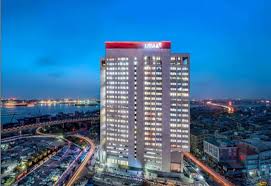
Africa’s Global Bank, United Bank for Africa (UBA) Plc, is set to reinforce its role in shaping the continent’s financial ecosystem with the launch of its landmark whitepaper.
The whitepaper, titled “Banking on Africa’s Future: Unlocking Capital and Partnerships for Sustainable Growth,” will be unveiled on the sidelines of the World Bank-International Monetary Fund (IMF) Annual Meetings in October 2025 in Washington, D.C., placing Africa’s economic agenda at the heart of global financial discussions.
The document presents a comprehensive and actionable framework for unlocking Africa’s vast economic potential, providing analysis of critical growth pillars including trade facilitation, infrastructure development, digital innovation, climate finance, and inclusive growth, while showcasing strategies for leveraging domestic capital alongside strategic global partnerships to access the continent’s $3.4 trillion single market potential under the African Continental Free Trade Area (AfCFTA).
UBA’s Group Chairman, Tony Elumelu, who emphasised the strategic importance of this whitepaper, explained that over the past few years, the bank has become an active leader in conversations and activities that drive tangible investments to the continent.
“UBA is shifting Africa’s development agenda from talk to action. With this whitepaper, we are championing initiatives that convert strategic dialogue into bankable projects and direct investments. Our commitment to execute these plans for the benefit of the continent and its people cannot be overemphasised,” Elumelu said. “We are committed partners in Africa’s development and sustainability and will continue to provide the capital, the platform, and the network needed to transform Africa’s vast potential into economic growth.”
UBA’s Group Managing Director and Chief Executive Officer, Oliver Alawuba, remarked on the white paper’s significance, highlighting the urgent need for private sector leadership.
“This whitepaper is a call to action and a statement of our capability,” Alawuba said. “It underlines our unique position in facilitating the partnerships and capital flows required to finance Africa’s future, providing the blueprint for action. The document delivers critical insights at a defining moment for Africa’s financial infrastructure.”
United Bank for Africa is one of the largest employers in the financial sector on the African continent, with more than 25,000 employees group-wide and serving over 45 million customers globally. Operating in twenty African countries and the United Kingdom, the United States of America, France, and the United Arab Emirates, UBA provides retail, commercial, and institutional banking services, leading financial inclusion and implementing cutting-edge technology.
MAN, UNIDO Lament Low Manufacturing Contribution to GDP

By Fidelia Okafor 

•Describe FG’s Nigeria’s First policy as rallying call for economic revival

The Manufacturers Association of Nigeria (MAN) and the United Nations Industrial Development Organisation (UNIDO) have bemoaned the declining contribution of the manufacturing sector to Nigeria’s Gross Domestic Product (GDP) over the past decade and what they described as the country’s shift from production to consumption.

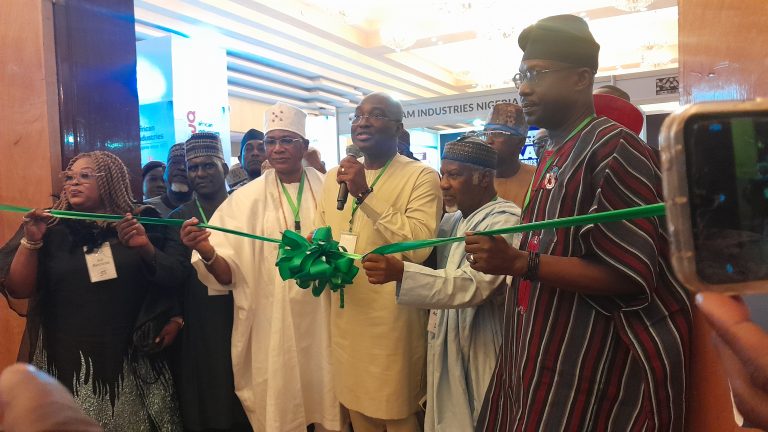
They made these observations Tuesday in Lagos, at the opening ceremony of a 3-Day Made-in-Nigeria Exhibition (MiNE) with the theme “Nigeria First: Prioritising Patronage of Made-in-Nigeria,” which was part of the activities marking the 53rd Annual General Meeting (AGM) of MAN.

The President of MAN, Mr. Francis Meshioye, in his welcome address, decried the continued shrinking of the Nigerian manufacturing sector and the troubling shift of the Nigerian economy from production to consumption.

Meshioye, however, described the Nigeria First policy, which advocates for prioritised patronage of Made-in-Nigeria products, as a rallying call that speaks directly to Nigeria’s economic survival and long-term transformation.

He said: “Recent developments in the economy remind us of the urgency of this call.

“In particular, the figures from the rebased Nigerian Gross Domestic Product (GDP), published by the National Bureau of Statistics, are striking.

“It shows that industry’s share of GDP declined from 27.65 per cent in the 2010 base year to 21.08 per cent under the 2019 rebased structure.

“Moreover, the manufacturing sector’s average 5-year performance is negative (–0.76 per cent), particularly between 2019 and 2024, whilst sectors such as services and agriculture expanded!

“This underscores a deeper concern. Nigeria’s industrial base continues to shrink. In essence, the rebased GDP figures signal a troubling shift from production to consumption; and from production to services and informal value creation.

“This is definitely not sustainable.”

Meshioye argued that if Nigeria “will build a resilient, inclusive and forward-looking economy that investors will have confidence in, we must re-industrialise, and that process must begin with deliberate support for local manufacturers.”

He explained that “The ‘Nigeria First’ agenda is not about closing our doors to the world; it is about opening the right doors to Nigerian-made solutions, Nigerian jobs, and Nigerian ingenuity.”

He also called for a legislation that would codify the prioritisation of Made-in-Nigeria in legal framework with institutionilised mechanism that would ensure full implementation, enforcement and monitoring of the execution of Nigeria First policy with provisions for consequences for non-compliance.

“We should eliminate the prevalence of selective compliance. Now is the time to create the policy framework for transitioning the Nigeria First policy from executive pronouncements to legislative imperative and ultimately to unfettered and bold implementation.

“We cannot continue to allow policy inertia to undermine our development potential,” Meshioye said.

He added that beyond policy enforcement, Nigeria, “must also establish a functional, independent compliance agency or institution tasked with auditing patronage levels, recommending corrective action, and publicly disclosing performance across Ministries, Departments and Agencies of government.

“Let it be known which institutions are genuinely driving local economic empowerment and those that are not. And we should take evident and far reaching corrective and disciplinary measures against the latter. Only then can we truly align government spending with our industrial policy goals.”

The president of MAN also stated that corporate Nigeria also has a responsibility to align with the “Nigeria First” vision of Mr. President, arguing that “multinationals, conglomerates, and large procurement organisations must look within for raw materials, packaging, and inputs.

“Many of these are already produced locally to global standards and should not be overlooked due to legacy procurement practices or cost assumptions that no longer hold true when long-term economic value is properly considered.”

Speaking in the same vein in his keynote speech as the special guest of honour at the MiNE, the UNIDO Representative in Nigeria, Amb. Philbert Abaka Johnson, said Tinubu’s Nigeria First policy offered a clear pathway to scale domestic patronage of Nigerian products and services.

Johnson, therefore, emphasised that “the call to ‘prioritise patronage of Made-in-Nigeria’ must go beyond rhetoric and patriotic sentiments.”

He said that the call, “is a strategic economic proposition that can only succeed with deliberate, coherent and coordinated action at all levels of Nigerian society.

“Nigeria First’ is therefore not about isolation. It is about intelligent integration. It is about ensuring that Nigerian producers have a fair chance to compete, to scale and to contribute meaningfully to national development.”

Johnson said Nigeria First was about ensuring that every public procurement decision, every corporate purchase and every consumer choice help build local capacity and strengthen the national value.

He said: “It means efficient production, responsible consumption, quality products and value addition.”

He said that UNIDO firmly believed that strong manufacturing base is the bedrock of sustainable development.

“Yet, as rightly noted by the president of MAN, the sector’s share of the GDP has declined over the past decade.

“To reverse this trend, our intervention must be sound, deliberate, coherent, and coordinated across following four interlinked drivers of competitiveness: infrastructure and energy reliability, access to finance, skills and technology, market access and trade facilitation,” Johnson said.

He also recommended that institutional monitoring, periodic evaluation, transparent reporting and capacity development would ensure that local content meant high-quality content.

“When Nigerian products are trusted, they will be patronised and not just at home but globally,” Johnson said.

MAN Advocates For ‘Proudly Nigeria Day’ to Boost Local Consumption

The Manufacturers Association of Nigeria (MAN) has reiterate its call for the Federal Government to designate an annual “Proudly Nigeria Day.”

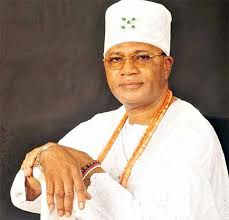
President of MAN, Otunba Francis Meshioye OFR giving more perspective to this demand at the opening ceremony of the MAN 53rd Annual General Meeting Tuesday in Lagos said “On this Day, all citizens, especially public officials, should wear, use, and consume only Made-in-Nigeria products.

“Let it be a day of national economic reflection, one that fosters behavioural change and renews national pride. Over time, such a tradition will strengthen consumer awareness and shift cultural perceptions in favour of local products.”

Speaking further on the theme of the AGM “Nigeria First: Prioritizing Patronage of Made-in-Nigeria” Meshioye said the “Nigeria First” agenda is not about closing the doors to the world; it is about opening the right doors to Nigerian-made solutions, Nigerian jobs, and Nigerian ingenuity.

“Every industrialised country in the world today began its journey by nurturing local content and leveraging public and private procurement as an avenue for galvanising scale production and economic development. Nigeria must not go the opposite direction.

“As a matter of urgency, we must institutionalise mechanisms that prioritise Made-in-Nigeria products in government contracts, public spending, and private-sector procurement. Existing Executive Orders—including 003 and 005—must be aligned with the Nigeria First Policy and fully implemented, enforced and monitored. Quite importantly, there must be consequences for non-compliance. We should eliminate the prevalence of selective compliance. Now is the time to create the policy framework for transitioning the Nigeria First Policy from executive pronouncements to legislative imperative and ultimately to unfettered and bold implementation. We cannot continue to allow policy inertia to undermine our development potential,” he said.

Meshioye pointed out that “Beyond policy enforcement, we must also establish a functional, independent compliance agency or institution tasked with auditing patronage levels, recommending corrective action, and publicly disclosing performance across Ministries, Departments and Agencies of government. Let it be known which institutions are genuinely driving local economic empowerment and those that are not. And we should take evident and far reaching corrective and disciplinary measures against the latter. Only then can we truly align government spending with our industrial policy goals.

“Additionally, we have intensified the conversation within! Corporate Nigeria also has a responsibility to align with the “Nigeria First” vision of Mr. President. Multinationals, conglomerates, and large procurement organisations must look within for raw materials, packaging, and inputs. Many of these are already produced locally to global standards and should not be overlooked due to legacy procurement practices or cost assumptions that no longer hold true when long-term economic value is properly considered.”

The MAN President noted that for “Nigeria First” to succeed, supply must meet demand. And for supply to be competitive, the operating environment must improve.
“Let us be clear that manufacturers in Nigeria operate under a tough business environment. Energy costs remain astronomically high. Access to credit is constrained by rising interest rates and limited long-term finance. Infrastructure gaps persist, particularly in logistics and transportation. Insecurity continues to inhibit progressive business planning and operations. In general and despite the onset of relative stability, a lot still needs to be done to overcome macroeconomic headwinds. We must take intentional action to overcome these binding constraints and promote an environment that solves for planning and competitiveness.”

He said MAN is deepening its engagement with the government to shape reforms in infrastructure development, tax policy, industrial financing, and trade facilitation.
“We are expanding our research capacity to better inform advocacy. We are also investing in partnerships that will enable technology upgrade, skills development, and regional market access under the African Continental Free Trade Area (AfCFTA).
“But all our efforts will count for little if the demand side is not unlocked. A truly transformative industrial policy is in the offing and its diligent implementation should support a national demand plan—one that maps out where procurement opportunities exist and how Nigerian manufacturers can be integrated into the demand chains. We must be intentional, just as China is with the Made-in-China 2025; just as India is with the Atmanirbhar Bharat, and just as every successful industrial nation has been,” Meshioye advised.

Dangote Refinery Clarifies Feedstock Imports, Reaffirms High-Quality Petrol Production

Dangote Petroleum Refinery has dismissed recent media reports alleging that it is importing finished petrol with high sulphur content into Nigeria, describing the claims as false and misleading.


In a statement issued on Friday, the company explained that, as a world-scale complex refinery, it processes a wide range of crude oils and intermediate feedstocks, which is a standard global practice aimed at optimising production and product quality.


“The cargo in question is an intermediate feedstock, not finished petrol,” the company said. “It will be fully refined in our processing units to meet both Nigerian and international quality standards.”


Operating within a Free Trade Zone, Dangote Petroleum Refinery said it refines and sells only high-quality fuels that comply with all regulatory specifications. The company added that its exports of petroleum products to the United States and Europe, among the world’s most regulated markets, underscore its adherence to international benchmarks for quality and safety.


Dangote Refinery further noted that all imported feedstocks are accompanied by quality certificates, which are transparently shared with regulators. “We are also willing to make these documents available to the public in the interest of full transparency and accountability,” the statement added.


The company reaffirmed its commitment to advancing Nigeria’s energy independence, maintaining global best practices, and delivering cleaner, high-quality fuels for both domestic and international markets.


Read Full Statement Below


Clarification on Importation of Intermediate Feedstocks


Dangote Petroleum Refinery has noted reports claiming it is importing finished petrol (PMS) with high sulphur content into Nigeria. These reports are false, malicious, and misleading.


As a world-scale complex refinery, Dangote processes a range of crude oils and intermediate feedstocks, a standard global practice aimed at optimising production and quality. The cargo in question is an intermediate feedstock, not finished petrol, and will be fully refined in our units to meet Nigerian and international quality standards.


Operating within a Free Trade Zone, Dangote Petroleum Refinery refines and sells only high-quality fuels, compliant with all regulatory specifications. Our exports of petroleum products to the United States and Europe, among the world’s most regulated markets, underscore our adherence to global benchmarks.


All imports are accompanied by quality certificates and shared transparently with regulators. Dangote Petroleum Refinery is also willing to make these documents available to the public in the interest of full transparency and accountability.


Dangote Refinery remains fully committed to advancing Nigeria’s energy independence, upholding the highest standards of quality and transparency, and delivering cleaner fuels for Nigeria and beyond.