CBN Advert
Shell Invests In Nigeria Offshore Gas Development

Shell invests in Nigeria offshore gas development


 Shell Nigeria Exploration and Production Company Limited (SNEPCo), a subsidiary of Shell plc, together with Sunlink Energies and Resources Limited, have taken a final investment decision (FID) on the HI gas project offshore Nigeria.


When completed, the project will supply 350 million standard cubic feet (approximately 60 thousand barrels of oil equivalent) of gas per day at peak production to Nigeria LNG (NLNG; Shell interest 25.6%), which produces and exports liquified natural gas (LNG) to global markets. Production is expected to begin before the end of this decade.


“Following recent investment decisions related to the Bonga deep-water development, today’s announcement demonstrates our continued commitment to Nigeria’s energy sector, with a focus on Deepwater and Integrated Gas,” said Peter Costello, Shell’s Upstream President. “This Upstream project will help Shell grow our leading Integrated Gas portfolio, while supporting Nigeria’s plans to become a more significant player in the global LNG market.”


The increase in feedstock to NLNG, via the Train 7 project that aims to expand the Bonny Island terminal’s production capacity, is in line with Shell’s plans to grow its global LNG volumes by an average of 4-5% per year until 2030. It will also bolster NLNG’s contribution to Nigeria’s national economic development goals, including jobs in construction and operations.


The HI field was discovered in 1985 and lies in 100m of water depth around 50km from the shore. The current estimated recoverable resource volumes of the HI project are approximately 285 mmboe (million barrels of oil equivalent). 

 
MAN Advocates For ‘Proudly Nigeria Day’ to Boost Local Consumption

The Manufacturers Association of Nigeria (MAN) has reiterate its call for the Federal Government to designate an annual “Proudly Nigeria Day.”

President of MAN, Otunba Francis Meshioye OFR giving more perspective to this demand at the opening ceremony of the MAN 53rd Annual General Meeting Tuesday in Lagos said “On this Day, all citizens, especially public officials, should wear, use, and consume only Made-in-Nigeria products.

“Let it be a day of national economic reflection, one that fosters behavioural change and renews national pride. Over time, such a tradition will strengthen consumer awareness and shift cultural perceptions in favour of local products.”

Speaking further on the theme of the AGM “Nigeria First: Prioritizing Patronage of Made-in-Nigeria” Meshioye said the “Nigeria First” agenda is not about closing the doors to the world; it is about opening the right doors to Nigerian-made solutions, Nigerian jobs, and Nigerian ingenuity.

“Every industrialised country in the world today began its journey by nurturing local content and leveraging public and private procurement as an avenue for galvanising scale production and economic development. Nigeria must not go the opposite direction.

“As a matter of urgency, we must institutionalise mechanisms that prioritise Made-in-Nigeria products in government contracts, public spending, and private-sector procurement. Existing Executive Orders—including 003 and 005—must be aligned with the Nigeria First Policy and fully implemented, enforced and monitored. Quite importantly, there must be consequences for non-compliance. We should eliminate the prevalence of selective compliance. Now is the time to create the policy framework for transitioning the Nigeria First Policy from executive pronouncements to legislative imperative and ultimately to unfettered and bold implementation. We cannot continue to allow policy inertia to undermine our development potential,” he said.

Meshioye pointed out that “Beyond policy enforcement, we must also establish a functional, independent compliance agency or institution tasked with auditing patronage levels, recommending corrective action, and publicly disclosing performance across Ministries, Departments and Agencies of government. Let it be known which institutions are genuinely driving local economic empowerment and those that are not. And we should take evident and far reaching corrective and disciplinary measures against the latter. Only then can we truly align government spending with our industrial policy goals.

“Additionally, we have intensified the conversation within! Corporate Nigeria also has a responsibility to align with the “Nigeria First” vision of Mr. President. Multinationals, conglomerates, and large procurement organisations must look within for raw materials, packaging, and inputs. Many of these are already produced locally to global standards and should not be overlooked due to legacy procurement practices or cost assumptions that no longer hold true when long-term economic value is properly considered.”

The MAN President noted that for “Nigeria First” to succeed, supply must meet demand. And for supply to be competitive, the operating environment must improve.
“Let us be clear that manufacturers in Nigeria operate under a tough business environment. Energy costs remain astronomically high. Access to credit is constrained by rising interest rates and limited long-term finance. Infrastructure gaps persist, particularly in logistics and transportation. Insecurity continues to inhibit progressive business planning and operations. In general and despite the onset of relative stability, a lot still needs to be done to overcome macroeconomic headwinds. We must take intentional action to overcome these binding constraints and promote an environment that solves for planning and competitiveness.”

He said MAN is deepening its engagement with the government to shape reforms in infrastructure development, tax policy, industrial financing, and trade facilitation.
“We are expanding our research capacity to better inform advocacy. We are also investing in partnerships that will enable technology upgrade, skills development, and regional market access under the African Continental Free Trade Area (AfCFTA).
“But all our efforts will count for little if the demand side is not unlocked. A truly transformative industrial policy is in the offing and its diligent implementation should support a national demand plan—one that maps out where procurement opportunities exist and how Nigerian manufacturers can be integrated into the demand chains. We must be intentional, just as China is with the Made-in-China 2025; just as India is with the Atmanirbhar Bharat, and just as every successful industrial nation has been,” Meshioye advised.

Access Bank Integrates PAPSS Into AccessMore App, Deepening Pan-African Payment Connectivity.

Access Bank Integrates PAPSS into AccessMore App, Deepening Pan-African  Payment Connectivity | The Bridge News


Access Bank Plc has taken a major step toward seamless intra-African payments with the recent integration of the Pan-African Payment and Settlement System (PAPSS) into its flagship mobile application, AccessMore. This strategic move underscores Access Bank’s commitment to enhancing cross-border payment experiences for its customers across the continent.


To mark the launch, the Chief Executive Officer of PAPSS, Mike Ogbalu III, paid a courtesy visit to the Bank’s head office in Lagos, where he held high-level discussions with Chizoma Okoli, Deputy Managing Director of Access Bank, and Seyi Kumapayi, Executive Director for African Subsidiaries at Access Bank. The discussions centered on deepening collaboration and optimizing the capabilities of PAPSS within the AccessMore ecosystem to deliver real-time, cost-effective, and secure cross-border transactions.


Speaking on the partnership, Chizoma Okoli, Deputy Managing Director, Access Bank said, “The integration of PAPSS into the AccessMore app is a significant milestone in our mission to unify Africa’s payment landscape. With Access Bank’s extensive footprint across the continent, this collaboration ensures that millions of our customers can now experience fast, efficient, and transparent cross-border payments like never before.


Our goal is to leverage what we are building together to unlock innovations that seamlessly connect the continent, and we are delighted to partner with PAPSS in making this vision a reality”


Mike Ogbalu, Chief Executive Officer (CEO) Pan-African Payment and Settlement System (PAPSS), commenting on the collaboration said, “Our partnership with Access Bank is a game-changer for cross-border trade and payments across Africa. With the integration of PAPSS on AccessMore, we are enabling customers, individuals, SMEs, and corporates alike to transact effortlessly across borders, thereby supporting the goals of the African Continental Free Trade Area (AfCFTA).
We’ve created a rail, and Access Bank has the network and customers. Within that, our rail can be used for all sorts of innovations. Access Bank can create products that we can carry on our network for every customer to use”.


Also speaking on the broader strategy, Seyi Kumapayi, Executive Director, African Subsidiaries at Access Bank, commented, “Access Bank’s vision is to be the world’s most respected African bank, and collaborations like this are essential to achieving that. By embedding PAPSS into AccessMore, we’re unlocking a new era of financial connectivity for our customers across our subsidiaries in over a dozen African markets.


PAPSS is significantly cost effective for cross border transactions, which makes it a highly valuable opportunity. To fully harness its potential, we need greater communication, stronger engagement, and coordinated rollouts across multiple countries at the same time. With the right momentum, we can accelerate adoption and achiever the scale this innovation deserves.”


This partnership between Access Bank and PAPSS is a step forward in realizing a fully interconnected Africa, where payments and trade move without friction. Customers can now enjoy a simplified, reliable, and faster method to send and receive money across African borders—directly from their AccessMore app.


The Access Bank Payments and Remittances Group manages AccessAfrica — the Bank’s proprietary cross-border payments platform — and oversees all remittance activities between Access Bank’s subsidiaries and international money transfer partners. At the core of its operations, AccessAfrica simplifies global transactions with speed, affordability, and reliability.


Currently available in Nigeria and 11 Access Bank subsidiaries across Africa, AccessAfrica enables cross-border payments to over 140 destinations worldwide through multiple channels, including branches, AccessMore, USSD, and Internet Banking. Access Bank is a leading force in African cross-border and remittance solutions, we facilitate a broad spectrum of international transfers — P2P, P2B, B2P, and B2B — reaching over 140 countries, connecting with more than 20,000 banks, and operating in over 20 global currencies. The Group also drives remittance services in partnership with licensed International Money Transfer Operators (IMTOs), enabling customers worldwide to send funds to beneficiaries in Nigeria either as cash payouts or direct bank credits.

Financial Literacy, Critical Life Skill – SEC

Financial literacy, critical life skill , says SEC | Western Post
Amaka Obiefuna


The Securities and Exchange Commission (SEC) has stated that it firmly believes that financial literacy is not merely an academic subject; but a life skill, and indeed, a survival tool in today’s complex and rapidly evolving economy.


Director General of the SEC, Dr. Emomotimi Agama stated this at the handing over ceremony of the reviewed National Univeristies Commission’s (NUC) Curriculum on Securities and Investment Management(SIM) by the SEC appointed Committee of Experts (drawn from the capital
Market and academia)in Abuja, Tuesday.


Agama said the important engagement, signifies not only institutional collaboration, but also the collective resolve to build a foundation for sustainable financial empowerment in Nigeria.


According to him, “Our gathering today goes beyond policy harmonisation or curriculum design. It is about shaping the financial mindset of future generations, equipping young Nigerians with the tools to make informed choices and contribute meaningfully to our development.


“Financial literacy determines how individuals earn, save, invest, and build wealth. It also influences how they engage with the financial system, ensuring they are not left behind in an increasingly digital and knowledge-driven economy.”


He said this is why the SEC remains deeply committed to embedding financial inclusion as a cornerstone of national development, beginning with education, where knowledge and values are first formed.


The SEC DG disclosed that the collaboration with the National Universities Commission (NUC) represents a strategic leap forward; a deliberate and forward-looking effort to integrate financial education into Nigeria’s national curriculum from the primary through to the secondary levels.


“This initiative recognizes that financial discipline and awareness are best nurtured early, when curiosity is highest and habits are still forming. Early intervention is key to producing responsible, confident, and financially empowered citizens.


“I am pleased to note that the pilot implementations in Nasarawa and Ibadan have yielded encouraging results, reflecting strong adaptability, enthusiasm, and measurable impact among teachers and students alike.


“These early successes affirm that when given the right tools and guidance, Nigerian youth can quickly understand and apply concepts such as saving, investing, budgeting, and responsible financial decision-making” he stated.


Beyond imparting knowledge, the SEC Boss said the effort is about empowerment, about giving young people the confidence to participate productively in financial and capital markets adding that as the apex regulator of the capital market, the SEC’s dual mandate to protect investors and deepen the market cannot be achieved in isolation from an informed, financially literate populace.


Agama said embedding financial education into the national curriculum, is investing in human capital, the most critical driver of sustainable, inclusive, and resilient economic growth.


He acknowledged the pivotal role of the NUC in harmonizing academic standards, ensuring that learning outcomes remain relevant to the evolving dynamics of our economy.


This partnership he added, strengthens the bridge between education and enterprise, between classroom theory and the financial realities of everyday life.


Agama noted that the SEC envisions a Nigeria where every student, regardless of background or region, understands the value of money, the principles of investment, and the discipline of financial planning. A Nigeria where financial inclusion is not a distant aspiration, but a lived experience that begins in the classroom and translates into responsible citizenship and national prosperity.


“This initiative could not have come at a more opportune time. As our nation pursues the goal of building a trillion-dollar economy, anchored on innovation, knowledge, and inclusive growth, financial literacy will be one of the strongest pillars supporting that ambition.


“The SEC remains committed to sustaining this momentum, through ongoing support for curriculum development, teacher training, resource provision, and stakeholder collaboration across all levels of education. We will continue to work closely with all relevant stakeholders to ensure that the lessons and successes from the pilot states are scaled nationwide.


“Together, we can institutionalize a financial literacy framework that not only empowers the youth but also strengthens the moral and economic fabric of our society” he added.


In his remarks, the Chairman of the Committee, Prof. Uche Uwaleke disclosed that the Committee was tasked with reviewing and expanding
the existing curriculum to reflect these developments with a view to making appropriate recommendations to the NUC that ensure that Nigerian universities are not only aligned with global trends, but are also equipping our students with the knowledge and competencies required to thrive in a modern capital market environment.


He said another equally important mandate of the Committee was to design and recommend to the NUC, a Basic Course in Capital Market Studies
to be taken by all first-year students across Nigerian universities. This
initiative is inspired by the recognition that awareness and understanding of the capital market remain relatively low, especially among young Nigerians. By introducing this foundational course, we
aim to promote early exposure, foster capital market literacy, and ultimately deepen financial inclusion — key pillars of the SEC’s developmental mandate.


Prof. Uwaleke said the Committee’s work was guided by a strong sense of purpose and collaboration. The Committee held a total of eight meetings — seven virtual and one in-person — during which we
engaged in extensive deliberations, research, and consultations. The
commitment and intellectual depth brought to the table by each member were remarkable.


Furthermore, the Committee recommended to the Federal
Ministry of Education, that this basic course be extended beyond
universities to all tertiary institutions — including polytechnics and colleges of education — so that the culture of investment awareness and financial literacy can be mainstreamed across all segments of our educational system.


“As we present this Report today,
we do so with a sense of fulfilment and optimism. We believe that its implementation will mark a major milestone in building a financially
literate generation and in strengthening the foundation for a vibrant,
inclusive, and globally competitive Nigerian capital market” He stated.


WHO Warns Of Widespread Resistance To Common Antibiotics Worldwide

One in six laboratory-confirmed bacterial infections causing common infections in people worldwide in 2023 were resistant to antibiotic treatments, according to a new World Health Organization (WHO) report launched .

 Between 2018 and 2023, antibiotic resistance rose in over 40% of the pathogen-antibiotic combinations monitored, with an average annual increase of 5–15%.

Data reported to the WHO Global Antimicrobial Resistance and Use Surveillance System (GLASS) from over 100 countries cautions that increasing resistance to essential antibiotics poses a growing threat to global health.

The new Global antibiotic resistance surveillance report 2025 presents, for the first time, resistance prevalence estimates across 22 antibiotics used to treat infections of the urinary and gastrointestinal tracts, the bloodstream and those used to treat gonorrhoea. The report covers 8 common bacterial pathogens – Acinetobacter spp., Escherichia coli, Klebsiella pneumoniae, Neisseria gonorrhoeae, non-typhoidal Salmonella spp., Shigella spp., Staphylococcus aureus and Streptococcus pneumoniae – each linked to one or more of these infections.

The risk of antibiotic resistance varies across the world
WHO estimates that antibiotic resistance is highest in the WHO South-East Asian and Eastern Mediterranean Regions, where 1 in 3 reported infections were resistant. In the African Region, 1 in 5 infections was resistant. Resistance is also more common and worsening in places where health systems lack capacity to diagnose or treat bacterial pathogens.

“Antimicrobial resistance is outpacing advances in modern medicine, threatening the health of families worldwide,” said Dr Tedros Adhanom Ghebreyesus, WHO Director-General. “As countries strengthen their AMR surveillance systems, we must use antibiotics responsibly, and make sure everyone has access to the right medicines, quality-assured diagnostics, and vaccines. Our future also depends on strengthening systems to prevent, diagnose and treat infections and on innovating with next-generation antibiotics and rapid point-of-care molecular tests.”

Gram-negative bacterial pathogens are posing the greatest threat
The new report notes that drug-resistant Gram-negative bacteria are becoming more dangerous worldwide, with the greatest burden falling on countries least equipped to respond. Among these, E. coli and K. pneumoniae are the leading drug-resistant Gram-negative bacteria found in bloodstream infections. These are among the most severe bacterial infections that often result in sepsis, organ failure, and death. Yet more than 40% of E. coli and over 55% of K. pneumoniae globally are now resistant to third-generation cephalosporins, the first-choice treatment for these infections. In the African Region, resistance even exceeds 70%.

Other essential life-saving antibiotics, including carbapenems and fluoroquinolones, are losing effectiveness against E. coli, K. pneumoniae, Salmonella, and Acinetobacter. Carbapenem resistance, once rare, is becoming more frequent, narrowing treatment options and forcing reliance on last-resort antibiotics. And such antibiotics are costly, difficult to access, and often unavailable in low- and middle-income countries.

Welcome progress in AMR surveillance – but more action needed
Country participation in GLASS has increased over four-fold, from 25 countries in 2016 to 104 countries in 2023. However, 48% of countries did not report data to GLASS in 2023 and about half of the reporting countries still lacked the systems to generate reliable data. In fact, countries facing the largest challenges lacked the surveillance capacity to assess their antimicrobial resistance (AMR) situation.

The political declaration on AMR adopted at the United Nations General Assembly in 2024 set targets to address AMR through strengthening health systems and working with a ‘One Health’ approach coordinating across human health, animal health, and environmental sectors. To combat the growing challenge of AMR, countries must commit to strengthening laboratory systems and generating reliable surveillance data, especially from underserved areas, to inform treatments and policies.

WHO calls on all countries to report high-quality data on AMR and antimicrobial use to GLASS by 2030. Achieving this target will require concerted action to strengthen the quality, geographic coverage, and sharing of AMR surveillance data to track progress. Countries should scale up coordinated interventions designed to address antimicrobial resistance across all levels of healthcare and ensure that treatment guidelines and essential medicines lists align with local resistance patterns.

The report is accompanied by expanded digital content available in the WHO’s GLASS dashboard, which provides global and regional summaries, country profiles based on unadjusted surveillance coverage and AMR data, and detailed information on antimicrobial use.

SOFIG Group Makes Case For Ukachukwu

* Says Anambra Needs Transformative Change In Leadership 
By Nnedinma Michael 
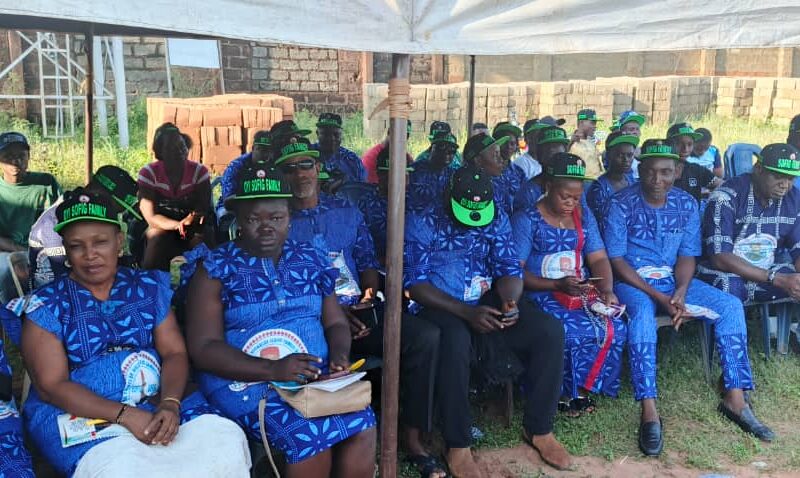
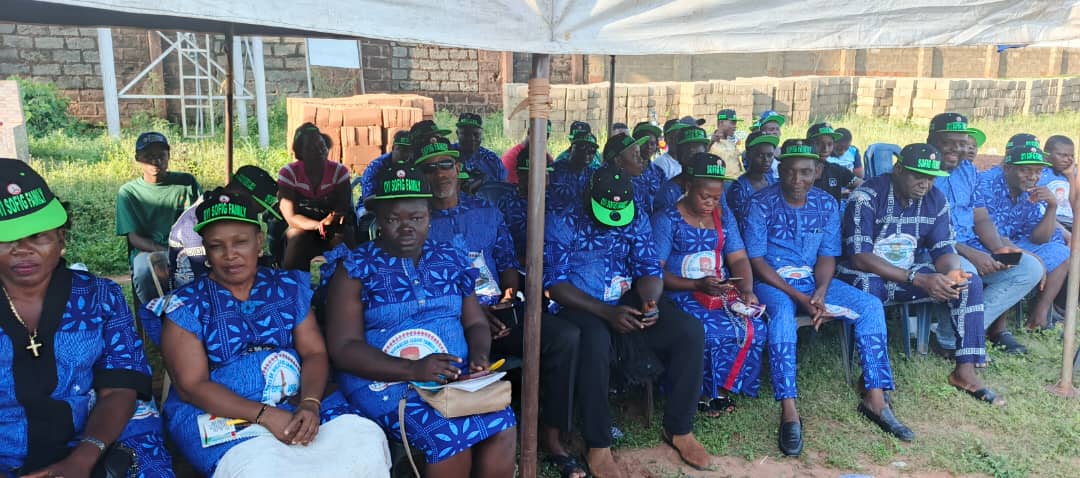
The President, Sustenance of Faith in Governance (SOFIG) Family,
Barr Kingsley Ezekwelu has described the All Progressives Congress (APC) Candidate for the November 8 Gubernatorial Election in Anambra State,
Prince Nicholas Chukwujekwu Ukachukwu as a visionary leader, equipped with integrity and proven capacity.
Speaking at Ifite-Ogwari, Ayamelum Local Government Area, when he led the SOFIG Family executives to the flag off campaign of its 21 local government area tour and mobilisation of polling unit canvassers across Anambra’s 326 electoral wards ahead the election,
Ezekwelu noted that the most meaningful step for Anambra State grassroots support and mobilisation at this defining moment is a transformative change in leadership, one capable of steering the state toward greater progress and glory.
 While urging members of the Ikukuoma SOFIG Family to make it a date with history on November 8,2025, by voting massively for the joint ticket of Prince Nicholas Ukachukwu and Senator Uche Ekwunife, he described them as a perfect team endowed with the experience, credibility, and vision to reposition Anambra for greatness.
He emphasised that at a time when the state stands at a political crossroads, Anambra needs a leadership that understands the pains of the people and has the willpower to deliver good governance.
“Prince Nicholas Ukachukwu has consistently demonstrated capacity, compassion, and commitment to the cause of Ndi Anambra. He represents integrity, development, and inclusiveness, qualities we urgently need to move our dear state forward,” he stated.
The Ayamelum Coordinator of the SOFIG Family, Pastor Emeka Okonkwo, said that Anambra deserved a people-oriented and transformational government that will restore hope and ensure development reaches every community.
 He noted that the APC ticket of Prince Ukachukwu and Senator Ekwunife offers the most credible path to achieve that vision.
“The desired change we have long yearned for can only come through a government led by Prince Nicholas Ukachukwu. He is not only a leader with a proven record of philanthropy and vision but also a man who listens and acts decisively.
“His partnership with Senator Ekwunife will ensure balanced representation, gender inclusion, and development across the three senatorial zones,” he said.
He however, expressed disappointment over the current administration under the All Progressives Grand Alliance (APGA), which, he said, had failed to fulfil its promises to the people of Ayamelum.
“It is heartbreaking that despite our loyalty and contributions, we have not witnessed the development we were promised. That is why we are aligning with a man of timbre and calibre, Prince Nicholas Ukachukwu, fondly known as Ikukuoma Ndi Igbo, whose leadership will restore dignity and direction to our politics,” he concluded.
Fidelity Bags Awards For Best Export, Trade Support And Innovation Innovation


Amaka Obiefuna


Fidelity Bank’s market leadership has been affirmed once again as the tier-one lender bagged double honours at the BusinessDay Bank and Other Financial Institutions’(BAFI) Awards 2025.


At the awards ceremony, which was held at the Lagos Continental Hotel, Victoria Island, Lagos on Saturday, 11 October 2025, Fidelity Bank was presented with the awards for the “Best Bank for Export & Trade Finance” and “Most Innovative Bank of the Year”.


Dedicating the Export and Trade Finance Award to its customers, the Managing Director/Chief Executive Officer, Fidelity Bank Plc, Dr Nneka Onyeali-Ikpe,OON, who was represented by the Executive Director/Chief Operations and Information Officer, Stanley Amuchie, said, “This recognition underscores our unwavering commitment to promoting non-oil exports and supporting Nigerian businesses to compete globally through initiatives such as the Fidelity International Trade & Creative Connect (FNITCC) and the Export Management Programme (EMP).


“I dedicate this award to all our exporters who continue to showcase the best of Nigeria to the world, our loyal customers, and our partners for their steadfast support.”


The BAFI Awards is the benchmark of distinction for institutions in the Nigerian financial services sector. Now in its 12th year, the awards recognise and celebrate organisations that are excelling in the delivery of financial services in Nigeria. The award acknowledges organisations demonstrating leadership, vision and impact in driving Nigeria’s growth trajectory.


Fidelity Bank’s recent recognition is attributed to significant accomplishments over the past twelve months. Notable milestones include the inauguration of the first privately constructed onshore oil export terminal in Nigeria in fifty years at the Otakikpo Marginal Field, which was funded by Fidelity Bank and commissioned by President Bola Ahmed Tinubu last week. Additionally, the Bank launched the Fidelity SME Hub, a multipurpose facility designed to support small businesses through innovation, collaboration, and capacity-building initiatives.


Furthermore, Fidelity Bank organized the third edition of the Fidelity Nigeria International Trade & Creative Connect (FNITCC) in Atlanta, Georgia, USA, in September 2025. This event provided local businesses with opportunities to engage in deal rooms with U.S. buyers, including prominent retailers such as Walmart and Target, fostering potential partnerships.


“The innovation award is a special one for us as it validates our continued drive to enhance operational efficiency, elevate customer experience, and strengthen business performance. We sincerely appreciate BusinessDay Media for this recognition and reaffirm our commitment to introducing more impactful innovations that empower our customers and advance the Nigerian financial services industry”, commented Amuchie.

Customer Service Week: SEC DG Emphasizes Technology As Key To Building Investor Trust

CSW: SEC DG emphasizes technology as key to building investor trust |  Western Post
Amaka Obiefuna

The Director General of the Securities and Exchange Commission (SEC), Dr. Emomotimi Agama, has reaffirmed the Commission’s commitment to leveraging technology to strengthen investor confidence and transform Nigeria’s capital market into a globally competitive environment.

 Speaking at the 2025 Customer Service Week celebration in Abuja with the theme “Building the Market of the Future, One Interaction at a Time,” Dr. Agama said the SEC is embracing digital innovation as a core part of its service strategy to enhance transparency, efficiency, and accessibility across all market operations.
He noted that recent advancements, such as the digitization of SEC processes, deployment of new online service portals, and enhanced engagement with market stakeholders through digital platforms, were designed to simplify regulatory interactions and make the market more user-friendly.
 According to him, “The digitization of our processes, the launch of new portals, and our enhanced engagement on social media are all steps in the right direction. They are designed to make our market more accessible, transparent, and user-friendly”.
 While acknowledging the transformative power of technology, the SEC boss stressed that human engagement remains central to building trust.
He explained that “technology is only an enabler,” adding: “The heart of excellent service is the human connection—the ability to listen, understand, and provide solutions that make every stakeholder feel valued.”
 Dr. Agama pledged that the Commission would continue to invest in digital infrastructure, continuous staff training, and tools that empower frontline officers to deliver superior service to investors.
 He described customer-facing staff as the “true heroes” of the capital market, whose work directly shapes investor perception and confidence in the system.
 He stressed that the SEC’s vision is to build a deep, vibrant, and technology-driven capital market powered by efficient service delivery and sustained trust.
“Let every day be Customer Service Day at the Nigerian SEC and across our capital market. Let us continue to build this market of the future, not with grand pronouncements alone, but with one successful interaction, one resolved complaint, and one satisfied stakeholder at a time”, he stated.
SON seeks improved stakeholders’ collaboration to strengthen trade through standards


The Standards Organisation of Nigeria has called for collaboration with stakeholders to strengthen trade through standards.
The Director General, SON, Ifeanyi Okeke at the 2025 edition of the World Standards Day themed “Shared vision for a better world,  spotlight on the Sustainable Development Goal 17” celebration in Lagos, said the event is not only to commemorate the global significance of standards, but also to demonstrate collective commitment through the work of standards, a symbolic expression of unity and shared vision for national and global development.
According to him, the theme is both timely and also compelling, noting that it reinforces the fact that sustainable development cannot be achieved by any single institution.
“Collaboration, cooperation, partnership are true drivers of progress and standards are the common language that makes such partnership possible.
“For Nigeria, this theme speaks to the realities of our development journey. Our goals, from food security to industrialization, from energy transition to trade expansion, require cooperation between the government, the private sector, academia and civil society.
“By spotlighting this Sustainable Development Goal 17, we affirm that partnerships are not simply supportive, but are the very backbone for achieving other Sustainable Development Goals.
Okeke said that national quality infrastructure is the underpinning, that determines Nigeria’s level of development, in terms of its ability to ensure that imported and exported products meet the required standards,  either national, regional and global standards.
“We cannot do conformity assessments alone.
We need the collaboration, we need the partnership, we need the cooperation.
“In this regard, for imported products, we need to have our internationally accredited experts, because SON cannot be found everywhere in the world.
“We need to have organizations that have been accredited and recognized globally to be able to help us test and certify our products.
“So we need that support, we need that collaboration internationally for imported products,” he added.
To boost export of locally produced goods, the Director General said, “We have the SONEXCAP which is our certification programme for exports. Nigeria cannot just continue dwelling on imports.
“What really sustains any nation is the ability to export. So SON is also playing in that field. Through the SONEXCAP, products that will leave this country to other countries with the SONEXCAP certification, those products can be accepted in most of the countries especially in Africa because of this African free trade area agreement.
“Because what it simply means is that with our SONEXCAP certification, we have a mutual recognised agreement with other African countries.
“This means that any products that leave Nigeria to other African countries will be wholeheartedly accepted,” he averred.
Archbishop Nzekwesi Celebrates Birthday In Grand Style 

By Nnedinma Michael
 
 
The Chief  Executive Officer ( CEO) of Pineeaf Estate and founder of Jesus Is Alive Church, Archbishop Onyekachukwu Joseph Nzekwesi, on Friday, October 10, 2025, celebrated his birthday in Eziowelle, Anambra State, Nigeria.
The celebration attracted numerous dignitaries, including politicians and business leaders, who gathered to wish him a happy birthday.
Some notable attendees include Chief George Muoghalu of Labour Party,
Chief Obinna Iyiegbu (Obi Cubana), Chief Chimezie Nwankwo (Abig Nwankwo), Chief Ikenna Iyiegbu (Ike Cubana), Hon Ikenna Offordeme of Anambra State House of Assembly, Chief Humphrey Anuna, President-General of ASMATA and others.
During the celebration, Archbishop Nzekwesi expressed gratitude to God for his blessings and prayed for his church members, business partners, sons and daughters in the real estate business, and for peaceful conduct of the November 8 Gubernatorial Election in Anambra State.
The Permanent Secretary,  Anambra State Ministry of Transport  and Commerce, Chief Engr. Michael  Obiekwe( Mmilioma Ogbunike),  praised Archbishop Nzekwesi for his  philanthropic efforts, noting that he has been a hope  for many,  a child of God that has created ripple effects of kindness  and generosity that has transformed lives and the community.
He prayed and thanked God for the celebrant’s life and that of his family, wishing him a peaceful birthday celebration.
A  consultant with Pine Leaf Estate, Mr Austine Eke,  described Archbishop Nzekwesi as a good man, a mentor in the real estate business, praising his exceptional work in real estate, and encouraged others to emulate his example to contribute to the development of the South East Region.
He added that his selflessness serves as a powerful reminder that everyone has the capacity to make positive impacts.
“Bishop has impacted many lives through his mentorship and empowerment to youths, women and others,” he concluded.