

Stakeholders Seek End To Infrastructure Deficits, Barriers to Achieving $1trillion Economy for Nigeria.



Dangote Petroleum Refinery has dismissed recent media reports alleging that it is importing finished petrol with high sulphur content into Nigeria, describing the claims as false and misleading.
In a statement issued on Friday, the company explained that, as a world-scale complex refinery, it processes a wide range of crude oils and intermediate feedstocks, which is a standard global practice aimed at optimising production and product quality.
“The cargo in question is an intermediate feedstock, not finished petrol,” the company said. “It will be fully refined in our processing units to meet both Nigerian and international quality standards.”
Operating within a Free Trade Zone, Dangote Petroleum Refinery said it refines and sells only high-quality fuels that comply with all regulatory specifications. The company added that its exports of petroleum products to the United States and Europe, among the world’s most regulated markets, underscore its adherence to international benchmarks for quality and safety.
Dangote Refinery further noted that all imported feedstocks are accompanied by quality certificates, which are transparently shared with regulators. “We are also willing to make these documents available to the public in the interest of full transparency and accountability,” the statement added.
The company reaffirmed its commitment to advancing Nigeria’s energy independence, maintaining global best practices, and delivering cleaner, high-quality fuels for both domestic and international markets.
Read Full Statement Below
Clarification on Importation of Intermediate Feedstocks
Dangote Petroleum Refinery has noted reports claiming it is importing finished petrol (PMS) with high sulphur content into Nigeria. These reports are false, malicious, and misleading.
As a world-scale complex refinery, Dangote processes a range of crude oils and intermediate feedstocks, a standard global practice aimed at optimising production and quality. The cargo in question is an intermediate feedstock, not finished petrol, and will be fully refined in our units to meet Nigerian and international quality standards.
Operating within a Free Trade Zone, Dangote Petroleum Refinery refines and sells only high-quality fuels, compliant with all regulatory specifications. Our exports of petroleum products to the United States and Europe, among the world’s most regulated markets, underscore our adherence to global benchmarks.
All imports are accompanied by quality certificates and shared transparently with regulators. Dangote Petroleum Refinery is also willing to make these documents available to the public in the interest of full transparency and accountability.
Dangote Refinery remains fully committed to advancing Nigeria’s energy independence, upholding the highest standards of quality and transparency, and delivering cleaner fuels for Nigeria and beyond.
Cornerstone Insurance Plc joined organizations across the globe this week in commemorating the annual Customer Service Week, which runs from October 7 to 11.
This year’s celebration carried the bold theme “Mission Impossible,” highlighting the exceptional dedication and resilience of customer service teams in delivering top-tier service in challenging environments.

Throughout the week, Cornerstone Insurance rolled out a series of staff engagement activities, customer appreciation initiatives designed to reinforce the company’s commitment to customer satisfaction. The campaign celebrated frontline service personnel as unsung heroes who go above and beyond to ensure seamless client experiences.
In a statement, the management of Cornerstone Insurance Plc emphasized that the celebration serves as both recognition and motivation. “Customer Service Week gives us the opportunity to appreciate the individuals who make our service delivery possible and to reaffirm our promise to put customers first,” the company noted.
With interactive sessions, games, and awards recognizing outstanding staff performance, the insurer underlined its dedication to fostering a culture of excellence and innovation in customer engagement.
Cornerstone Insurance Plc, a leading player in Nigeria’s insurance sector, continues to distinguish itself through a combination of digital transformation and customer-centric policies—solidifying its reputation as a dependable and forward-thinking insurer.
By Winifred Bosa
Côte d’Ivoire, Burkina Faso and Mali underscore the rise of ‘slow burn’ attacks


West Africa is facing a new dimension of cyberthreats. While the number of attacks often dominates headlines, a quieter but equally dangerous trend is emerging: prolonged, ‘slow burn’ distributed denial of service (DDoS) attacks that can hold critical services offline for hours.
As noted by NETSCOUT SYSTEMS, INC. with the release of its latest global threat intelligence report, Côte d’Ivoire, Burkina Faso and Mali were all subject to lengthy incidents within the first six months of 2025, effectively putting the digital infrastructure of these countries through a gruelling endurance test.
Côte d’Ivoire suffered through the longest DDoS attack within the region, at an average duration of more than 415 minutes (almost seven hours), followed by Burkina Faso at 356.49 minutes (close to six hours), and then Mali at 336.63 minutes (more than 5.5 hours).
Bryan Hamman, regional director for Africa at NETSCOUT explains: “These extended attacks demonstrate that West African countries are not just facing frequent onslaughts – they are enduring hours-long disruptions that put critical services to the test.
“This is of particular significance when looking at the types of organisations exposed to these attacks. Telecommunications was overwhelmingly the hardest hit in all three countries: of Mali’s 4,145 incidents, more than 95 percent (3,951) affected wireless telecommunications organisations. Likewise for Côte d’Ivoire where, although with far fewer strikes overall (611), wireless telcos were the top of the list, with wired carriers coming in second. Burkina Faso measured in at 168 attacks in total for the six-month period, with 85 percent (143) of these within the wired telecommunications carrier space.
“A DDoS that lasts for six or seven hours will most definitely affect service availability in a major way, impacting on user access, revenue loss and reputational damage. The fact is that cybercriminals are not just launching many small or brief attacks; in some places, they are sustaining pressure. This could indicate changes in objectives, such as disruption rather than data theft, hacktivism or even experimentation in testing resilience,” he comments.
Comparative insights across the region: Mali and Nigeria
As previously stated by Hamman, Mali not only experienced one of the longest DDoS attacks in West Africa during the first six months of 2025, but it also saw the most incidents.
When compared to historically high-volume countries, such as Nigeria, Ghana and Guinea, it’s clear that Mali has seen the fastest growth trajectory in the region – from 115 in the first half of 2024, to 1,637 in the second part of the year, skyrocketing again to a staggering 4,145 for 1H 2025 – more than double Nigeria’s total of 1,844 from January to July this year.
“This could potentially be the result of ongoing political instability within the country, and early-stage cybersecurity capacity, in combination with its growing internet penetration.”
Nigeria did, however, still experience the most complex incidents within the region. The maximum number of vectors observed in a single attack was 23, the highest on the continent, as seen in other African countries such as South Africa, Kenya and Libya.
“Interestingly, while its top industries targeted did include wireless telcos as number one, Nigeria uniquely recorded 108 incidents aimed at beauty salons, the only country in the world to have this sector noted in NETSCOUT’s global report. Commercial banking was placed in fourth spot, with household appliances, electric houseware and consumer electronic merchant wholesalers rounding out the list in eight position.”
Countries seeing declines in DDoS incidents
In contrast to Mali, Côte d’Ivoire and Burkina Faso, which experienced protracted ‘slow burn’ attacks, other West African countries saw either lower volumes or a decrease in DDoS activity in the first half of 2025.
Ghana and Liberia for example, two countries that were highly affected in 2024, saw a significant drop for the first six months of this year.
From January to July 2024, Ghana led the West African region in both the frequency and diversity of cyber threats, subjected to a total of 4,753 attacks. This dropped significantly to 917 in the second half of 2024. The country has once more seen a drastic decrease in DDoS attacks of more than 80 percent, recording just 152 incidents for 1H 2025, albeit with a complex combination of attack vectors (18 seen in one incident). The telecommunications sector was almost exclusively under fire within the country, including wired telco businesses (94), wireless carriers (24) and satellite communications organisations (7) listed as the most targeted.
Similarly, 1,515 incidents were documented for the first half of 2024 in Liberia, with a slight decline to 1,189 for the latter part of the year. This has dipped again by more than 76 percent to 280 over 1H 2025, mostly focused on computing infrastructure providers (76) and wireless telcos (74).
Cameroon recorded 449 incidents; a notable decline compared to the previous reporting period of 811. The attacks primarily targeted wireless telecommunications carriers (448 of 449 incidents), and the average duration remained relatively short at just more than 35 minutes, highlighting a very different threat profile compared with the slow-burn nations.
The Republic of the Congo experienced 101 DDoS incidents, also mostly directed at wireless telecommunications carriers (26 incidents), with an average duration of around 22 minutes.
Guinea reported 141 incidents, with wireless telcos again the top target (37 attacks). Although the average duration was slightly longer than 41 minutes, the total number of incidents represents a significant reduction from the prior period (down from 341), indicating a regional easing in both frequency and impact.
“These countries demonstrate that not all West African nations are experiencing the slow-burn phenomenon,” comments Hamman. “While volumes and durations vary, the focus remains on telecommunications infrastructure, and sustained mitigation efforts appear to be paying off in places like Cameroon, the Republic of the Congo, and Guinea.”
NETSCOUT maps the DDoS landscape through passive, active and reactive vantage points, providing unparalleled visibility into global attack trends. NETSCOUT protects two-thirds of the routed IPv4 space, securing network edges that carried global peak traffic of over 800 Tbps in 1H2025. It monitors tens of thousands of daily DDoS attacks by tracking multiple botnets and DDoS-for-hire services that leverage millions of abused or compromised devices.
NETSCOUT SYSTEMS, INC. (NASDAQ: NTCT) protects the connected world from cyberattacks and performance and availability disruptions through its unique visibility platform and solutions powered by its pioneering deep packet inspection at scale technology. NETSCOUT serves the world’s largest enterprises, service providers, and public sector organizations.
Academy Press Plc., one of Nigeria’s foremost printing and publishing companies, is set to celebrate its 60 years of printing excellence and innovation.




Amaka Obiefuna
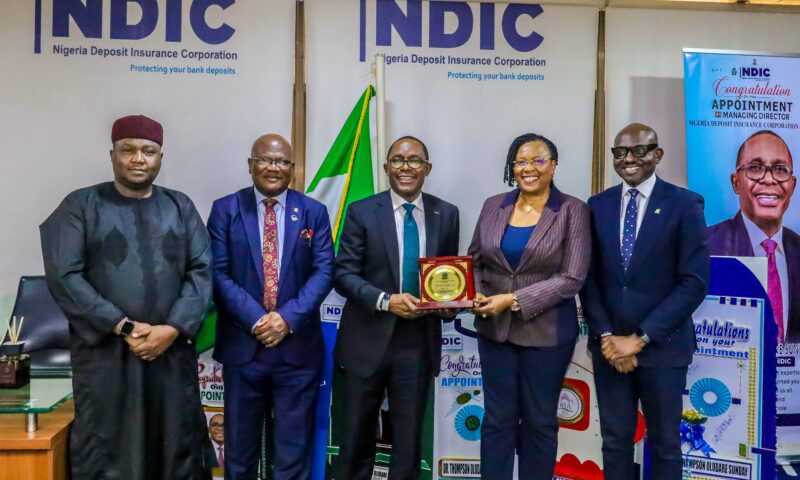
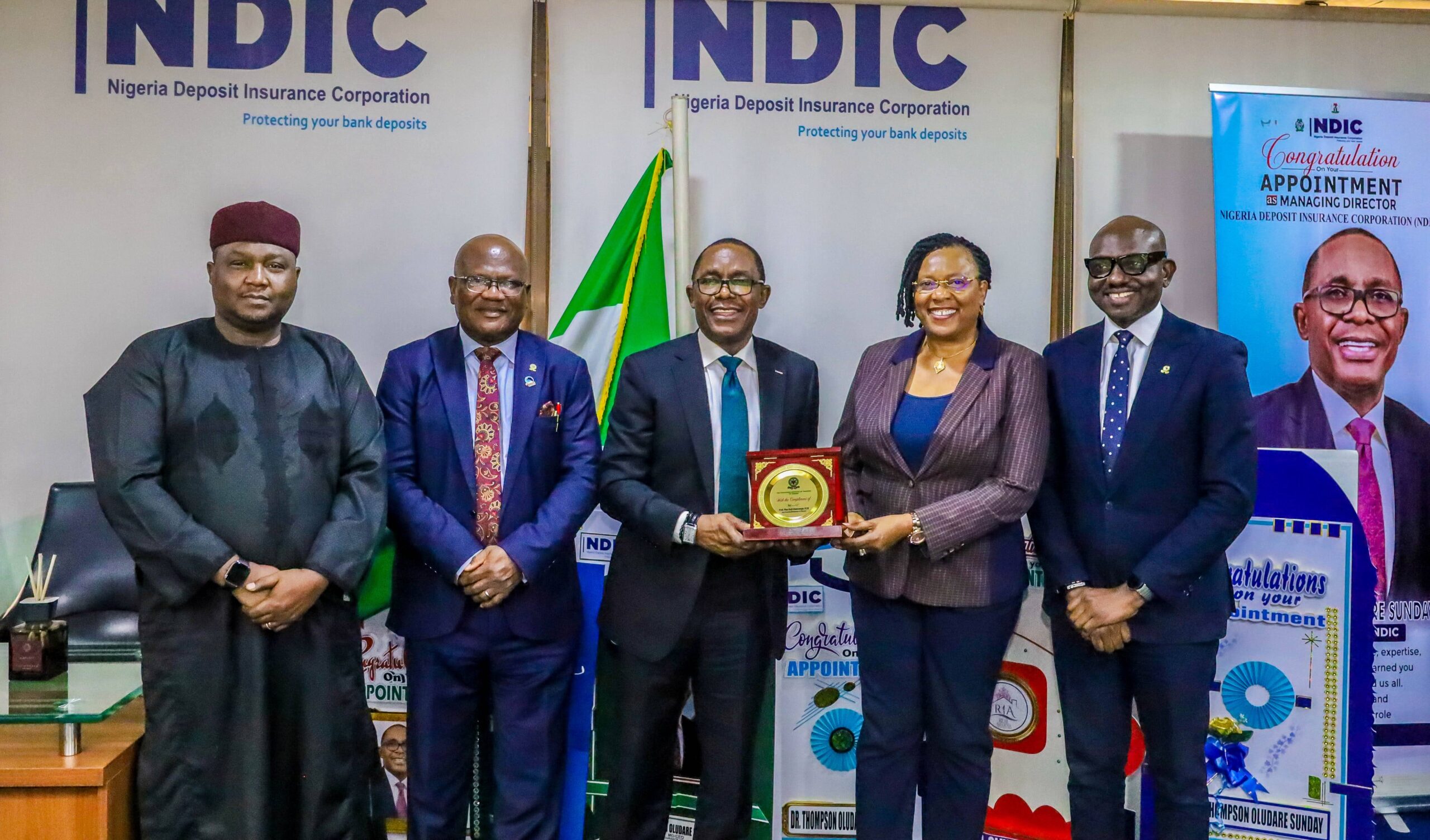
The Managing Director/Chief Executive of the Nigeria Deposit Insurance Corporation (NDIC), Mr. Thompson Oludare Sunday, has called for enhanced collaboration between the Corporation and the Chartered Institute of Bankers of Nigeria (CIBN) in addressing emerging risks and challenges within Nigeria’s banking sector.
The MD/CE made the call during a courtesy visit by the President/Chairman of Council of the CIBN, Prof. Pius Deji Olanrewaju, and members of his executive team to the NDIC Head Office, Abuja.
The NDIC Chief Executive emphasized the need for stronger partnership between both institutions in critical areas such as digital banking, cyber- security, fraud and forgery prevention, and sound risk management.
Mr. Sunday noted that while the phenomena of the emerging issues are on the rise, regulators and operators must come together to proffer solutions which help build a stronger financial ecosystem that withstands the vagaries of the innovations to deliver value to the economy.
While commending the growth of the CIBN as a professional body over the years, and its positive impact on the banking system, the NDIC Boss further called on the Institute to take critical interest in working more closely with regulators to fashion innovative failure resolution strategies that strengthen the overall resilience of the banking sector.
The NDIC boss reiterated the Corporation’s commitment to supporting professional institutions such as the CIBN in developing and implementing programs that foster innovation while maintaining sound risk management frameworks and financial system stability.
President/Chairman of Council of the CIBN, Prof. Pius Deji Olanrewaju congratulated Mr. Sunday on his appointment as Managing Director/Chief Executive of the Corporation. He expressed confidence in the capacity of the MD/CE to uphold the trust reposed in the Corporation by the public based on his sound track record and expertise.
He particularly commended the NDIC for its notable milestone achievements, highlighting the upward review of deposit insurance coverage aimed at strengthening public confidence in the banking system; the deployment of technology to expedite the reimbursement of depositors of the failed Heritage Bank; and the commencement of liquidation dividend payments within one year of the bank’s closure. Prof. Olanrewaju noted that these accomplishments have significantly enhanced depositor and investor confidence in the financial system.
The CIBN President also expressed appreciation to the NDIC for its invaluable contributions and active role as a member of the Institute’s Governing Council, noting that its participation has greatly strengthened the Council’s oversight functions, policy direction, and ethical leadership.