CBN Advert
Lagos State Applauds Leadway, Ouida For Inspiring Festember Read Along With Onakoya And Shoneyin


Leadway Group, one of Nigeria’s foremost non-banking financial services providers, has received commendation from the Lagos State Government. This followed Leadway Group and Ouida’s successful hosting of the 2025 Lagos Festember Read-Along Initiative, a platform that spotlights and simplifies access to the city’s diverse arts, literary, and creative experiences.


This year’s edition brought together pupils from schools and learning centers across Lagos for an enriching reading session. It featured Guinness World Record holder, celebrated Chess Advocate, Founder of Chess in Slums Africa, Tunde Onakoya, alongside renowned Author and Publisher, Lola Shoneyin. They led the reading of her book, “Tunde Onakoya, The Chess Champion,” a story that explores his journey of grit, vision, and impact from the chessboard.


This strategic partnership aligns with Leadway’s mission to inspire learning, creativity, and community impact. The collaboration fosters cultural engagement and sparks curiosity, imagination, and a love of storytelling among young learners.
Speaking on the initiative, the Brand Communication Manager of Leadway Group, Niyi Abiola, said the Read-Along reinforces the Group’s long-standing commitment to education, creativity, and cultural preservation across generations.


“Through this Read-Along initiative, we want to reignite a love for books among children by connecting them with influential innovators, creatives, and storytellers. Seeing children connect deeply with Tunde Onakoya’s story reminds us why platforms like this matter. When young learners engage with stories, they imagine broader possibilities, build empathy, and strengthen critical-thinking skills. These are the foundations of productive future citizens. We are proud to contribute meaningfully to that journey.”


Representing the Lagos State Universal Basic Education Board (SUBEB), Mrs. Busola Williams commended Leadway Group and Ouida for launching an initiative that develops literacy. She emphasised that the program brings relatable Nigerian stories directly to children. She affirmed that these efforts align strongly with Lagos State’s commitment to improving reading culture and educational outcomes in public schools.


The initiative also helped the young learners engage with curated books, participate in guided discussions led by facilitators, and explore new ideas shaped by storytelling. These efforts aim to improve learning outcomes and expand access to knowledge for children across Nigeria.


Leadway’s involvement aligns with its broader educational interventions. These include previous book donation drives, youth empowerment programmes, and mentorship efforts such as the Pages to Places Initiative. This collaboration highlights Leadway Group’s commitment to strengthening literacy as a catalyst for critical thinking, innovation, and enduring national development.


About Leadway Group

Leadway Group is a leading non-banking financial services organisation in Nigeria with strong expertise in Insurance, Pension Administration, Investment, and other financial solutions. Backed by decades of industry leadership, Leadway continues to play a pivotal role in shaping Nigeria’s economic landscape. The organisation focuses on corporate social responsibility, community development, youth empowerment, and initiatives that promote national progress.

Polaris Bank Champions Girls’ Hygiene Awareness With Female Hygiene Essentials Distribution In Kuramo & Victoria Island Junior And Senior Secondary Schools

Amaka Obiefuna


Polaris Bank has continued its commitment to empowering the Nigerian girl-child through health education and essential support, with the successful distribution of female hygiene essentials to female students of Kuramo and Victoria Island Junior and Senior Secondary Schools, Lagos.


This initiative stems from Polaris Bank’s 2025 International Women’s Day celebration and forms part of our ongoing Adolescent Health and Hygiene Support Programme.


Through the Bank’s Girl-Child Support and Hygiene Education Initiative, the outreach aims to improve menstrual hygiene education, build confidence and dignity among young girls, and reduce school absenteeism resulting from lack of access to sanitary products.


Speaking at the event, Group Head, Customer Experience & Value Management, Polaris Bank, Mrs. Bukola Oluyadi, delivered a practical health talk to the girls, emphasizing the importance of maintaining proper hygiene during their menstrual cycle and in their daily lives.


She advised the students on essential personal care practices including the appropriate use of sanitary pads, the importance of daily use of clean underwear, and maintaining good body hygiene with deodorants and regular washing, especially during puberty when their bodies are developing.


“Your body is precious, and how you take care of it determines your confidence and wellbeing,” Mrs. Oluyadi told the students. “Good hygiene is not just about looking clean; it is about staying healthy, feeling comfortable, and showing up confidently in school and everywhere you go.”


She also encouraged the girls to cultivate life-long healthy habits, be informed about their bodies, and speak confidently about their health needs.


Also present at the distribution was the Non-Executive Director of Polaris Bank, Mrs. Subulade Giwa-Amu, who delivered a powerful motivational session on self-care, confidence, and self-presentation.


In her address, she reminded the girls that taking care of their appearance and hygiene contributes significantly to building a successful future.


“A clean girl equals a successful woman,” Mrs. Giwa-Amu affirmed. “Success is not only about your academic performance; it is also about how you present yourself. People see you before they know you, and first impressions always last. Loving yourself and caring for yourself should be a daily habit.”


She further encouraged the students to build confidence from within, stay self-assured, and always be conscious of their personal hygiene as young girls stepping into womanhood.
“Confidence starts with knowing who you are and being proud of yourself,” she added.


“When you take care of your body, you build respect for yourself, and others see that confidence reflected in how you speak, walk, and show up in the world.”


Polaris Bank’s support for the girl-child aligns with the Bank’s broader Sustainability and CSR strategy, which includes empowering young girls through education, access to essential learning materials, and social support systems that improve their health and academic performance.


The Bank believes that sustained investment in girls’ wellbeing ensures equal opportunity, reduces school dropout rates, and helps drive long-term social and economic development.


The female hygiene essentials distribution initiative directly addresses barriers that affect school attendance among adolescent girls, especially those who lack access to basic hygiene products.


By equipping students with knowledge and materials, Polaris Bank is helping to normalize conversations around menstruation, reduce stigma, and support healthier outcomes for young girls.


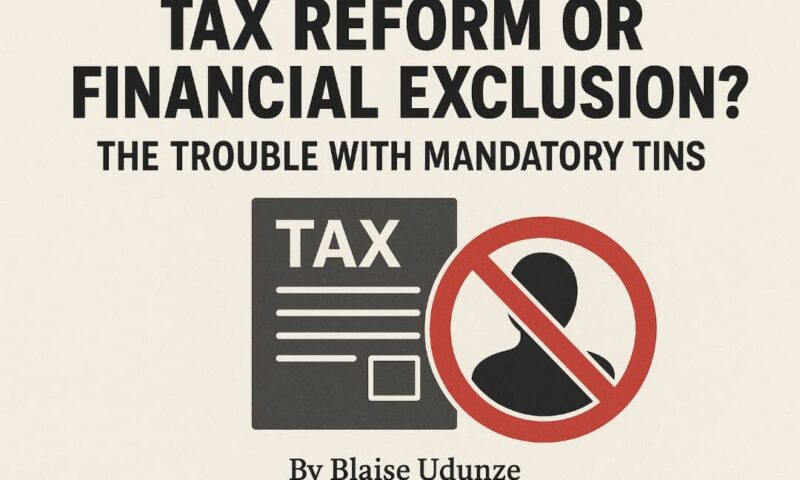
Tax Reform Or Financial Exclusion? The Trouble With Mandatory TINs

BY BLAISE UDUNZE


It is not only questionable but an aberration that a nation where over 38million Nigerians remain financially excluded, where trust in institutions is fragile, and where citizens are pressured under the weight of rising living costs, the use of Tax Identification Number (TIN) has been specified as the only option for their bank accounts operation from January 1, 2026 by the Federal Government of Nigeria.

In practice, the policy spearheaded by Taiwo Oyedele, Chairman of the Presidential Committee on Fiscal Policy and Tax Reforms, is rooted in the Nigerian Tax Administration Act (NTAA), and the intention can be understood in the areas of improving tax compliance, widening the tax net, and formalizing economic activities. But in practice, the directive risks becoming yet another well-meaning reform that punishes the wrong people, disrupts financial inclusiveness, and potentially destabilises an already stressed economy.


Yes, Nigeria needs tax reforms. Yes, the country must broaden its tax base. And yes, public revenues must increase to address fiscal pressures.

But compelling citizens to obtain TINs as a condition for operating bank accounts is the wrong tool for the right objective.

Below are five core arguments against the directive, and sustainable alternatives that actually strengthen tax compliance without endangering banking access or punishing informal earners.


The Directive Risks Deepening Financial Exclusion

Nigeria still struggles with financial inclusion. According to several official assessments, over 38 million adults remain outside the formal financial system. Many of them operate small, irregular businesses, survive through subsistence earnings, or depend on cash-based livelihoods.

The Federal Government’s compulsory TIN-for-bank-accounts policy is built on the assumption that every banked Nigerian is structured, organised, and tax-ready. This is false.

For instance, the rural market woman with N30,000 in rotating savings, the okada rider who deposits cash once a week, the petty trader using a mobile POS agent account, the retiring pensioner managing a small monthly income, and the migrant worker sends small remittances to their family. These are not tax evaders; they are survivalists.

Most operate bank accounts not because they run formal businesses, but because those accounts are essential to modern financial life: receiving transfers, accessing loans, participating in digital commerce, saving against emergencies, and avoiding the risks of moving cash in insecure environments.


By creating an additional bureaucratic barrier, the directive risks pushing millions back into a cash-dominant shadow economy, precisely the opposite outcome of what Nigeria’s financial-sector reforms are trying to achieve.


Bank Accounts Are Not Proof of Taxable Income

The NTAA clarifies that the TIN requirement applies only to taxable persons, individuals engaged in trade, employment, or income-generating activities.

But herein lies the problem: banks cannot determine who is “taxable” and who is not. Banks only see deposits and withdrawals. They do not audit the source or consistency of income. They are not tax authorities.

A student may run a small online clothing resale gig. A retiree may occasionally rent out farmland.

A dependent may receive cash support from a relative abroad. A job seeker may get intermittent gifts from family.

Who decides which of these scenarios qualifies as taxable? Banks? FIRS? Or will citizens be expected to self-declare under threat of account restrictions?

The result will be confusion, over-compliance, and mass panic with banks indiscriminately demanding TINs from everyone to avoid regulatory penalties.

This not only contradicts the spirit of the law but also exposes ordinary Nigerians to harassment and arbitrary compliance requirements.


The Policy Could Trigger Disruption, Panic Withdrawals, and Cash Hoarding

Whenever Nigerians perceive threats to their access to funds, the natural reaction is withdrawal and hoarding. We saw it during:

–       the 2023 Naira redesign crisis,

–       the 2016 TSA-bank consolidation tightening, and multiple periods of financial instability.

Telling citizens that bank accounts may face “operational restrictions” if they do not obtain a TIN creates a predictable behavioural response: people will rush to withdraw money.

This would be disastrous for a banking system already pressured by:

–       high interest rates,

–       inflation eroding deposits,

–       rising loan defaults, and

–       declining public trust.


Any government policy that unintentionally creates an incentive for citizens to flee the formal banking system is counterproductive.


The TIN Requirement Will Become a Bureaucratic Nightmare

Even if millions of Nigerians want to comply, the system is not ready. Nigeria’s administrative infrastructure does not have the capacity to process tens of millions of TIN registrations within months without:

–       long queues,

–       delays,

–       data mismatches,

–       duplicate records, and

–       systemic errors.

The National Identity Number (NIN)-SIM registration experience is a painful reminder of what happens when ambitious policy meets weak execution capacity.

–       Citizens spent months in overcrowded enrolment centres.

–       Millions were blocked from services.

–       Data inconsistencies persisted.

–       The economy suffered productivity losses.

If Nigeria could not seamlessly synchronise NIN and SIM data, how will it synchronise NIN, BVN, and TIN at a national scale without dislocation?


Forcing TIN Adoption Ignores the Real Problem: Nigeria’s Broken Tax Culture


The Federal Government’s real challenge is not that citizens lack TINs, but that they lack trust in how taxes are used.

A government cannot widen the tax net when:

–       tax leakages remain widespread,

–       citizens feel services do not match taxation,

–       corruption perceptions are high,

–       government spending lacks transparency, and

–       taxpayers do not feel seen, heard, or valued.


Coercion does not build a tax culture. Engagement does. Policy does not create legitimacy. Accountability does.

If the Federal Government wants Nigerians to freely participate in the tax system, it must earn legitimacy first, not mandate compliance through financial restrictions.


What the Government Should Do Instead: A Smarter Path to Tax Reform

Instead of enforcing a policy that may backfire economically and socially, the Federal Government can adopt four smarter, people-centred alternatives.


–       Automatic TIN Issuance Linked to NIN and BVN

Rather than forcing Nigerians to apply manually, the government should:

·       auto-generate TINs for all existing BVN/NIN holders,

·       send the TINs via SMS, email, and bank alerts,

·       allow self-activation only when needed for tax obligations.

This eliminates queues, delays, and confusion.


–       Build a Voluntary Tax Compliance Culture Through Transparency and Incentives

Tax morale improves when citizens see value. Government should:

·       publish annual audited reports of tax revenue use,

·       incentivise compliant taxpayers with benefits (priority access to government grants, credit scoring, etc.),

·       simplify tax filings for small businesses.

People comply more when they feel respected, not coerced.


–       Target High-Value Tax Evaders, Not Low-Income Account Holders

Nigeria’s real tax leakages come from:

·       large corporations shifting profits,

·       politically exposed persons,

·       illicit financial flows,

·       multinational tax avoidance strategies,

·       the informal “big money” class operating outside the banking system.


Instead of threatening small depositors, the government should strengthen:

·       FIRS intelligence and investigation units,

·       inter-agency data integration (CAC, Customs, Immigration),

·       beneficial ownership transparency enforcement.

The fight against tax evasion should focus on those hiding billions, not those depositing thousands.


–       Strengthen Digital Tax Platforms for Easy Self-Registration and Compliance

If tax registration becomes as easy as opening a social media account, compliance will rise naturally. The government should build:

·       a mobile-first tax app,

·       simplified online TIN retrieval,

·       one-click tax filing for gig workers and small traders.

Digital convenience can achieve what regulatory coercion cannot.


Reform Should Not Punish the Public

No doubt, tax reforms are needed urgently, but they must come with a human face, an intelligent, equitable, and aligned with the realities of ordinary Nigerians.

The TIN-for-bank-accounts policy, while well-intentioned, risks undermining financial inclusion, triggering economic instability, and imposing unnecessary burdens on millions who are not tax evaders but survival-based earners.

Good tax policy is built on trust, not fear. On transparency, not threats. On civic legitimacy, not administrative compulsion.

If the Federal Government truly wants to modernise Nigeria’s tax system, it must focus not on restricting citizens’ access to their own money, but on:

·       repairing tax trust,

·       digitising compliance,

·       targeting the real evaders, and

·       making participation easier, not harder.


Financial inclusion took Nigeria decades to build. We cannot afford a policy that carelessly reverses these gains.

A better tax system is possible, but it must start with the people, not with their bank accounts.


Blaise, a journalist and PR professional, writes from Lagos, can be reached via: blaise.udunze@gmail.com



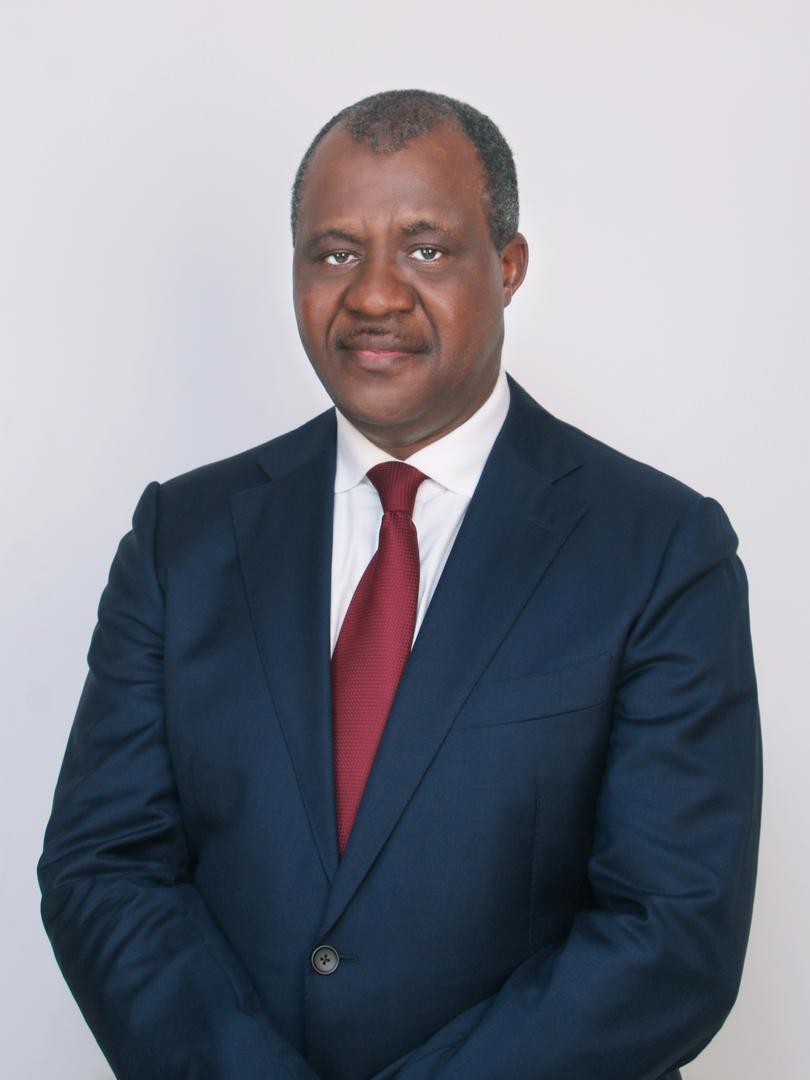
Dangote Appoints Former CBN Director, Dr Hassan Mahmud As Group Chief Economist


Dangote Group has appointed renowned economist and former Central Bank of Nigeria (CBN) Director, Dr Mahmud Hassan as its Chief Economist, strengthening the Group’s economic advisory capacity at a time of heightened global and domestic market volatility.


In his new role, Dr Hassan will serve as the Group’s top adviser on economic strategy, market trends, and policy implications, reporting directly to the President of the Group, Aliko Dangote.


Dr Hassan brings more than 30 years of experience in economic policy formulation, financial sector regulation, and central banking. During his long career at the CBN, he held several senior positions, including Director of the Trade and Exchange Department and Director of the Monetary Policy Department. He also served as Secretary to the Monetary Policy Committee and as Special Assistant on Economic Policy and Research to the CBN Governor.


Beyond Nigeria, Dr Hassan has played a key role in advancing regional economic integration, working as a lead consultant to the African Union Commission on trade integration initiatives and the establishment of the African Monetary Fund.


Academically, he holds a PhD in Economics and an MSc in Energy Economics and Policy from the University of Surrey in the United Kingdom, as well as a BSc in Economics from Ahmadu Bello University, Zaria. He is an alumnus of the Harvard Kennedy School and holds professional certifications as a Bank Examiner and AML CFT Analyst.


Dr Hassan is a Fellow of several professional bodies, including the Nigerian Statistical Association, the Chartered Institute of Bankers of Nigeria, and the Compliance Institute of Nigeria. He is also a prolific researcher with extensive publications in macroeconomics, monetary policy, energy economics, and financial engineering.


In addition to his corporate role, he continues to serve as a visiting professor at several Nigerian universities and is currently the President of the Nigerian Association for Energy Economics.


His appointment underscores Dangote Industries Limited’s focus on deep economic insight and policy intelligence as it navigates evolving market dynamics across Nigeria, Africa, and the global economy.

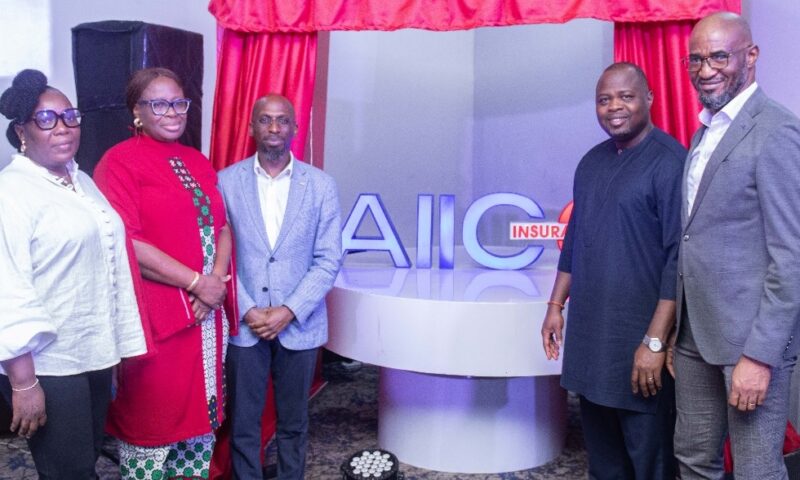
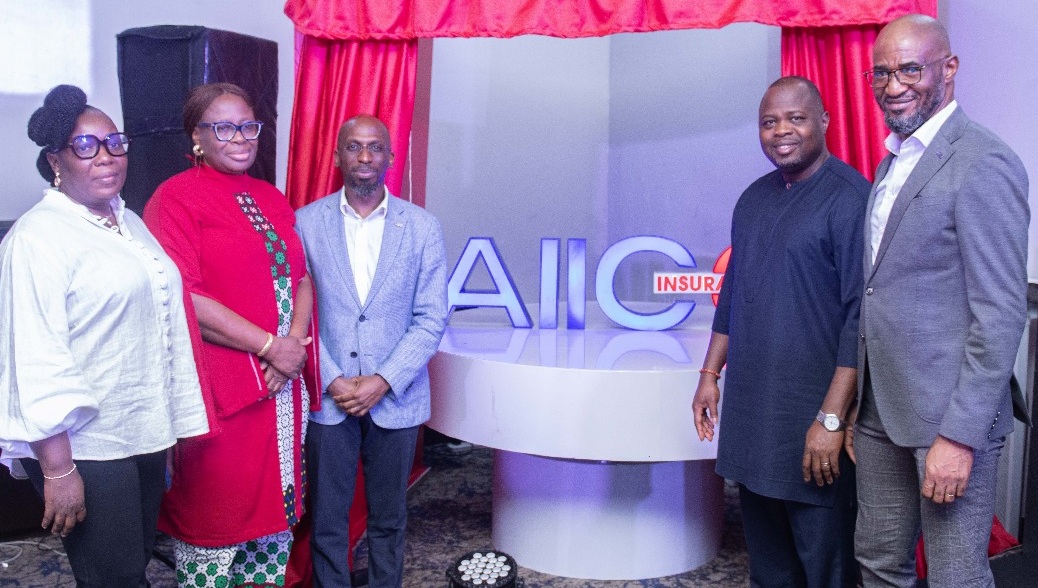
AIICO Unveils Its New Identity, Reimagining the Future of Protection

AIICO Insurance Plc has officially unveiled its refreshed brand identity, marking a significant milestone in its evolution as one of Nigeria’s most trusted and established insurance institutions. The brand refresh signals renewed energy, youthfulness and innovation, while reinforcing the company’s longstanding commitment to trust, reliability and exceptional customer experience.


The unveiling, which took place on Friday, December 12, brings to life a revitalised visual and experiential identity designed to reflect modernity, optimism and relevance in a rapidly evolving marketplace. The refreshed brand is a representation of AIICO’s forward-thinking vision—one that connects with today’s dynamic consumers without losing touch with the values that have sustained it for over six decades.


AIICO serves a diverse customer base spanning multiple generations, from long-standing policyholders who have built their trust over years, to younger, digitally-savvy customers seeking flexible, accessible, and future-focused financial protection. The new identity embraces this broad spectrum, positioning AIICO as a brand that evolves with its customers while remaining rooted in its legacy of dependability and service excellence.


Speaking at the unveil, Mr. Babatunde Fajemirokun, the Managing Director/Chief Executive Officer of AIICO Insurance Plc., described the brand refresh as both a strategic and cultural shift for the organisation.


“Today’s unveiling represents more than a new look; it represents a renewed mindset,” the MD said. “We have refreshed our identity to reflect the vibrancy, resilience and forward momentum of our brand. While our appearance has evolved, our promise remains unchanged: to protect, to serve, and to continually place the customer at the centre of everything we do. This refresh reinforces our commitment to delivering innovative, reliable solutions for this generation and the next.”


Also commenting on the unveiling, the Chief Digital and Information Officer (CDIO), Mr. Olusanjo Shodimu, emphasised the brand’s alignment with AIICO’s digital transformation and innovation agenda.

“The refreshed brand is a true reflection of where AIICO is headed,” Mr. Shodimu said. “It mirrors our focus on digital enablement, smarter processes and more connected experiences for our customers and partners. We are building an organisation that is agile, tech-driven and deeply responsive to changing customer expectations. This new identity is a visual and strategic signal that AIICO is ready for the future.”


The rebrand extends across AIICO’s digital platforms, office environments, customer touchpoints and communication materials, ensuring a consistent, modern and engaging experience for stakeholders at every point of contact.


With this unveiling, AIICO Insurance Plc strengthens its position as a brand that combines legacy with innovation, tradition with transformation, and trust with renewed vitality – ready, more than ever, to serve its customers, partners and communities with excellence.


AIICO Insurance is a leading composite insurer in Nigeria, with over six decade’s record of accomplishment in delivering quality service to its clients. Founded in 1963, AIICO provides life and general insurance, health insurance, and investment management services to create and protect wealth for individuals, families, and corporate customers.

Leadway Launches First Ever Lifestyle Fair To Empower And Spotlight Young Entrepreneurs


Amaka Obiefuna


Leadway, one of Nigeria’s top non-banking financial services and wellbeing providers, has announced Media Dash 3.0. This edition features the first-ever Leadway Lifestyle Fair, a physical engagement platform designed to give young Nigerian SMEs a more robust platform to showcase their brands, connect with target markets, and gain visibility that will help them scale their businesses.


The two-day event will take place from Saturday, 27th December to Sunday, 28th December at L’eola Hotel, Maryland, Lagos. It will feature brand showcases, vendor exhibitions, SME spotlights and partnerships, live music, youth engagements, and a kiddies’ corner for family activities. This creates a vibrant and engaging experience for all attendees.


Media Dash is one of Leadway’s frontline support initiatives, spotlighting young Nigerian entrepreneurs by freely ceding its flagship advertising assets and media slots to help businesses build awareness and scale. Past editions have empowered youth-owned enterprises by promoting their brands nationwide on digital and offline channels at no cost, helping entrepreneurs increase their reach and engagement across audiences.


Building on this, Media Dash 3.0 evolves beyond visibility and media slot campaigns to deliver an immersive lifestyle and community brand experience. This edition introduces the Leadway Lifestyle Fair, designed to drive even greater impact and strengthen the brand’s strategic positioning as an SME-empowering partner.


On behalf of Leadway Group, Olusakin Labeodan, the Chief Executive Officer of Leadway Pensure PFA, spoke about the initiative’s goal. He said: “Media Dash initiative aligns with our well-programmed support for Nigerian SMEs. With the newly introduced Lifestyle Fair, this offer small businesses a wider platform to physically connect with new customers and boost their visibility, all at no cost. Our entire business ecosystem is built around providing support and succour to businesses and individuals, and this affirms that commitment.”


At the Lifestyle Fair, participating SMEs get free exhibition space to showcase and sell products to a larger, engaged audience. Entrepreneurs interested in exhibiting can apply through Leadway Holdings’ Instagram page by Monday, 15th December 2025.
About Leadway Group


Leadway is a financial services group with a strong market presence and expertise in insurance, pensions, asset management, trusteeship, and investment solutions. Since 1970, Leadway has grown from a traditional insurer into a broad-based platform with interests across general and life insurance, pensions, wealth management, health insurance, and hospitality. For more than five decades, the Group has been known for reliability, integrity, innovation, and strong governance. It provides solutions that help individuals and institutions protect, grow, and transfer wealth. Today, Leadway oversees a portfolio of businesses and is considered one of Nigeria’s most trusted and resilient financial services groups.

Supreme Court Rules In Favour Of Fidelity Bank In Sagecom Case


Amaka Obiefuna


A five-member panel of the Supreme Court, led by Justice Lawal Garba, on Friday ruled in favor of Fidelity Bank in its appeal against Sagecom Concepts Limited. Given previous rulings, this marks a significant victory for Fidelity Bank in a long-running legal dispute.


The judgment brings definitive closure to a legacy case that has attracted attention across the financial sector for more than two decades.


In a motion dated October 8, 2025, Fidelity Bank sought clarification from the Supreme Court, requesting a consequential order that the judgment debt be paid in Naira. The bank also asked that the interest rate be set at 19.5% per annum rather than 19.5% compounded daily. Additionally, it prayed that the exchange rate used for conversion be the rate on the date of the High Court judgment, in line with the Supreme Court’s decision in Anibaba v. Dana Airlines.


Fidelity Bank further requested that the judgment debt be fixed at ₦30,197,286,603.13 and that interest on this amount be payable at 19.5% per annum until full settlement.


In a ruling delivered by Justice Adamu Jauro, the apex court granted the bank’s first three prayers but declined the fourth and fifth. As a result, the judgment sum will be paid in Naira at an annual interest rate of 19.5%, rather than the daily compounded rate previously awarded by the High Court. The Supreme Court also affirmed that the applicable exchange rate should be that of the date of the High Court judgment, consistent with its earlier decision in Anibaba v. Dana Airlines.


The dispute originated from a legacy transaction involving the former FSB International Bank, which merged with Fidelity Bank in 2005. It stemmed from a 2002 credit facility extended to G. Cappa Plc and subsequent legal proceedings tied to the collateral.


This ruling provides finality to years of litigation and confirms a significantly lower liability than the ₦225 billion previously speculated in some quarters. It aligns with Fidelity Bank’s consistent computation and materially contradicts earlier estimates.


Throughout the case, Fidelity Bank’s share price remained stable, reflecting investor confidence in its strong governance framework, prudent risk management, and robust financial fundamentals. Industry experts believe the judgment reinforces the bank’s financial strength and commitment to transparent, responsible governance.


When approached for comment, Fidelity Bank representatives declined to speak on the matter but expressed gratitude to the Supreme Court for bringing clarity and closure to the case.

Union  Bank Honoured As Best In Workplace Practice At Prestigious Seras Awards

L-R: Head, Strategic Communications and Media Relations, Union Bank, Olufisayo Adelekun; Chairman, Wonder Energy, Engr. Toju Koso; Chief Brand and Marketing Officer, Union Bank, Olufunmilola Aluko, Team Lead, External Communication, Union Bank, Favour Ayeni; Executive Asst, Corporate Communication and Marketing, Union Bank, Boluwatife Lawal; Products and Partnerships Specialist, Union Bank, Oghenemaro Ebrorhie; Team Lead, Digital Marketing, Union Bank, Abisola Oluyede; and Customer Service Partner, Union Bank, Eduvie Ejakpomewhe during the Award presentation to Union Bank for Best Company in Workplace Practice at the 2025 SERAS Awards held at Lagos Oriental Hotel, Lagos recently.
Amaka Obiefuna
 Union Bank of Nigeria has secured another prestigious accolade, being named Best Company in Workplace Practice at the Sustainability, Enterprise and Responsibility Awards. The ceremony took place on Saturday 29 November 2025 at the Grand Ballroom, Oriental Hotel, Victoria Island, Lagos.
This significant achievement follows a comprehensive assessment by SERAS multinational independent judges who rigorously evaluated applicants’ Corporate Social Responsibility and sustainability initiatives.
Union Bank received nominations across four categories: SERAS Education Intervention of the Year, Best Company in Workplace Practice, Best in Gender Equity and Women Empowerment, and Best Company in Reporting and Transparency. The Bank also achieved first runner up positions in both the Gender Equity and Women Empowerment and Educational Intervention categories, highlighting the strength of its commitment to these critical areas.
The Bank’s award-winning workplace practices reflect its holistic people-first philosophy that transcends conventional human resources functions. Union Bank has created an inclusive, rewarding and high performing work environment that establishes new benchmarks for Nigeria’s financial sector.
Key initiatives that distinguished Union Bank include the introduction of five months fully paid maternity leave exceeding statutory requirements, and the establishment of an onsite crèche at its head office to support work life balance and improve female retention. The Bank also recorded its highest promotion rate in ten years with 24 per cent of employees advancing across departments, demonstrating a robust meritocratic culture. A significant 40 per cent salary increase further enhanced employee financial wellbeing, reduced economic pressures and boosted productivity.
Judges recognised Union Bank’s initiatives for generating substantial social value, particularly in advancing gender equality through comprehensive maternity benefits aligned with Sustainable Development Goal 5. Enhanced wellness programmes featuring mental health support and flexible working arrangements fostered a more inclusive workplace, improving overall staff wellbeing. The Bank’s prioritisation of employee and family needs created positive ripple effects throughout the broader community.
Commenting on the award, Olufunmilola Aluko, Chief Brand and Marketing Officer at Union Bank, stated:
“Our workplace initiatives are firmly anchored in our triple pillar model of Citizenship, Sustainability and Innovation, which underpins our commitment to responsible financial, environmental and socio-economic development. This framework empowers us to champion best practices across the sector. The measurable outcomes, including enhanced employee satisfaction, increased productivity and significant progress in gender inclusion, demonstrate the strength and adaptability of our approach. We are confident these efforts will continue driving positive social transformation across Nigeria. Union Bank is deeply honoured by this recognition from SERAS and all sustainability stakeholders, and we remain dedicated to advancing these vital initiatives.”
Now in its nineteenth year, SERAS has consistently established the benchmark for corporate social responsibility and sustainability excellence. This year’s edition, themed “Sustainability 2.0: Innovating for Impact and Inclusive Growth”, celebrated corporate entities and leaders who pushed creative, technological and strategic boundaries to deliver measurable community and industry impact.
Union Bank’s workplace initiatives provide a robust model worthy of replication both within and beyond the financial sector, setting a new standard for responsible corporate citizenship in Nigeria.
Ayodele Urge Nigerians Not To Panic, With New Tax Reform Deductions From Customers Account Is False

Mr Taiwo Ayodele (m), speaking during the worrkshop

By Fidelia Okafor 

Nigerians panic as the new tax law is about to kick-off January 2026, claiming that lots of deductions of money will be done by the banks directly from customers account by early next year.

The Chairman, Presidential Fiscal Policy and Tax Reform Committee, Taiwo Oyedele Thursday dispelled the rumours of possible deductions of money directly from customers’  bank accounts.

President Bola Ahmed Tinubu had on June 26, 2025, signed four landmark  tax reforms bill into law, providing a transition period for individuals, as well as businesses to prepare for the comprehensive changes.

Oyedele disclosed this during a one-day media workshop, designed to provide insights to support accurate and impactful reporting, reassured Nigerians not to panic or entertain any fear over the new tax regime, stating that claims of such possible deductions are not true but false, capable of destabilising the nation’s economy.

Oyedele, as a fiscal policy expert appointed by the federal government to overhaul the nation’s tax system, said that the committee focuses on fairness, efficiency, and economic growth by simplifying taxes, offering relief to low income earners while promoting compliance.

Speaking, he stated that the new tax reform would help businesses to reduce risks while harmonising multiple taxes.

“The tax reform will be fair to small business, guarantee economic stability and growth”, he stated while adding that it would equally boost investors confidence.

On households, he said the reform would guarantee wage rewards, import, as well as tax suspension on fuel products.

Low-income earners would also be exempted while reducing rates for middle class workers.

Also, it would create more opportunities to small businesses and start-ups.

The new tax regime would also improve credit rating, lower deficit and cost of debts, as revenue mobilisation would improve tax to Gross Domestic Product, GDP, ratio. It will help non-oil revenue to perform optimally.

It’s economic road map include; ensuring legal, institutional and readiness for the reforms.

Key actions include gazetting and publishing new acts and make them available online and in print.

The federal government would soon establish the Nigeria Revenue Service (NRS); the Joint Revenue Board and the Office of the Tax Ombud, thus phasing-out the Federal Inland Revenue Service (FIRS).

To achieve all these, the Committee intends to engage with key stakeholders to seek inputs for the implementation of the tax reform laws, including relevant agencies, professional bodies, and sector associations among others.

It equally intends to create more awareness and equip institutions, taxpayers, and professionals for smooth implementations of the regime.

Enugu Govt Approves Construction, Reconstruction Of 1,022 Urban Roads

Enugu approves construction, reconstruction of 1,022 urban roads |LarryBravo Nwaiwu
The Enugu State Government has approved the construction and reconstruction of 1,022 urban roads in line with Governor Peter Mbah’s administration’s target to pave all the roads in Enugu metropolis before the end of his first term in office.
This was made known at the end of the Enugu State Executive Council meeting at the weekend.
Briefing Government House correspondents, the Commissioner for Information and Communication, Dr. Malachy Agbo; Commissioner for Works and Infrastructure, Engr. Osita Okoh; and Commissioner for Trade, Investment and Industry, Dr. Sam Ogbu-Nwobodo, said that the Executive Council also approved the Business Enabling Reform Action Plan for 2026, as well as a series of events for an unforgettable “Detty December” experience marking the forthcoming Christmas and New Year celebrations.
Throwing more light on the 1,022 roads, Okoh said it was an effort to maximise the dry season window, ensuring that contracts were awarded early and contractors mobilised to the various sites from January 2026.
“We have done the first phase, which was over 90 roads. We have also done phase two, which also exceeded the earlier planned 141 urban roads. So, we are now in phase three. Here, we are going to award contracts that will cover all the roads that are yet to be paved in Enugu metropolis.
“These roads cut across New GRA, Old GRA, Emene Zone, Abakpa Zone, Thinkers Corner, Airport Corner, Upper Meniru in Awkunanaw, Idaw River Layout, Gariki, Maryland, Achara Layout, Uwani, One Day and Upper One Day, Trans Ekulu, Independence Layout, Independence Layout Phase II, Coal Camp Zone, Pocket Layout, as well as Ogui and Asata Zone, among other places. We want to cover the uncovered areas roads in the Enugu metropolis,” he said.
On his part, Dr. Ogbu-Nwobodo explained that the Business Enabling Reform Action Plan for 2026 was aimed at enhancing the Enugu business-friendly ecosystem, having achieved a major leap from 36th position to 6th position in the national ease of doing business survey.
“Three years ago, Enugu was ranked 36th out of 37 (36 states and the FCT). But presently, it has performed well in the ease of doing business rankings. This translates to more robust engagements with the private sector and increased investment inflow into the state. So, as you enhance your environment through processes that are transparent and predictable in land administration, tax administration, permits, and business-to-government interfaces, you get more capital inflow,” he stated.